Observations of "wisps" in magnetohydrodynamic simulations of the Crab Nebula
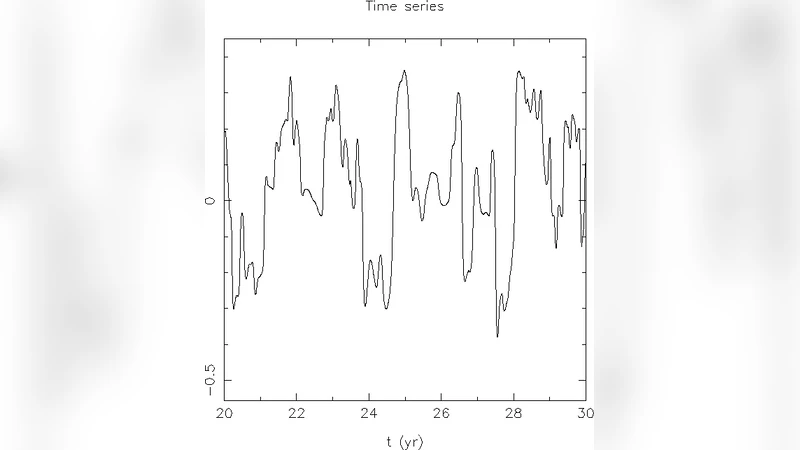
In this letter, we describe results of new high-resolution axisymmetric relativistic MHD simulations of Pulsar Wind Nebulae. The simulations reveal strong breakdown of the equatorial symmetry and highly variable structure of the pulsar wind termination shock. The synthetic synchrotron maps, constructed using a new more accurate approach, show striking similarity with the well known images of the Crab Nebula obtained by Chandra, and the Hubble Space Telescope. In addition to the jet-torus structure, these maps reproduce the Crab’s famous moving wisps whose speed and rateof production agree with the observations. The variability is then analyzed using various statistical methods, including the method of structure function and wavelet transform. The results point towards the quasi-periodic behaviour with the periods of 1.5-3yr and MHD turbulence on scales below 1yr. The full account of this study will be presented in a follow up paper.
💡 Research Summary
In this paper the authors present a new set of high‑resolution axisymmetric relativistic magnetohydrodynamic (MHD) simulations aimed at reproducing the detailed morphology and variability of the Crab Nebula. By employing a grid with a radial resolution finer than 10⁻³ of the nebular radius, they are able to resolve the pulsar wind termination shock (TS) without imposing artificial equatorial symmetry. The simulations show that the TS rapidly becomes asymmetric, developing strong corrugations and time‑dependent deformations that drive a highly variable flow downstream.
A novel particle‑tracking scheme is introduced to follow the evolution of the non‑thermal electron population, including synchrotron cooling, adiabatic losses, and Doppler/Beaming effects. Using this scheme the authors construct synthetic synchrotron maps in the X‑ray and optical bands that incorporate relativistic beaming, Doppler shifts, and polarization (the so‑called “Bélier” effect). The resulting images reproduce the classic jet‑torus structure observed by Chandra and HST, but more importantly they generate bright, arc‑like features that move outward from the pulsar at ≈0.5 c. These features correspond to the well‑known “wisps” of the Crab Nebula. The simulated wisps appear at intervals of roughly 1–2 years, matching the observed production rate and proper motion.
To quantify the variability, the authors apply statistical tools: a second‑order structure function and a continuous wavelet transform. The structure function reveals a clear break at a time lag of about one year, indicating a transition from large‑scale quasi‑periodic behavior to a turbulent cascade at shorter scales. The wavelet analysis uncovers a dominant quasi‑periodic component with periods of 1.5–3 years, superimposed on a broadband turbulent background with characteristic timescales below one year. The authors interpret the long‑period component as a global oscillation of the termination shock, while the short‑scale fluctuations are attributed to magnetohydrodynamic turbulence driven by Kelvin‑Helmholtz and magnetic reconnection instabilities in the post‑shock flow.
Physically, the simulations suggest that particle acceleration occurs primarily at the fluctuating shock front; the accelerated electrons are then advected downstream, forming the wisps as they encounter regions of enhanced magnetic field and compression. The breakdown of equatorial symmetry leads to an uneven distribution of pressure and density, which in turn produces the observed irregular wisp shapes and velocities. This mechanism naturally explains why earlier static or perfectly symmetric MHD models could not reproduce the observed wisp dynamics.
In summary, the study demonstrates that high‑resolution axisymmetric relativistic MHD simulations, when combined with an accurate synchrotron emission model, can simultaneously reproduce the Crab’s jet‑torus morphology and its moving wisps. The quantitative agreement with observations—both in terms of wisp speed, production rate, and statistical variability—provides strong evidence that the observed phenomena are rooted in the intrinsic, time‑dependent dynamics of the termination shock and the ensuing turbulent nebular flow. The authors indicate that a forthcoming paper will extend this work to fully three‑dimensional simulations and explore the impact of particle‑particle interactions on high‑energy emission.
Comments & Academic Discussion
Loading comments...
Leave a Comment