Exploring the Use of Virtual Worlds as a Scientific Research Platform: The Meta-Institute for Computational Astrophysics (MICA)
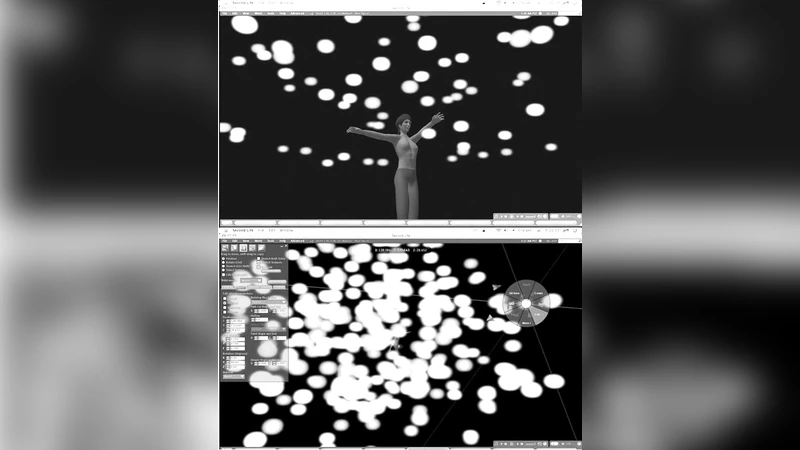
We describe the Meta-Institute for Computational Astrophysics (MICA), the first professional scientific organization based exclusively in virtual worlds (VWs). The goals of MICA are to explore the utility of the emerging VR and VWs technologies for scientific and scholarly work in general, and to facilitate and accelerate their adoption by the scientific research community. MICA itself is an experiment in academic and scientific practices enabled by the immersive VR technologies. We describe the current and planned activities and research directions of MICA, and offer some thoughts as to what the future developments in this arena may be.
💡 Research Summary
The paper presents the Meta‑Institute for Computational Astrophysics (MICA), the world’s first professional scientific organization that exists entirely within virtual worlds (VWs). Established on platforms such as Second Life and OpenSimulator, MICA serves as a living laboratory for exploring how immersive virtual‑reality (VR) and VW technologies can be harnessed for scholarly work, with a particular focus on computational astrophysics. The authors outline two overarching goals: (1) to evaluate the utility of VWs as a research platform that enables real‑time, geographically independent collaboration, and (2) to accelerate the broader adoption of VR/VW tools across the scientific community.
MICA’s activities are organized into four main pillars. First, regular seminars, journal clubs, and workshops are held in virtual conference rooms where participants attend as avatars, raise hands, and ask questions in real time. This model eliminates travel costs, reduces scheduling friction across time zones, and creates a persistent, searchable record of presentations. Second, the institute integrates high‑performance computing (HPC) resources with a virtual visualization environment. N‑body simulations, radiative‑transfer calculations, and large‑scale cosmological datasets are rendered in three‑dimensional space, allowing researchers to “walk around” galaxies, rotate structures, and inspect particle trajectories with a level of spatial intuition unavailable on flat screens. Third, MICA runs education and training programs for graduate students, undergraduates, and even high‑school teachers. Virtual classrooms support live coding, interactive problem solving, and hands‑on manipulation of astrophysical phenomena, thereby bridging the gap between abstract theory and concrete experience. Fourth, the institute conducts public outreach through virtual exhibitions that showcase cutting‑edge research (e.g., black‑hole mergers, galaxy formation) as immersive, narrative‑driven experiences accessible to anyone with an internet connection.
The authors also discuss the technical and sociocultural challenges that accompany this ambitious experiment. Network bandwidth and latency remain limiting factors for high‑resolution, real‑time rendering; users with modest hardware may experience degraded performance, creating an equity issue. The user interface, while increasingly sophisticated, still lacks the intuitive simplicity of traditional desktop tools, raising the learning curve for non‑technical participants. Data security, intellectual‑property rights, and provenance tracking are additional concerns that must be addressed before virtual collaborations can be fully trusted for sensitive research data. Moreover, the academic reward system does not yet recognize virtual seminars or VR‑based publications on par with conventional conference talks and journal articles, which could hinder widespread participation.
To overcome these obstacles, MICA proposes a two‑pronged strategy. Technologically, the institute is developing platform‑agnostic standards (e.g., WebXR‑compatible APIs) that allow seamless integration of diverse VR/AR headsets and cloud‑based rendering services, thereby reducing dependence on local GPU power. On the scholarly side, MICA is designing a metadata schema that links virtual events, datasets, and code repositories to traditional citation indices, enabling measurable academic credit for VR‑mediated contributions. The institute also plans to embed collaborative coding environments (e.g., Jupyter notebooks) directly within the virtual space, so that researchers can edit scripts, run analyses, and visualize results without leaving the immersive environment.
In conclusion, the paper argues that virtual worlds have the potential to transform scientific communication, collaboration, and education by providing low‑cost, globally accessible, and highly interactive platforms. While current limitations in hardware, networking, and institutional incentives remain, the authors view MICA as a proof‑of‑concept that demonstrates how sustained investment in VR/VW infrastructure and community building can eventually make virtual research institutes a mainstream component of the scientific ecosystem.
Comments & Academic Discussion
Loading comments...
Leave a Comment