Optical--to--X-ray emission in low-absorption AGN: Results from the Swift-BAT 9 month catalogue
(Abridged) We present simultaneous optical–to–X-ray spectral energy distributions (SEDs) from Swift’s X-ray and UV–optical telescopes (XRT and UVOT) for a well-selected sample of 26 low-redshift (z<0.1) AGN from the Swift/BAT 9-month catalogue, the largest well-studied, hard X-ray selected survey of local AGN to date. Our subsample consists of AGN with low intrinsic X-ray absorption (N_H<10^22 cm^-2) and minimal spectral complexity, to more accurately recover the intrinsic accretion luminosity in these sources. We perform a correction for host galaxy contamination in all available UVOT filter images to recover the intrinsic AGN emission, and estimate intrinsic dust extinction from the resultant nuclear SEDs. Black hole mass estimates are determined from the host-galaxy 2MASS K-band bulge luminosity. Accretion rates determined from our SEDs are on average low (Eddington ratios <~ 0.1) and hard X-ray bolometric corrections cluster at ~10-20, in contrast with the higher values seen for quasars. An average SED for the 22 low accretion rate (Eddington ratio < 0.1) objects is presented, with and without correction for intrinsic extinction. We do not find a correlation of optical–to–X-ray spectral index with Eddington ratio, regardless of the optical reference wavelength chosen for defining the spectral index. The low accretion rates and bolometric corrections found for this representative low-redshift sample are of particular importance for studies of AGN accretion history.
💡 Research Summary
The authors present a systematic study of the broadband spectral energy distributions (SEDs) of a well‑defined sample of low‑absorption active galactic nuclei (AGN) drawn from the Swift/BAT 9‑month hard‑X‑ray catalogue. From the full BAT sample they select 26 nearby (z < 0.1) objects that satisfy two stringent criteria: (i) intrinsic X‑ray column density N_H < 10^22 cm⁻², ensuring minimal obscuration of the central engine, and (ii) a lack of complex spectral features (e.g., strong reflection or warm absorbers) that could compromise a clean measurement of the intrinsic continuum. This careful culling yields a representative set of “clean” Seyfert‑like nuclei whose emission can be traced from the optical/UV to the hard X‑ray band without large systematic uncertainties.
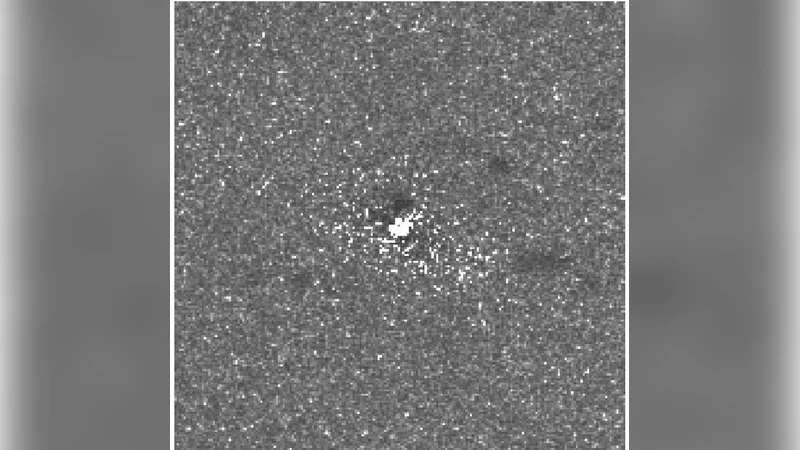
Simultaneous Swift observations provide UVOT imaging in six filters (V, B, U, UVW1, UVM2, UVW2) and XRT spectroscopy (0.3–10 keV). To isolate the nuclear light, the authors perform two‑dimensional surface‑brightness modelling of each UVOT image, fitting a combination of bulge, disk, and point‑source components with GALFIT. The point‑source flux, after subtraction of the host contribution, constitutes the intrinsic AGN UV/optical emission. They then correct this nuclear SED for internal dust extinction by fitting a Small‑Magellanic‑Cloud‑type reddening law, deriving an E(B–V) for each source. This step is crucial because even modest amounts of dust can suppress the UV flux and bias bolometric estimates.
Black‑hole masses are estimated from the host galaxy’s 2MASS K‑band bulge luminosity using the established M–L_K relation. This method avoids reliance on reverberation mapping or broad‑line widths, which are often unavailable for low‑luminosity AGN, and provides a homogeneous mass scale across the sample. With the de‑reddened SEDs in hand, the authors integrate the luminosity from the UV through the hard X‑ray band to obtain the bolometric luminosity L_bol. Dividing by the Eddington luminosity (L_Edd = 1.26 × 10^38 M_BH M_⊙ erg s⁻¹) yields the Eddington ratio λ_Edd.
The principal results are: (1) The majority of the sample exhibits low accretion rates, λ_Edd ≲ 0.1, with a median around 0.03. (2) The hard‑X‑ray bolometric correction factor k_bol = L_bol/L_14‑195 keV clusters between 10 and 20, substantially lower than the values (k_bol ≈ 30–70) reported for luminous quasars. This indicates that, for low‑λ_Edd AGN, the hard X‑ray band carries a larger fraction of the total radiative output. (3) The optical‑to‑X‑ray spectral index α_ox, computed using several reference wavelengths (2500 Å, 5100 Å) and the 2 keV flux, shows no statistically significant correlation with λ_Edd. This lack of trend persists even after correcting the SEDs for intrinsic extinction, suggesting that the previously reported α_ox–λ_Edd relationship may be driven by selection effects or by inadequate host‑galaxy subtraction in other studies.
An average SED is constructed from the 22 objects with λ_Edd < 0.1, both before and after intrinsic extinction correction, providing a benchmark template for low‑accretion‑rate AGN. The authors discuss the implications of their findings for AGN population synthesis models and for the reconstruction of the cosmic accretion history. Because low‑λ_Edd, low‑absorption AGN constitute a substantial fraction of the local AGN population, their relatively low bolometric corrections imply that hard X‑ray surveys may already capture a large portion of their total energy output, reducing the need for large extrapolations to unseen wavebands.
In summary, this work delivers a high‑quality, host‑subtracted, extinction‑corrected set of broadband SEDs for a clean sample of low‑absorption AGN, demonstrates that these objects accrete at modest rates and emit a significant fraction of their power in the hard X‑ray band, and challenges the universality of the α_ox–Eddington ratio correlation. These results are essential for refining models of AGN growth and for interpreting the contribution of low‑luminosity AGN to the overall energy budget of the universe.