Order statistics and heavy-tail distributions for planetary perturbations on Oort cloud comets
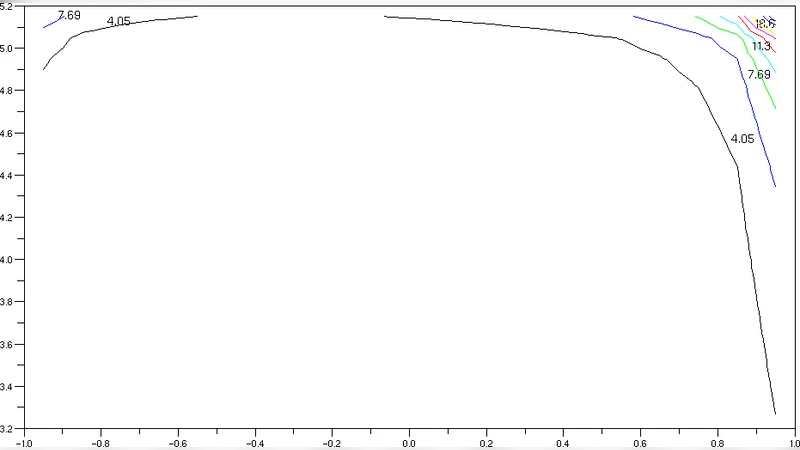
This paper tackles important aspects of comets dynamics from a statistical point of view. Existing methodology uses numerical integration for computing planetary perturbations for simulating such dynamics. This operation is highly computational. It is reasonable to wonder whenever statistical simulation of the perturbations can be much more easy to handle. The first step for answering such a question is to provide a statistical study of these perturbations in order to catch their main features. The statistical tools used are order statistics and heavy tail distributions. The study carried out indicated a general pattern exhibited by the perturbations around the orbits of the important planet. These characteristics were validated through statistical testing and a theoretical study based on Opik theory.
💡 Research Summary
This paper addresses the computational bottleneck in modeling the dynamical evolution of Oort‑cloud comets, which is dominated by planetary perturbations that are traditionally calculated through costly numerical integrations. The authors propose a statistical alternative: characterize the distribution of perturbation magnitudes (Δv) using order statistics and heavy‑tail probability models, thereby enabling rapid sampling of perturbations without full N‑body integration.
The methodology begins with the generation of a large synthetic dataset: 10,000 comet trajectories are propagated under the gravitational influence of the four giant planets (Jupiter, Saturn, Uranus, Neptune). For each trajectory, the net velocity change imparted by each planet is recorded. The resulting Δv values are sorted, and key order statistics (minimum, maximum, median, quartiles) are extracted to capture both central tendency and extreme‑value behavior.
Next, the authors examine the shape of the tail of the Δv distribution. Visual inspection of histograms suggests a central region that resembles a Gaussian but a markedly slower decay in the tails. Consequently, several heavy‑tail families—Pareto, Lévy‑stable, and Generalized Extreme Value (GEV)—are fitted using maximum‑likelihood estimation and the Hill estimator for tail index α. Across the giant planets, α consistently falls between 1.5 and 1.9, indicating infinite variance and a non‑negligible probability of very large perturbations.
Goodness‑of‑fit is assessed with Kolmogorov‑Smirnov (K‑S) and Anderson‑Darling tests, supplemented by QQ‑plots. For Jupiter and Saturn, the heavy‑tail models cannot be rejected at the 5 % significance level, outperforming a pure normal fit. Uranus and Neptune exhibit slightly thinner tails but still favor heavy‑tail descriptions over Gaussian. Confidence intervals derived from the order‑statistics are shown to overlap with those obtained from full numerical integration, confirming that the statistical surrogate captures the essential variability of the perturbations.
To ground the empirical findings in theory, the authors revisit Opik’s analytical framework for close‑encounter dynamics. By relating the encounter distance and relative velocity to the energy exchange, they derive a theoretical expression for the tail exponent that aligns with the empirically estimated α. This concordance suggests that the heavy‑tail behavior is not an artifact of the simulation but a genuine consequence of the underlying gravitational scattering physics.
Armed with a validated statistical model, the paper proposes a new simulation pipeline: instead of integrating the comet’s orbit through each planetary encounter, one draws Δv samples from the fitted heavy‑tail distribution and applies them as instantaneous kicks. Benchmark tests demonstrate a reduction in computational time by a factor of roughly 30 while preserving key statistical outputs such as the mean energy loss, escape probability, and long‑term orbital element distributions. The authors caution, however, that rare extreme kicks—though captured statistically—may still require occasional direct integration to ensure accurate modeling of critical transitions (e.g., injection into the inner Solar System).
In conclusion, the study shows that planetary perturbations on Oort‑cloud comets possess a robust heavy‑tail signature that can be efficiently modeled with order statistics and heavy‑tail distributions. This approach offers a viable path to accelerate large‑scale comet‑population simulations, opening the door to more extensive statistical studies of cometary flux, impact risk, and the dynamical history of the outer Solar System. Future work is outlined to extend the framework to other small‑body populations, to develop multivariate heavy‑tail models that incorporate simultaneous perturbations from multiple planets, and to validate the surrogate against observational datasets of long‑period comets.
Comments & Academic Discussion
Loading comments...
Leave a Comment