Effect of user tastes on personalized recommendation
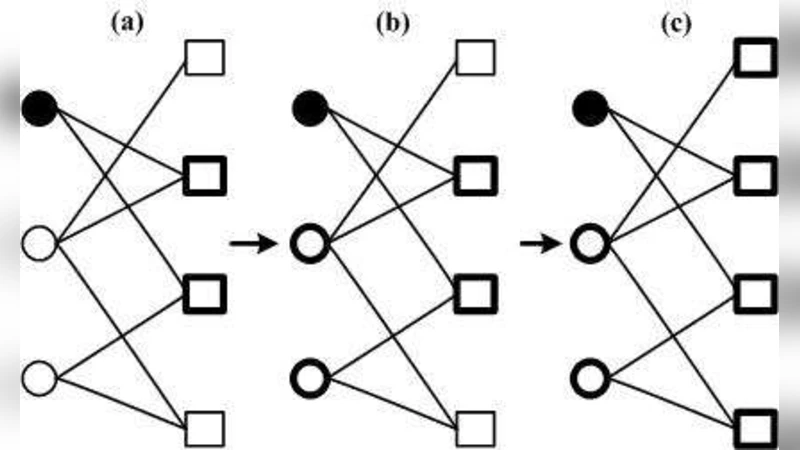
In this paper, based on a weighted projection of the user-object bipartite network, we study the effects of user tastes on the mass-diffusion-based personalized recommendation algorithm, where a user’s tastes or interests are defined by the average degree of the objects he has collected. We argue that the initial recommendation power located on the objects should be determined by both of their degree and the users’ tastes. By introducing a tunable parameter, the user taste effects on the configuration of initial recommendation power distribution are investigated. The numerical results indicate that the presented algorithm could improve the accuracy, measured by the average ranking score, more importantly, we find that when the data is sparse, the algorithm should give more recommendation power to the objects whose degrees are close to the users’ tastes, while when the data becomes dense, it should assign more power on the objects whose degrees are significantly different from user’s tastes.
💡 Research Summary
The paper addresses a well‑known limitation of mass‑diffusion (MD) based personalized recommendation: the initial allocation of recommendation power (or “resource”) is uniform across all items a user has previously collected, ignoring both the popularity of those items and the individual user’s taste. To remedy this, the authors introduce a quantitative definition of a user’s taste as the average degree (i.e., the average number of users who have collected each item) of the items the user has already interacted with. This average degree, denoted (\bar{k}_u), serves as a proxy for whether a user tends to favor popular items (high (\bar{k}_u)) or niche items (low (\bar{k}_u)).
The core contribution is a modified initial‑resource distribution formula:
( f_i = k_i^{\beta} \times \exp!\big
Comments & Academic Discussion
Loading comments...
Leave a Comment