AzTEC Half Square Degree Survey of the SHADES Fields -- I. Maps, Catalogues, and Source Counts
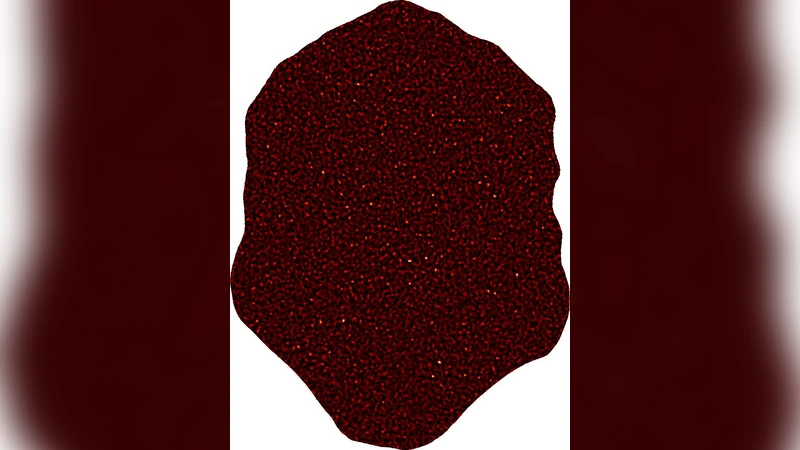
We present the first results from the largest deep extragalactic millimetre-wavelength survey undertaken to date. These results are derived from maps covering over 0.7 deg^2, made at 1.1mm, using the AzTEC continuum camera mounted on the James Clerk Maxwell Telescope. The maps were made in the two fields originally targeted at 0.85mm with SCUBA in the SHADES project, namely the Lockman Hole East (mapped to a depth of 0.9-1.3 mJy rms) and the Subaru XMM Deep Field (1.0-1.7 mJy rms). The wealth of existing and forthcoming deep multi-frequency data in these two fields will allow the bright mm source population revealed by these images to be explored in detail in subsequent papers. Here we present the maps themselves, a catalogue of 114 high-significance sub-millimetre galaxy detections, and a thorough statistical analysis leading to the most robust determination to date of the 1.1mm source number counts. Through careful comparison, we find that both the COSMOS and GOODS North fields, also imaged with AzTEC, contain an excess of mm sources over the new 1.1mm source-count baseline established here. In particular, our new AzTEC/SHADES results indicate that very luminous high-redshift dust enshrouded starbursts (S_{1.1} > 3 mJy) are 25-50% less common than would have been inferred from these smaller surveys, thus highlighting the potential roles of cosmic variance and clustering in such measurements. We compare number count predictions from recent models of the evolving mm/sub-mm source population to these SMG surveys, which provide important constraints for the ongoing refinement of semi-analytic and hydrodynamical models of galaxy formation, and find that all recent models over-predict the number of bright sub-millimetre galaxies found in this survey.
💡 Research Summary
This paper reports the first results from the largest deep extragalactic millimetre‑wavelength survey conducted to date, using the AzTEC continuum camera on the James Clerk Maxwell Telescope (JCMT). The authors mapped a total of more than 0.7 deg² at 1.1 mm in the two fields originally targeted by the SCUBA‑based SHADES project: the Lockman Hole East (LHE) and the Subaru XMM‑Deep Field (SXDF). The LHE map reaches an rms depth of 0.9–1.3 mJy, while the SXDF map attains 1.0–1.7 mJy rms, making these among the deepest and widest 1.1 mm surveys ever performed.
Data acquisition employed AzTEC’s 144‑bolometer array in a raster‑scan mode, providing uniform coverage across both fields. The reduction pipeline incorporated standard steps—de‑glitching, common‑mode subtraction, atmospheric opacity correction, and optimal filtering—to suppress low‑frequency atmospheric noise and high‑frequency instrumental noise. The final signal‑to‑noise (S/N) maps were generated with a point‑source kernel matched to the 30‑arcsec JCMT beam.
Source extraction was performed on the S/N maps using a threshold of S/N ≥ 3.5. Candidate detections were fitted with two‑dimensional Gaussians to obtain precise positions and raw flux densities. Because the steep underlying source counts bias measured fluxes upward (the “flux‑boost” effect), the authors applied a Bayesian deboosting algorithm that uses an a priori count model derived from previous AzTEC surveys. This correction reduces the median flux bias from ~30 % to <10 % for sources near the detection limit.
To assess completeness and reliability, the team injected simulated point sources into the real maps and measured the recovery fraction as a function of input flux. Completeness exceeds 70 % for S₁.₁ > 3 mJy and drops to ~50 % at 2 mJy. False‑detection rates were estimated via map inversion (negative‑image analysis), yielding a spurious fraction below 1 % for the adopted threshold. After these quality controls, a catalogue of 114 high‑significance sub‑millimetre galaxies (SMGs) was compiled, each with deboosted flux, positional uncertainties, S/N, and completeness corrections.
The authors derived differential and cumulative 1.1 mm number counts from the catalogue, employing a maximum‑likelihood approach that accounts for flux uncertainties, completeness, and the Eddington bias. The resulting counts show a clear downturn relative to earlier, smaller‑area AzTEC surveys. Specifically, for bright sources (S₁.₁ > 3 mJy) the surface density is 25–50 % lower than previously reported. This discrepancy is interpreted as a combination of cosmic variance (the earlier fields happen to sample overdense regions) and improved statistical handling of flux boosting and completeness.
A direct comparison with the AzTEC surveys of the COSMOS and GOODS‑North fields reveals that both of those fields contain an excess of bright SMGs relative to the new SHADES baseline. The authors discuss possible causes: genuine large‑scale structure (the COSMOS and GOODS‑N fields may intersect massive protoclusters), differences in map‑making strategies, or residual systematic effects.
Finally, the observed counts are confronted with predictions from recent semi‑analytic and hydrodynamical galaxy‑formation models that have been tuned to reproduce sub‑millimetre number counts. All examined models over‑predict the abundance of bright (S₁.₁ > 3 mJy) SMGs, suggesting that current prescriptions for star‑formation efficiency, dust temperature evolution, or merger‑driven starbursts are too aggressive at high redshift. The authors propose that the SHADES counts provide a robust benchmark for refining these models, especially concerning the role of feedback and the duty cycle of dusty starbursts.
In summary, this work delivers the most extensive, uniformly‑processed 1.1 mm map to date, a reliable SMG catalogue, and the most robust determination of 1.1 mm source counts over a sub‑degree scale. The findings underscore the importance of wide‑area surveys to mitigate cosmic variance, highlight the need for careful statistical corrections in faint‑source studies, and place stringent constraints on theoretical models of dusty galaxy evolution. Future multi‑wavelength follow‑up (radio, optical/near‑IR, X‑ray) will exploit the rich ancillary data in the SHADES fields to characterize the physical properties, redshift distribution, and clustering of these SMGs, thereby advancing our understanding of the most luminous phases of galaxy formation in the early Universe.