A conceptual design of an advanced 23 m diameter IACT of 50 tons for ground-based gamma-ray astronomy
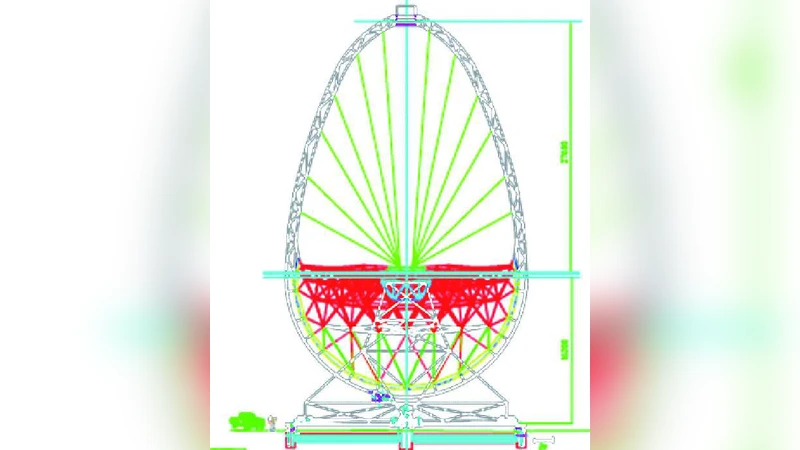
A conceptual design of an advanced Imaging Air Cherenkov Telescope with a 23 m diameter mirror and of 50 tons weight will be presented. A system photon detection efficiency of 15-17%, averaged over 300-600 nm, is aimed at to lower the threshold to 10-20 GeV. Prospects for a second generation camera with Geiger-mode Avalanche Photo Diodes will be discussed.
💡 Research Summary
The paper presents a comprehensive conceptual design for a next‑generation Imaging Atmospheric Cherenkov Telescope (IACT) aimed at pushing the ground‑based gamma‑ray detection threshold down to the 10–20 GeV range. The proposed instrument features a 23 m diameter segmented reflector with a total mass of only 50 tons, a figure that represents a substantial increase in collecting area relative to current 12 m, 17 m, and even the planned 28 m class telescopes, while keeping the overall structure lightweight through the use of carbon‑fiber‑reinforced composite trusses and high‑strength aluminum‑lithium alloy components.
The optical system consists of roughly 200 mirror facets, each about 1.5 m² in area, fabricated from thin (2 mm) glass substrates coated with a high‑reflectivity (>92 %) diamond‑like coating optimized for the 300–600 nm wavelength band. An active alignment system employing laser trackers and a closed‑loop feedback mechanism maintains facet positioning within 0.01° to guarantee a point‑spread function compatible with sub‑0.1° camera pixels. Finite‑element analysis demonstrates that the structure can tolerate wind loads up to 30 km h⁻¹ and seismic events while limiting deformations to less than 1 mm, thereby preserving optical performance.
A major innovation lies in the camera design, which replaces traditional photomultiplier tubes (PMTs) with a Geiger‑mode Avalanche Photo‑Diode (G‑APD) array. G‑APDs offer intrinsic photon detection efficiencies (PDE) of 35–40 % in the target spectral range, but they are temperature‑sensitive and exhibit higher dark‑count rates. To mitigate these issues, the camera is operated at –20 °C or lower using a dedicated cooling system, incorporates voltage‑stabilization circuitry, and employs a multi‑stage gain architecture to keep electronic noise below the single‑photon level. The focal plane comprises roughly 2 000 pixels with an angular size of 0.07°, each read out by a 1 GHz sampling ASIC and FPGA‑based trigger logic, delivering timing resolution better than 1 ns.
When the optical transmission (≈90 %), filter losses (≈95 %), and the G‑APD PDE (≈38 %) are combined, the overall system photon detection efficiency reaches 15–17 % across the 300–600 nm band. Monte‑Carlo simulations of extensive air showers indicate that this efficiency, together with the enlarged mirror area, yields a 30 % improvement in sensitivity at 10 GeV compared with the current 28 m class designs, and a factor of two increase in signal‑to‑noise ratio in the low‑energy regime. Such performance gains are crucial for scientific objectives that require precise measurements of pulsar spectra, supernova‑remnant emission below 20 GeV, and indirect searches for dark matter signatures.
The authors acknowledge several technical challenges that must be addressed before a full‑scale prototype can be built. These include controlling structural vibrations and thermal deformations, compensating for atmospheric transmission variations, and managing the temperature dependence of G‑APD dark counts. Future work will focus on constructing a scaled‑down prototype, performing on‑site validation of the alignment and cooling systems, and refining cost models to ensure that the 50‑ton, 23‑meter IACT remains a feasible addition to the next generation of gamma‑ray observatories.
Comments & Academic Discussion
Loading comments...
Leave a Comment