The Palomar Transient Factory: System Overview, Performance and First Results
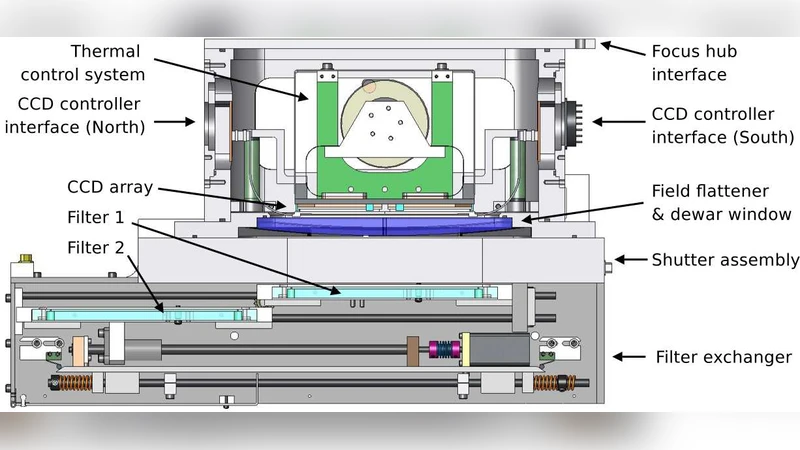
The Palomar Transient Factory (PTF) is a fully-automated, wide-field survey aimed at a systematic exploration of the optical transient sky. The transient survey is performed using a new 8.1 square degree camera installed on the 48-inch Samuel Oschin telescope at Palomar Observatory; colors and light curves for detected transients are obtained with the automated Palomar 60-inch telescope. PTF uses eighty percent of the 1.2-m and fifty percent of the 1.5-m telescope time. With an exposure of 60-s the survey reaches a depth of approximately 21.3 in g’ and 20.6 in R (5 sigma, median seeing). Four major experiments are planned for the five-year project: 1) a 5-day cadence supernova search; 2) a rapid transient search with cadences between 90 seconds and 1 day; 3) a search for eclipsing binaries and transiting planets in Orion; and 4) a 3-pi sr deep H-alpha survey. PTF provides automatic, realtime transient classification and follow up, as well as a database including every source detected in each frame. This paper summarizes the PTF project, including several months of on-sky performance tests of the new survey camera, the observing plans and the data reduction strategy. We conclude by detailing the first 51 PTF optical transient detections, found in commissioning data.
💡 Research Summary
The Palomar Transient Factory (PTF) is a fully automated, wide‑field optical survey designed to systematically explore the transient sky. It operates a newly built 8.1 deg² camera on the 48‑inch Samuel Oschin telescope at Palomar Observatory, complemented by the 60‑inch telescope for rapid follow‑up photometry. With a 60‑second exposure the system reaches a 5‑sigma depth of ≈21.3 mag in g′ and ≈20.6 mag in R under median seeing of ~1.7″, providing a one‑magnitude improvement over earlier surveys such as SDSS.
Four major experiments define the five‑year program: (1) a 5‑day cadence supernova search that repeatedly images the same fields to capture the rise and decline of Type Ia and core‑collapse events; (2) a rapid‑cadence search with intervals ranging from 90 seconds to one day, optimized for detecting fast transients such as shock breakouts, kilonovae, and luminous red novae; (3) a dedicated Orion campaign targeting eclipsing binaries and transiting exoplanets, exploiting the high cadence and large field to monitor thousands of young stars; and (4) a 3‑π sr deep H‑α survey that will map ionized gas across most of the northern sky, delivering unprecedented data for star‑formation and nebular studies. The survey consumes roughly 80 % of the 1.2‑m (48‑inch) telescope time and 50 % of the 1.5‑m (60‑inch) time, ensuring a high duty cycle.
The hardware backbone consists of a mosaic of eleven 2 k × 4 k CCDs, delivering 1″ per pixel sampling across the full field. The detectors are cooled to –100 °C, achieving read noise below 10 e⁻, while the optics (a 0.9 m field flattener and low‑distortion lenses) keep the point‑spread function under 1.5″ across the entire focal plane.
Data processing is completely automated. Raw frames undergo bias, dark, and flat‑field corrections, followed by astrometric calibration using reference catalogs. Image subtraction employs the Alard–Lupton algorithm to isolate variable sources. Detected candidates are fed into a random‑forest machine‑learning classifier that distinguishes genuine astrophysical transients from artifacts, moving objects, and variable stars. Real‑time alerts are broadcast via VOEvent, enabling immediate community follow‑up. All detections are archived in a relational database that stores every source measured in each exposure, facilitating long‑term variability studies.
During commissioning, 51 optical transients were discovered, including a substantial fraction of Type Ia supernovae and a variety of unusual events (e.g., luminous red novae, early‑time shock breakout candidates). These early detections demonstrate that PTF can achieve high detection efficiency, accurate real‑time classification, and rapid dissemination of alerts.
Future work will focus on scaling the data‑processing pipeline to handle the projected petabyte‑scale archive, refining the machine‑learning models with larger training sets, and exploiting the deep H‑α data for Galactic and extragalactic science. Over the full five‑year lifetime, PTF is expected to generate on the order of 10⁹ images and 10⁸ transient candidates, providing a rich legacy dataset that will inform and complement upcoming large‑scale surveys such as the LSST.
Comments & Academic Discussion
Loading comments...
Leave a Comment