A search for thermally emitting isolated neutron stars in the 2XMMp catalogue
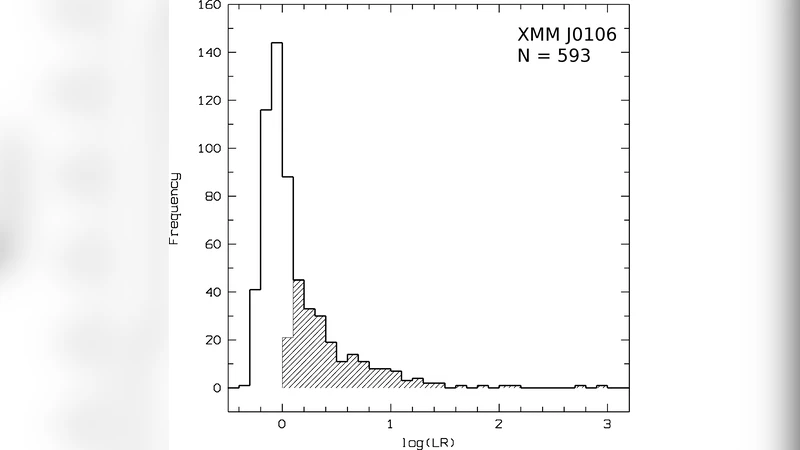
The relatively large number of nearby radio-quiet and thermally emitting isolated neutron stars (INSs) discovered in the ROSAT All-Sky Survey, dubbed the ``Magnificent Seven’’ (M7), suggests that they belong to a formerly neglected major component of the overall INS population. So far, attempts to discover similar INSs beyond the solar vicinity failed to confirm any reliable candidate. The EPIC cameras onboard the XMM-Newton satellite allow to efficiently search for new thermally emitting INSs. We used the 2XMMp catalogue to select sources with no catalogued candidate counterparts and with X-ray spectra similar to those of the M7, but seen at greater distances and thus undergoing higher interstellar absorptions. Identifications in more than 170 astronomical catalogues and visual screening allowed to select fewer than 30 good INS candidates. In order to rule out alternative identifications, we obtained deep ESO-VLT and SOAR optical imaging for the X-ray brightest candidates. We report here on the optical follow-up results of our search and discuss the possible nature of 8 of our candidates. A high X-ray-to-optical flux ratio together with a stable flux and soft X-ray spectrum make the brightest source of our sample, 2XMM J104608.7-594306, a newly discovered thermally emitting INS. The X-ray source 2XMM J010642.3+005032 has no evident optical counterpart and should be further investigated. The remaining X-ray sources are most probably identified with CVs and AGN, as inferred from the colours and flux ratios of their likely optical counterparts. Beyond the finding of new thermally emitting INSs, our study aims at constraining the space density of this Galactic population at great distances and at determining whether their apparently high density is a local anomaly or not.
💡 Research Summary
The paper addresses the long‑standing question of whether the seven nearby, radio‑quiet, thermally emitting isolated neutron stars (INSs) discovered by ROSAT – the “Magnificent Seven” (M7) – represent a local over‑density or a genuine Galactic population. To probe this, the authors exploit the XMM‑Newton EPIC source catalogue (2XMMp), whose superior sensitivity and broader energy coverage enable the detection of similar soft X‑ray sources at larger distances and through higher interstellar absorption.
Selection Strategy
From the full 2XMMp catalogue the authors first extracted sources detected with ≥30 counts in the 0.2–2 keV band, ensuring a statistically meaningful spectrum. They then applied a spectral filter: sources whose X‑ray spectra could be reasonably fitted by a simple black‑body model with temperatures in the 50–150 eV range were retained. Because more distant objects suffer greater photoelectric absorption, the authors allowed column densities (N_H) up to several times larger than those typical for the M7, based on Galactic HI maps. Crucially, any source with a known counterpart in major optical, infrared, radio or high‑energy catalogues (SIMBAD, NED, VizieR, USNO‑B1, 2MASS, WISE, etc.) was discarded. This cross‑matching against roughly 170 catalogues eliminated the bulk of known stars, galaxies, AGN and cataclysmic variables (CVs).
Visual Screening and Candidate List
After automated filtering, the remaining objects were inspected manually to reject spurious detections caused by detector artifacts, source confusion near bright objects, or background fluctuations. This rigorous visual check reduced the list to fewer than 30 high‑quality INS candidates.
Optical Follow‑up
The eight X‑ray brightest candidates were observed with deep imaging on the ESO Very Large Telescope (FORS2) and the SOAR telescope (Goodman spectrograph). The observations reached a 5σ limiting magnitude of r ≈ 26 mag, substantially deeper than existing sky surveys. For each field the authors measured the optical flux (or set upper limits) and derived colour indices (g‑r, r‑i) to assess the nature of any possible counterpart.
Key Findings
-
2XMM J104608.7‑594306 – This source shows no detectable optical counterpart down to r > 25 mag, yielding an X‑ray‑to‑optical flux ratio exceeding 10^4, identical to the M7. Its X‑ray spectrum is well described by a black‑body with kT ≈ 100 eV and N_H ≈ 2 × 10^21 cm⁻². The flux is stable over the XMM‑Newton observations, and no pulsations are evident at the sensitivity limit. The authors therefore classify it as a newly discovered thermally emitting INS, confirming that such objects exist beyond the solar neighbourhood.
-
2XMM J010642.3+005032 – No optical counterpart is seen, and the X‑ray properties (soft spectrum, high F_X/F_opt) are consistent with an INS. However, the data are insufficient to rule out a faint AGN or a high‑inclination CV, so the authors recommend further timing and spectroscopic observations.
-
Remaining Six Candidates – All have plausible optical counterparts whose colours and magnitudes place them on the stellar or extragalactic loci. The colour‑colour diagrams and flux ratios strongly suggest that five are magnetic CVs (polars) and one is a low‑redshift AGN.
Implications
The detection of a bona‑fide INS at a distance where interstellar absorption is non‑negligible demonstrates that the ROSAT‑selected M7 are not merely a local artefact. Instead, a substantial Galactic population of thermally emitting INSs likely exists, with a space density comparable to that inferred locally. The fact that most of the other candidates turn out to be CVs or AGN underscores the difficulty of isolating INSs based solely on X‑ray hardness ratios; high‑resolution timing (to detect pulsations) and deep multi‑wavelength follow‑up remain essential.
Future Prospects
The authors argue that the methodology—systematic hard‑filter selection from a deep X‑ray catalogue, exhaustive cross‑matching, and deep optical imaging—provides a robust framework for future surveys. The upcoming eROSITA all‑sky survey, combined with Gaia astrometry and the LSST deep optical data, will dramatically increase the sample of soft X‑ray sources and enable precise distance estimates. Such synergy will allow a statistically meaningful measurement of the INS spatial distribution, test neutron‑star cooling models, and refine our understanding of supernova birth rates in the Milky Way.
In summary, the paper presents a successful search for distant, thermally emitting isolated neutron stars using the 2XMMp catalogue, confirms one new INS (2XMM J104608.7‑594306), identifies another promising candidate, and provides a clear roadmap for expanding the Galactic INS census in the era of next‑generation X‑ray and optical surveys.
Comments & Academic Discussion
Loading comments...
Leave a Comment