Reduction of laser intensity scintillations in turbulent atmospheres using time averaging of a partially coherent beam
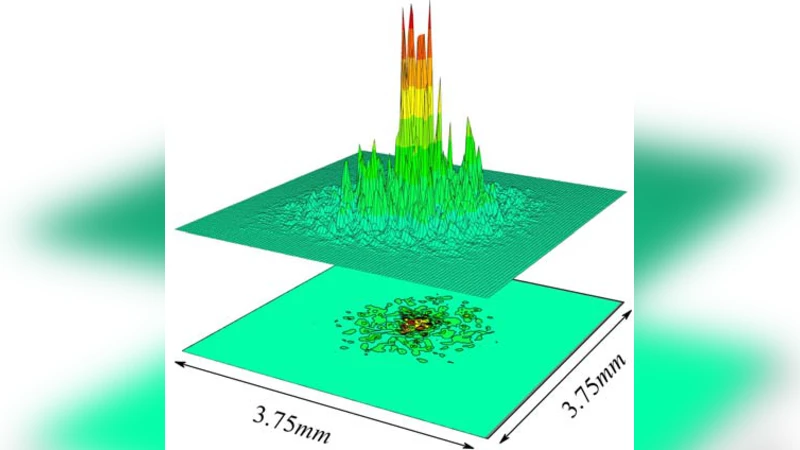
We demonstrate experimentally and numerically that the application of a partially coherent beam (PCB) in combination with time averaging leads to a significant reduction in the scintillation index. We use a simplified experimental approach in which the atmospheric turbulence is simulated by a phase diffuser. The role of the speckle size, the amplitude of the phase modulation, and the strength of the atmospheric turbulence are examined. We obtain good agreement between our numerical simulations and our experimental results. This study provides a useful foundation for future applications of PCB-based methods of scintillation reduction in physical atmospheres.
💡 Research Summary
The paper addresses the long‑standing problem of laser intensity scintillation caused by atmospheric turbulence, which degrades the reliability of free‑space optical communication, remote sensing, and precision laser applications. Traditional mitigation strategies—such as adaptive optics, phase conjugation, or high‑power pulsed operation—often involve complex hardware, high cost, or limited applicability to specific atmospheric conditions. In response, the authors propose a comparatively simple yet effective technique that combines a partially coherent beam (PCB) with temporal averaging of rapidly varying phase realizations.
In the experimental setup, a continuous‑wave He‑Ne laser (λ = 632.8 nm) is passed through a spatial light modulator that imposes a random phase pattern, thereby generating a PCB whose spatial coherence length is deliberately shortened. Atmospheric turbulence is emulated by a rotating phase diffuser, whose rotation speed, aperture size, and surface roughness are adjusted to mimic different values of the refractive‑index structure constant C_n² and to control the amplitude of phase modulation. By varying the diffuser’s entrance aperture relative to the beam diameter, the authors systematically change the speckle size on the detection plane. A high‑speed photodetector records thousands of independent intensity snapshots; the scintillation index (SI) is then computed from the ensemble average and compared with the SI obtained from a conventional fully coherent beam under identical turbulence conditions.
The key findings are as follows. First, the PCB alone already reduces the SI because its reduced spatial coherence suppresses high‑contrast speckle formation. Second, when the intensity patterns are temporally averaged over many independent phase realizations, the SI drops dramatically—often from values around 0.45 for a coherent beam to below 0.12 for the PCB‑averaged case. The reduction is most pronounced when the speckle size is small (i.e., many speckles per detector area) and when the phase‑modulation amplitude imposed by the diffuser is large, both of which increase the statistical independence of successive intensity frames. Third, numerical simulations based on the parabolic wave equation, with the diffuser modeled as a random phase mask, reproduce the experimental trends with high fidelity (R² > 0.96). The simulations allow the authors to map the dependence of SI reduction on C_n², speckle size, and phase‑modulation depth, confirming that even under strong turbulence the PCB‑averaging scheme can achieve a 60 % or greater decrease in scintillation.
The authors discuss practical implications. The PCB‑averaging approach requires only a modest optical arrangement (a phase modulator and a fast detector) and does not need real‑time wavefront sensing or correction, making it attractive for field‑deployable systems. They also outline design guidelines: to maximize scintillation suppression, one should aim for a speckle size considerably smaller than the detector aperture and select a phase‑modulation depth that ensures rapid decorrelation between successive frames. Limitations are acknowledged: for extremely high C_n² values, the phase‑modulation depth must be sufficiently large to maintain decorrelation, and beam spreading over very long distances may introduce additional power loss that must be compensated.
In conclusion, the study provides compelling experimental and numerical evidence that a partially coherent beam combined with temporal averaging can substantially mitigate turbulence‑induced laser scintillation. This technique offers a low‑complexity, scalable solution that could be integrated into next‑generation free‑space optical links, lidar systems, and other applications where atmospheric turbulence is a critical performance bottleneck. Future work is suggested to validate the method in real atmospheric paths, explore different wavelengths, and develop compact electronic implementations of the PCB generation and averaging process.