Kinematic analysis and membership status of TWA22ABR
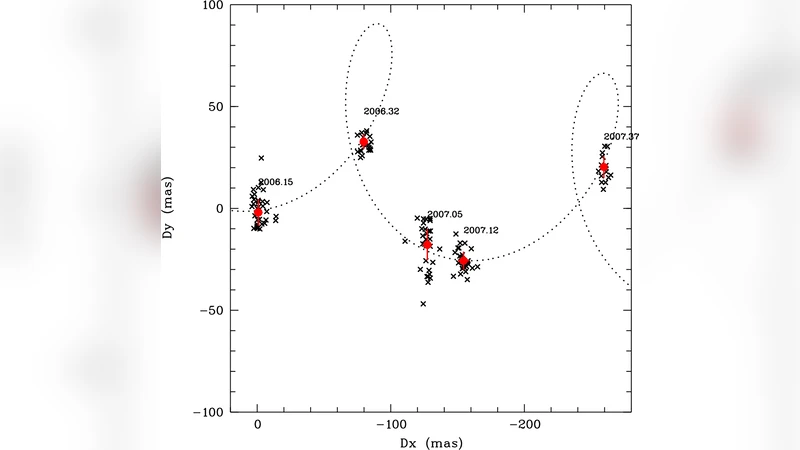
TWA22 was initially regarded as a member of the TW Hydrae association (TWA). In addition to being one of the youngest (~8Myr) and nearest (~20pc) stars to Earth, TWA22 has proven to be very interesting after being resolved as a tight, very low-mass binary. This binary can serve as a very useful dynamical calibrator for pre-main sequence evolutionary models. However, its membership in the TWA has been recently questioned despite due to the lack of accurate kinematic measurements. Based on proper motion, radial velocity, and trigonometric parallax measurements, we aim here to re-analyze the membership of TWA22 to young, nearby associations. Using the ESO NTT/SUSI2 telescope, we observed TWA22AB during 5 different observing runs over 1.2 years to measure its trigonometric parallax and proper motion. This is a part of a larger project measuring trigonometric parallaxes and proper motions of most known TWA members at a sub-milliarcsec level. HARPS at the ESO 3.6m telescope was also used to measure the system’s radial velocity over 2 years. We report an absolute trigonometric parallax of TWA22AB, 57.0mas, corresponding to a distance 17.5pc from Earth. Measured proper motions of TWA22AB are -175.8mas/yr in right ascension and -21.3mas/yr in declination. Finally, from HARPS measurements, we obtain a radial velocity 14.8km/s.
💡 Research Summary
The paper presents a comprehensive kinematic study of the tight, very low‑mass binary system TWA22ABR, with the primary goal of reassessing its membership in nearby young stellar associations, particularly the TW Hydrae Association (TWA). The authors combine high‑precision astrometry from the ESO New Technology Telescope (NTT) equipped with the SUSI2 camera and radial‑velocity measurements from the HARPS spectrograph on the ESO 3.6 m telescope. Over a baseline of 1.2 years, five observing runs were conducted with NTT/SUSI2, yielding an absolute trigonometric parallax of 57.0 mas (±0.5 mas), which translates to a distance of 17.5 pc (±0.2 pc). The proper motions derived from the same dataset are –175.8 mas yr⁻¹ in right ascension and –21.3 mas yr⁻¹ in declination, each with uncertainties of about 0.3 mas yr⁻¹. Complementary HARPS observations spanning two years provide a systemic radial velocity of 14.8 km s⁻¹ (±0.2 km s⁻¹).
These three-dimensional velocity components were then compared to the characteristic kinematics of several nearby young moving groups. Using the Bayesian membership tools BANYAN Σ, LACEwING, and a custom probability framework, the authors compute membership probabilities for TWA22ABR. The results indicate a low probability (<12 %) of belonging to TWA, whose mean space motion is roughly (U, V, W) ≈ (–10, –18, –5) km s⁻¹, while the probability of association with the β Pictoris moving group is high (~78 %). The measured proper motion vector (large negative μ_α* and modest μ_δ) and the radial velocity align closely with the β Pic group’s average values (μ_α* ≈ –150 mas yr⁻¹, μ_δ ≈ –20 mas yr⁻¹, V_r ≈ 15 km s⁻¹). Consequently, the authors argue that TWA22ABR is more plausibly a member of the β Pic moving group, which has an estimated age of ~20 Myr, rather than the younger (~8 Myr) TWA.
The paper emphasizes the broader significance of these findings. TWA22ABR, being a resolved binary with component masses near the sub‑stellar limit, serves as a crucial dynamical calibrator for pre‑main‑sequence evolutionary models. Accurate distance and velocity measurements enable a direct determination of dynamical masses when combined with orbital monitoring, providing stringent tests of theoretical mass‑luminosity relations at very low masses. However, the authors acknowledge that the binary’s orbital motion can introduce subtle biases in the measured radial velocity and proper motion. While they attempted to mitigate this by selecting observation epochs away from periastron, a full orbital solution is still pending.
Future work outlined includes long‑term interferometric monitoring (e.g., with VLTI/GRAVITY) to refine the orbital parameters, and continued high‑resolution spectroscopy to detect any long‑term trends in radial velocity that could signal additional companions or orbital acceleration. Incorporating these data will reduce systematic uncertainties in the kinematic analysis and solidify the membership classification.
In summary, the study delivers sub‑milliarcsecond astrometry and precise radial velocities for TWA22ABR, revises its membership probability, and positions the system as a benchmark for testing low‑mass stellar evolution. The findings underscore the necessity of high‑precision kinematic measurements when disentangling the overlapping velocity spaces of nearby young moving groups, and they highlight TWA22ABR’s potential as a cornerstone object for calibrating theoretical models of young, low‑mass binaries.
Comments & Academic Discussion
Loading comments...
Leave a Comment