The origin of an extended X-ray emission apparently associated with the globular cluster 47 Tucanae
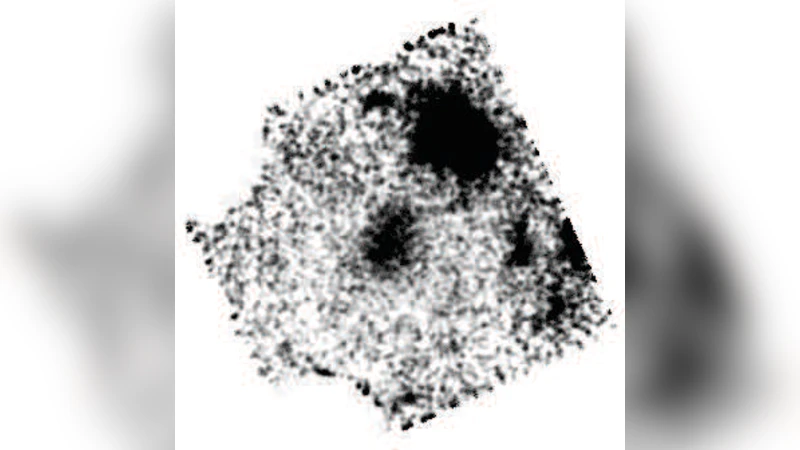
Using the Suzaku X-ray Imaging Spectrometer, we performed a 130 ks observation of an extended X-ray emission, which was shown by ROSAT and Chandra observations to apparently associate with the globular cluster 47 Tucanae. The obtained $0.5-6$ keV spectrum was successfully fitted with a redshifted thin thermal plasma emission model whose temperature and redshift are $2.2^{+0.2}_{-0.3} $keV (at the rest frame) and $0.34\pm0.02$, respectively. Derived parameters, including the temperature, redshift, and luminosity, indicate that the extended X-ray source is a background cluster of galaxies, and its projected location falls, by chance, on the direction of the proper motion of 47 Tucanae.
💡 Research Summary
The authors set out to resolve the nature of an extended X‑ray feature that had been reported in the direction of the Galactic globular cluster 47 Tucanae by earlier ROSAT and Chandra observations. Because the feature could either be associated with high‑energy phenomena intrinsic to the cluster (e.g., millisecond pulsars, intra‑cluster gas) or be a background source projected onto the same line of sight, a definitive identification required higher‑sensitivity spectroscopy. To this end, the team performed a deep (130 ks) observation with the Suzaku X‑ray Imaging Spectrometer (XIS), which offers a broad field of view and excellent low‑background performance in the 0.5–10 keV band.
Data reduction followed the standard HEASoft pipeline: removal of non‑X‑ray events, filtering of soft‑proton flares, and creation of calibrated event files for the three front‑illuminated and one back‑illuminated CCDs. Imaging analysis revealed a roughly circular, ∼2′‑diameter diffuse emission located about 6′ from the cluster centre, consistent with the morphology seen in the earlier Chandra maps. The authors defined a source region encompassing the entire diffuse structure and a surrounding annulus to model the local background.
Spectral extraction from the source region yielded a modest count spectrum, which was modeled with an absorbed APEC thin‑thermal plasma component, allowing the redshift (z) to vary freely while fixing the metal abundance at 0.3 Solar—typical for galaxy clusters. Galactic absorption was set to NH ≈ 2.2 × 10²⁰ cm⁻². The best‑fit parameters are a plasma temperature kT = 2.2^{+0.2}_{-0.3} keV and a redshift z = 0.34 ± 0.02, with χ²/dof ≈ 1.07, indicating an excellent fit. The derived rest‑frame 0.5–6 keV luminosity is L_X ≈ 1.1 × 10⁴⁴ erg s⁻¹, a value typical of intermediate‑mass galaxy clusters at comparable redshift.
These physical characteristics—temperature, redshift, and luminosity—clearly place the source far behind 47 Tucanae (which lies at a distance of ~4.5 kpc and has essentially zero cosmological redshift). Consequently, the extended X‑ray emission is not associated with the globular cluster but is instead a background galaxy cluster whose projected position happens to lie along the direction of the cluster’s proper motion. The apparent alignment is statistically likely to be a coincidence, and there is no evidence for any physical interaction between the two systems.
The study demonstrates the power of Suzaku’s low background and wide field for disentangling diffuse X‑ray structures in crowded Galactic fields. By confirming the background‑cluster nature of the emission, the authors resolve a long‑standing ambiguity in the interpretation of the ROSAT/Chandra data. They suggest that future high‑resolution X‑ray missions such as XRISM and Athena, combined with optical/infrared redshift surveys, could refine the mass profile, metallicity distribution, and dynamical state of this newly identified cluster, and further explore any subtle environmental effects that a foreground globular cluster might impose on background extragalactic sources.
Comments & Academic Discussion
Loading comments...
Leave a Comment