SPS: A software simulator for the Herschel-SPIRE photometer
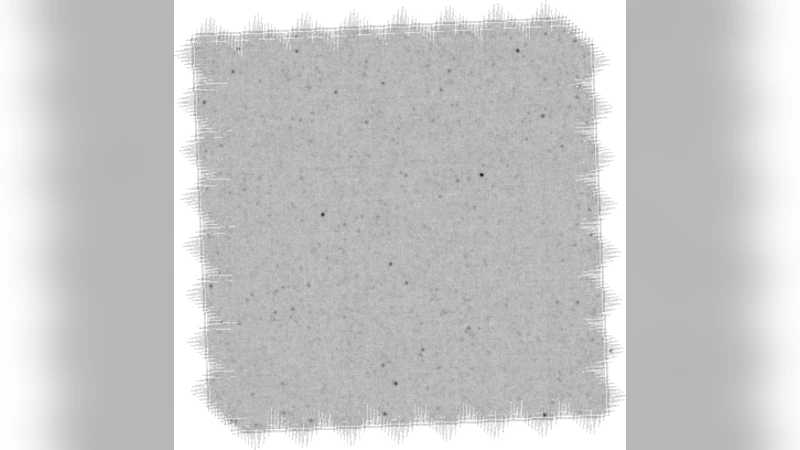
Instrument simulators are becoming ever more useful for planning and analysing large astronomy survey data. In this paper we present a simulator for the Herschel-SPIRE photometer. We describe the models it uses and the form of the input and output data. The SPIRE photometer simulator is a software package which uses theoretical models, along with flight model test data, to perform numerical simulations of the output time-lines from the instrument in operation on board the Herschel space observatory. A description of the types of uses of the simulator are given, along with information on its past uses. These include example simulations performed in preparation for a high redshift galaxy survey, and a debris disc survey. These are presented as a demonstration of the sort of outputs the simulator is capable of producing.
💡 Research Summary
The paper presents the SPIRE Photometer Simulator (SPS), a comprehensive software package designed to generate realistic time‑line data for the Herschel Space Observatory’s SPIRE photometer. The authors begin by emphasizing the growing importance of instrument simulators for planning large‑scale astronomical surveys, noting that accurate pre‑flight modeling can dramatically improve observing efficiency, data‑reduction pipeline development, and systematic‑error mitigation.
SPS is built around four hierarchical modules that together reproduce the full signal chain from astrophysical source to recorded voltage. The first module creates photon fluxes from user‑defined spectral energy distributions (SEDs), incorporating redshift, optical depth, and background emission. It supports multi‑component sources such as high‑redshift galaxies, galaxy clusters, and debris disks. The second module models the optical train of SPIRE, applying filter transmission curves, mirror reflectivity, and beam profiles derived from ground‑test measurements. By integrating flight‑model test data, the optical response is calibrated to reflect the true on‑orbit performance.
The third module simulates the detector and read‑out electronics. It implements a non‑linear Transition Edge Sensor (TES) model, including thermal capacity, bias‑feedback dynamics, and noise contributions (photon shot, white, and 1/f noise). Temperature‑dependent responsivity and voltage spikes caused by feedback loops are numerically solved, allowing the simulator to reproduce realistic drift and glitch behavior. The fourth module handles data acquisition, offering configurable sampling rates, compression ratios, and scan strategies (e.g., raster, spiral, cross‑scan). All parameters are exposed through a simple input schema based on FITS headers and auxiliary text files, enabling users to define scan speed, array rotation, overlap factor, and observation timeline.
Output from SPS consists of time‑ordered voltage streams accompanied by per‑sample metadata (sky coordinates, wavelength channel, and simulation stage identifiers) stored in standard FITS files. This format is directly ingestible by Herschel’s data‑processing environment (HIPE), allowing end‑to‑end testing of reduction pipelines, calibration routines, and map‑making algorithms without the need for real spacecraft data.
To demonstrate the simulator’s capabilities, the authors present two case studies. The first concerns a planned high‑redshift galaxy survey. By running SPS across a grid of scan patterns, overlap numbers, and detector bias settings, the team identified an observing strategy that meets the science requirement of ≈1 mJy sensitivity at 250 µm while preserving the nominal 18″ spatial resolution. The simulation also quantified the contribution of 1/f noise and detector non‑linearity, informing the design of post‑processing filters and non‑linearity corrections.
The second case study focuses on a debris‑disk (debris disc) survey, where faint, sub‑Jy structures must be distinguished from instrumental artifacts. SPS was used to inject realistic non‑linear detector responses and low‑frequency drifts into synthetic time‑lines. Comparison with actual flight data showed that the simulator accurately reproduces both the linear regime and the onset of non‑linearity, validating the correction algorithms applied during data reduction.
Key insights emerging from the work include: (1) the synergy of theoretical astrophysical models with empirical flight‑test data yields a simulator that captures both ideal and non‑ideal instrument behavior; (2) time‑line outputs enable direct propagation of systematic effects through the entire reduction chain, facilitating robust error budgeting; (3) the modular, parameter‑driven architecture allows rapid re‑configuration for different science cases, making SPS a versatile tool for both pre‑mission planning and post‑mission analysis; and (4) the design principles underlying SPS are readily transferable to future infrared and sub‑millimeter missions (e.g., JWST/MIRI, SPICA), suggesting a pathway toward a standardized simulation framework for space‑based photometry.
In conclusion, the SPIRE Photometer Simulator provides a high‑fidelity, end‑to‑end virtual instrument that bridges the gap between astrophysical source models and processed astronomical maps. Its successful application to real‑world survey designs demonstrates its value in optimizing observing strategies, validating data‑processing pipelines, and ultimately enhancing the scientific return of the Herschel mission. The authors advocate broader adoption of such simulators as essential components of modern astronomical mission development.
Comments & Academic Discussion
Loading comments...
Leave a Comment