An investigation of lucky imaging techniques
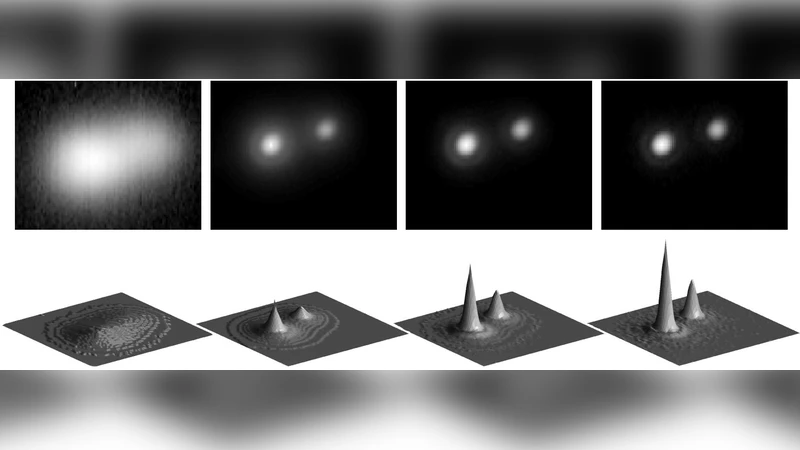
We present an empirical analysis of the effectiveness of frame selection (also known as Lucky Imaging) techniques for high resolution imaging. A high-speed image recording system has been used to observe a number of bright stars. The observations were made over a wide range of values of D/r0 and exposure time. The improvement in Strehl ratio of the stellar images due to aligning frames and selecting the best frames was evaluated as a function of these parameters. We find that improvement in Strehl ratio by factors of 4 to 6 can be achieved over a range of D/r0 from 3 to 12, with a slight peak at D/r0 ~ 7. The best Strehl improvement is achieved with exposure times of 10 ms or less but significant improvement is still obtained at exposure times as long as 640 ms. Our results are consistent with previous investigations but cover a much wider range of parameter space. We show that Strehl ratios of >0.7 can be achieved in appropiate conditions whereas previous studies have generally shown maximum Strehl ratios of ~0.3. The results are in reasonable agreement with the simulations of Baldwin et al. (2008).
💡 Research Summary
This paper presents a systematic, empirical evaluation of Lucky Imaging (frame‑selection) techniques for achieving high‑resolution ground‑based astronomical imaging. Using a high‑speed camera capable of recording hundreds of frames per second, the authors observed a set of bright stars under a wide range of atmospheric conditions, parameterized by the ratio of telescope aperture D to Fried’s coherence length r₀ (D/r₀) and by the exposure time of individual frames.
The methodology consists of three steps. First, all recorded frames are precisely aligned to a sub‑pixel accuracy using the stellar centroid as a reference, thereby removing tip‑tilt jitter. Second, a quality metric based on peak intensity relative to background noise is computed for each frame; the best N % of frames (where N is varied between 1 % and 10 %) are retained. Third, the selected frames are co‑added to produce a final image, and the Strehl ratio (SR) – the ratio of the observed peak intensity to that of an ideal diffraction‑limited point spread function – is used as the performance indicator.
The results show that significant Strehl improvements (factors of 4–6) are achievable across a broad D/r₀ range from 3 to 12. The improvement peaks near D/r₀ ≈ 7, indicating an optimal balance between telescope size and atmospheric coherence. Exposure time is a critical factor: frames shorter than 10 ms yield the highest SR gains because the atmospheric wavefront is effectively frozen, allowing the selection of truly “lucky” realizations. Nevertheless, even with exposure times as long as 640 ms, the technique still delivers measurable SR enhancements (≈0.3–0.5), demonstrating that occasional high‑quality wavefronts persist over longer integration periods.
Most strikingly, under optimal conditions the authors report Strehl ratios exceeding 0.7, far surpassing the ≈0.3 maxima reported in earlier experimental studies. This leap is attributed to the combination of a low‑noise, high‑frame‑rate detector and a refined alignment/selection pipeline. The empirical data are in good agreement with the numerical simulations of Baldwin et al. (2008), confirming that current Lucky Imaging models reliably predict real‑world performance.
The discussion acknowledges limitations: the test set consists mainly of bright stars (visual magnitude < 6) observed under relatively good seeing, so extrapolation to faint targets or poor atmospheric conditions requires further work. Moreover, the trade‑off between selection fraction and signal‑to‑noise ratio is highlighted – too aggressive a cut reduces photon statistics, while too lax a cut dilutes the quality gain.
In conclusion, the study validates Lucky Imaging as a powerful post‑processing technique for telescopes operating in the D/r₀ = 3–12 regime, especially near D/r₀ ≈ 7, and demonstrates that exposure times ≤10 ms are optimal for maximal Strehl improvement. The finding that useful gains persist even at several hundred milliseconds opens the possibility of applying the method on instruments lacking ultra‑fast detectors. Future work is suggested in three areas: (1) hybrid systems that combine Lucky Imaging with adaptive optics to push performance further, (2) optimization of selection algorithms for low‑light targets, and (3) real‑time implementation of frame ranking to enable on‑the‑fly data reduction. This comprehensive experimental survey thus expands the practical parameter space for Lucky Imaging and provides a solid benchmark for both observers and instrument designers.
Comments & Academic Discussion
Loading comments...
Leave a Comment