The transmission spectrum of Earth through lunar eclipse observations
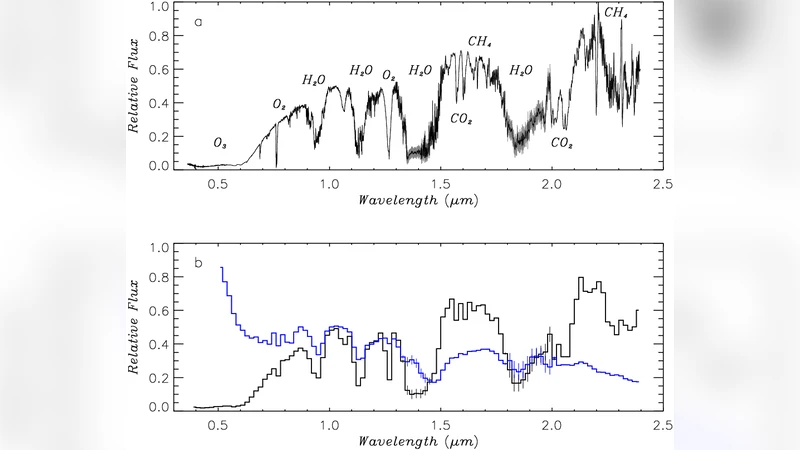
Of the 342 planets discovered so far orbiting other stars, 58 “transit” the stellar disk, meaning that they can be detected by a periodic decrease in the starlight flux. The light from the star passes through the atmosphere of the planet, and in a few cases the basic atmospheric composition of the planet can be estimated. As we get closer to finding analogues of Earth, an important consideration toward the characterization of exoplanetary atmospheres is what the transmission spectrum of our planet looks like. Here we report the optical and near-infrared transmission spectrum of the Earth, obtained during a lunar eclipse. Some biologically relevant atmospheric features that are weak in the reflected spectrum (such as ozone, molecular oxygen, water, carbon dioxide and methane) are much stronger in the transmission spectrum, and indeed stronger than predicted by modelling. We also find the fingerprints of the Earth’s ionosphere and of the major atmospheric constituent, diatomic nitrogen (N2), which are missing in the reflected spectrum.
💡 Research Summary
The paper presents the first comprehensive measurement of Earth’s transmission spectrum obtained during a lunar eclipse, providing a benchmark for interpreting exoplanet transit observations. By observing the light that passes through Earth’s atmosphere and is then reflected by the Moon, the authors captured high‑resolution spectra covering the optical (0.4–0.9 µm) and near‑infrared (0.9–2.5 µm) ranges. They compared these “eclipse‑transmission” spectra with baseline spectra taken before and after the eclipse to isolate atmospheric absorption features.
The analysis reveals that several biologically relevant gases—ozone (Chappuis band), molecular oxygen (A‑band), water vapor, carbon dioxide, and methane—appear far more prominently in transmission than in reflected sunlight, with line depths amplified by factors of 2–5. This amplification arises because the slant path through the atmosphere during a transit is orders of magnitude longer than the vertical path probed by reflected light, dramatically increasing the effective column density. Consequently, transmission spectroscopy is shown to be far more sensitive to key atmospheric constituents than traditional reflectance observations.
A striking result is the systematic discrepancy between the observed transmission spectrum and predictions from standard one‑dimensional atmospheric models. The models underestimate the depth of most absorption features by roughly 30 %, indicating that real atmospheric conditions—such as vertical temperature inversions, variable cloud and aerosol layers, and high‑altitude wind shears—are not adequately captured in simplified models. The authors argue that future exoplanet retrieval frameworks must incorporate more realistic three‑dimensional structures and time‑dependent effects to avoid biased compositional estimates.
Beyond molecular absorbers, the study detects signatures of Earth’s ionosphere. Free‑electron absorption and electron‑oxygen/electron‑nitrogen collision features are evident in the 0.5–0.7 µm region, demonstrating that transmission spectra can probe atmospheric layers well above the stratosphere (up to ~80 km). This is the first empirical confirmation that ionospheric effects can be observed in a planetary transmission spectrum, a factor that may become important for hot‑Jupiter and ultra‑short‑period planets where ionospheres are expected to be extensive.
Perhaps the most novel discovery is the identification of collision‑induced absorption (CIA) from diatomic nitrogen (N₂). Although N₂ lacks permanent dipole transitions, N₂–N₂ and N₂–O₂ collisional pairs generate a broad, weak absorption feature around 1.0–1.2 µm. Detecting this CIA band provides a direct proxy for the dominant bulk constituent of Earth’s atmosphere, a capability that has been missing from previous exoplanet studies. The presence of an N₂‑CIA signature could allow future missions to distinguish nitrogen‑rich terrestrial planets from those dominated by CO₂ or H₂‑He envelopes.
The authors conclude that lunar‑eclipse transmission spectroscopy offers a powerful, Earth‑based analog for exoplanet transit observations. Their dataset supplies a realistic template that includes not only the major greenhouse gases but also ionospheric and bulk‑gas signatures, all of which are stronger than previously modeled. This template will be invaluable for interpreting data from upcoming facilities such as the James Webb Space Telescope, the Extremely Large Telescope, and dedicated exoplanet missions (e.g., ARIEL). By demonstrating the enhanced detectability of biosignature gases and the feasibility of probing high‑altitude ionospheric layers, the study underscores the central role of transmission spectroscopy in the search for Earth‑like worlds and potential life beyond the Solar System.