A Flexible Quasioptical Input System for a Submillimeter Muliobject Spectrometer
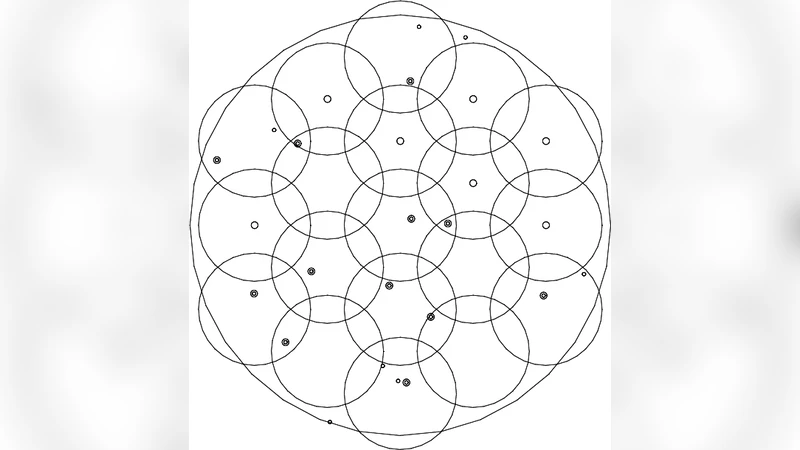
We present a conceptual design for the input optical system for a multi-object spectrometer operating at submillimeter wavelengths. The Mirror MOS is based on a sequence of mirrors that enables low-loss propagation of beams from selected positions distributed throughout the focal plane to the spectroscopic receiver inputs. This approach should be useful for observations of sources which have a relatively low density on the sky, for which it is inefficient to use a traditional array receiver with uniformly spaced, relatively closely packed beams. Our concept is based on assigning a patrol region to each of the receivers, which have inputs distributed over the focal plane of the telescope. The input to each receiver can be positioned at any point within this patrol region. This approach, with only 4 reflections, offers very low loss. The Gaussian beam optical system can be designed to produce frequency-independent illumination of the telescope, which is an important advantage for broadband systems such those required for determination of redshifts of submillimeter galaxies.
💡 Research Summary
The paper introduces a novel quasi‑optical input architecture, called the Mirror MOS (Multi‑Object Spectrometer), designed for sub‑millimeter wavelength multi‑object spectroscopy. Traditional multi‑pixel receiver arrays are optimized for densely packed sources; when the sky density of targets is low, many beams remain unused, reducing overall efficiency. Mirror MOS addresses this inefficiency by assigning each receiver a “patrol region” on the telescope focal plane. Within its patrol region, a receiver can accept a beam from any sky position, allowing flexible targeting of sparsely distributed objects.
The optical train consists of only four mirrors arranged in a sequential configuration. The first mirror captures the incoming beam from a selected focal‑plane location; the second redirects the beam to a vertical plane; the third and fourth mirrors bring the beam back to the focal plane and precisely focus it onto the receiver’s input aperture. Limiting the system to four reflections minimizes insertion loss and phase distortion, yielding a total transmission efficiency exceeding 90 % when each mirror surface is polished to λ/20 RMS roughness.
A Gaussian‑beam formalism underpins the design. By choosing waist parameters that are frequency‑independent, the system delivers the same illumination pattern across a broad band (approximately 200–900 GHz). This broadband, frequency‑flat illumination is crucial for applications such as redshift determination of sub‑millimeter galaxies, where a wide spectral window must be observed simultaneously. The beam’s waist size and curvature are carefully matched to the telescope optics, ensuring that the telescope is uniformly illuminated regardless of the observing frequency.
Patrol region geometry is optimized to maximize sky coverage while avoiding overlap between neighboring receivers. For a typical configuration with seven receivers, each patrol radius is set to roughly 1.5 times the beam diameter at the focal plane, allowing the combined patrol areas to cover more than 80 % of the focal surface without redundancy. This flexibility enables efficient observation of low‑density source fields, where a conventional fixed‑grid array would waste most of its beams.
Beam steering is achieved through high‑precision actuators (piezoelectric or stepper‑motor driven) that tilt the mirrors in real time based on target coordinates supplied by a control computer. The steering algorithm computes the optimal mirror angles that place the selected sky position within the receiver’s patrol region while minimizing mechanical motion and preventing collisions.
Thermal stability and alignment tolerance are also addressed. Mirror mounts are fabricated from low‑expansion materials (e.g., Invar) and equipped with temperature sensors that feed back to a closed‑loop control system, maintaining alignment over long observing runs in harsh environments such as high‑altitude sites.
Compared with fiber‑optic or waveguide delivery, the mirror‑based approach offers several advantages: lower loss, absence of frequency‑dependent attenuation, and the ability to preserve the full broadband signal. The simplicity of the four‑mirror layout also reduces maintenance complexity and facilitates integration with upcoming large‑aperture sub‑millimeter facilities (e.g., CCAT‑p, LMT, NOEMA).
In summary, the Mirror MOS concept provides a low‑loss, broadband‑compatible, and highly flexible input system for sub‑millimeter multi‑object spectrometers. By allowing each receiver to “patrol” a defined region of the focal plane, it dramatically improves observational efficiency for sparsely populated target fields and supports the demanding requirements of redshift surveys and molecular line studies in the sub‑millimeter regime.
Comments & Academic Discussion
Loading comments...
Leave a Comment