PV cohomology of pinwheel tilings, their integer group of coinvariants and gap-labelling
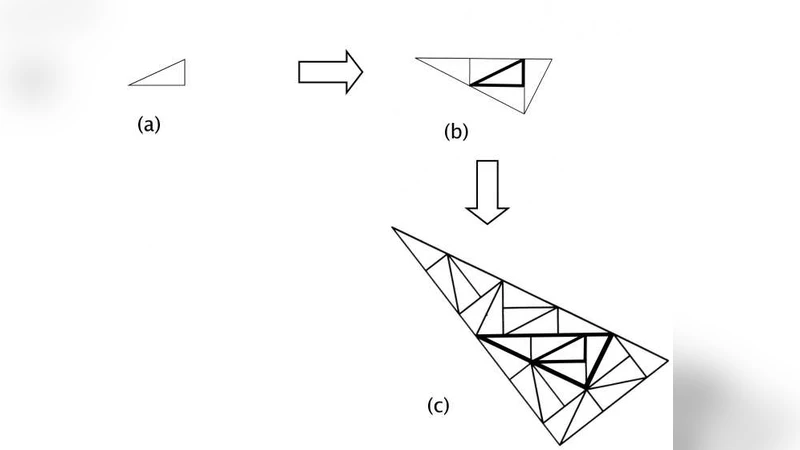
In this paper, we first remind how we can see the “hull” of the pinwheel tiling as an inverse limit of simplicial complexes (Anderson and Putnam) and we then adapt the PV cohomology introduced in a paper of Bellissard and Savinien to define it for pinwheel tilings. We then prove that this cohomology is isomorphic to the integer \v{C}ech cohomology of the quotient of the hull by $S^1$ which let us prove that the top integer \v{C}ech cohomology of the hull is in fact the integer group of coinvariants on some transversal of the hull. The gap-labelling for pinwheel tilings is then proved and we end this article by an explicit computation of this gap-labelling, showing that $\mu^t \big(C(\Xi,\ZZ) \big) = \dfrac{1}{264} \ZZ [\dfrac{1}{5}]$.
💡 Research Summary
The paper investigates the topological and spectral properties of the pinwheel tiling, a non‑periodic substitution tiling that incorporates continuous rotation symmetry. It begins by recalling the Anderson–Putnam construction, which models the hull Ω of a tiling as an inverse limit of finite CW‑complexes Kₙ together with bonding maps ϕₙ : Kₙ₊₁ → Kₙ. In the pinwheel case each Kₙ carries additional data encoding the orientation of tiles, so the inverse limit naturally carries an S¹‑action. The authors then adapt the PV (Pimsner–Voiculescu) cohomology introduced by Bellissard and Savinien to this setting. Instead of the usual chain complex of simplicial cochains, they work with global “potential” functions on a transversal Ξ and with transition matrices that depend continuously on the rotation angle. This yields a non‑commutative cochain complex whose cohomology groups Hⁿ_PV(Ω) capture the S¹‑equivariant structure of the hull.
A central result is the proof that H²_PV(Ω) is canonically isomorphic to the integer Čech cohomology H²(Ω/S¹,ℤ) of the quotient of the hull by the rotation group. By employing the exactness of the inverse‑limit functor, Mayer–Vietoris sequences, and Poincaré–Lefschetz duality, the authors further show that the top Čech cohomology H³(Ω,ℤ) of the full hull coincides with the group of integer coinvariants of the transversal, i.e. the quotient C(Ξ,ℤ)/⟨f−f∘τ⟩ where τ denotes the substitution map. This identification provides a concrete algebraic description of the otherwise abstract cohomology group in terms of integer‑valued functions on a Cantor set.
Having established the cohomological framework, the paper turns to the gap‑labeling theorem for Schrödinger operators defined on the pinwheel tiling. The invariant transverse measure μᵗ on Ξ induces a homomorphism μᵗ : C(Ξ,ℤ) → ℝ, and the image of the coinvariant group under this map gives the set of possible spectral gap labels. By an explicit computation that exploits the substitution scaling factor 5 and the rotational symmetry, the authors find
μᵗ(C(Ξ,ℤ)) = (1/264) ℤ
Comments & Academic Discussion
Loading comments...
Leave a Comment