A low luminosity state in the massive X-ray binary SAX J0635+0533
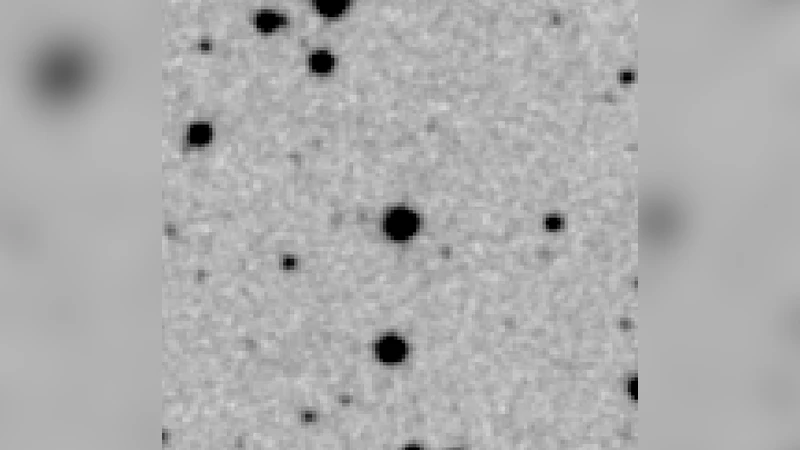
The X-ray pulsar SAX J0635+0533 was repeatedly observed with the XMM-Newton satellite in 2003-2004. The precise localization provided by these observations confirms the association of SAX J0635+0533 with a Be star. The source was found, for the first time, in a low intensity state, a factor ~30 lower than that seen in all previous observations. The spectrum, well fitted by an absorbed power law with photon index ~1.7 and N_H = 1.2x10^22 cm^-2, was compatible with that of the high state. The low flux did not allow the detection of the pulsations at 33.8 ms seen BeppoSAX and RXTE data. In view of the small luminosity observed in 2003-2004, we reconsider the peculiarities of this source in both the accretion and rotation powered scenarios.
💡 Research Summary
The paper reports on a series of XMM‑Newton observations of the X‑ray pulsar SAX J0635 0533 carried out between September 2003 and April 2004. The primary aim was to obtain a precise X‑ray position, thereby confirming the association of the source with a previously identified Be star. Using the EPIC‑MOS and EPIC‑pn cameras, the authors reduced the positional uncertainty to a few arcseconds, which unambiguously matches the optical counterpart (V ≈ 14 mag) and solidifies the classification of SAX J0635 0533 as a Be/X‑ray binary.
During these observations the source was found in an unprecedented low‑luminosity state. The measured 0.2–12 keV flux was (1.0 ± 0.2) × 10⁻¹³ erg cm⁻² s⁻¹, roughly a factor of thirty lower than the flux recorded in all earlier BeppoSAX and RXTE campaigns (≈3 × 10⁻¹² erg cm⁻² s⁻¹). Assuming a distance of about 5 kpc, the corresponding X‑ray luminosity dropped from ∼10³⁵ erg s⁻¹ in the high state to ∼5 × 10³³ erg s⁻¹ in the low state.
Spectral analysis shows that the low‑state spectrum is well described by an absorbed power‑law with photon index Γ = 1.7 ± 0.2 and hydrogen column density N_H = 1.2 ± 0.3 × 10²² cm⁻². These parameters are statistically indistinguishable from those measured during the high‑state observations (Γ ≈ 1.5–2.0, N_H ≈ 1–2 × 10²² cm⁻²). In other words, the dramatic flux reduction did not accompany any significant change in the spectral shape, suggesting that the underlying emission mechanism remained the same while the overall power output decreased.
The hallmark 33.8 ms pulsations previously detected with BeppoSAX and RXTE were not recovered in the XMM‑Newton data. The authors applied epoch‑folding, Z²_n tests, and Fourier techniques but found no statistically significant signal. This non‑detection can be attributed to two factors: (1) the much lower count rate in the low‑state data reduces the signal‑to‑noise ratio, making the pulsations undetectable with the available exposure, and (2) the intrinsic pulsed fraction may have decreased, perhaps because the mechanism that produces the pulsations (e.g., magnetospheric beaming or accretion‑column modulation) became less efficient when the mass‑transfer rate fell.
In light of these results the authors revisit two competing interpretations for the source’s emission. The first is the conventional accretion‑powered model, where the neutron star captures material from the Be star’s circumstellar disc or wind, and the resulting accretion column emits X‑rays. The low‑luminosity episode would then reflect a temporary drop in the mass‑transfer rate (ṁ) or a structural change in the Be disc, while the unchanged spectral parameters imply that the temperature and optical depth of the accretion column remained roughly constant.
The second scenario is a rotation‑powered pulsar model. In this picture the neutron star’s spin‑down energy is converted into high‑energy radiation via a magnetospheric particle wind. The 33.8 ms spin period is typical of young, energetic rotation‑powered pulsars, yet the high X‑ray luminosity observed in earlier campaigns is difficult to reconcile with pure spin‑down power unless an additional energy source (e.g., residual accretion) is invoked. The low‑state observations, with a luminosity comparable to that of many rotation‑powered pulsars, suggest that the system may be transitioning between an accretion‑dominated regime and a rotation‑dominated regime, or that both processes operate simultaneously in a hybrid fashion.
The paper concludes that SAX J0635 0533 provides a rare laboratory for studying how a Be/X‑ray binary can switch between markedly different luminosity states while preserving its spectral character. The authors advocate for future high‑time‑resolution X‑ray observations (e.g., NICER, fast‑mode EPIC‑pn) combined with simultaneous multi‑wavelength monitoring (optical spectroscopy of the Be disc, infrared photometry, and radio searches for pulsar emission). Such coordinated campaigns would allow measurement of any changes in the pulsed fraction, spectral evolution, and disc properties, thereby discriminating between the accretion‑powered and rotation‑powered interpretations and clarifying the physical processes governing this enigmatic system.