A joint spectro-imaging analysis of the XMM-Newton and HESS observations of the supernova remnant RX J1713.7-3946
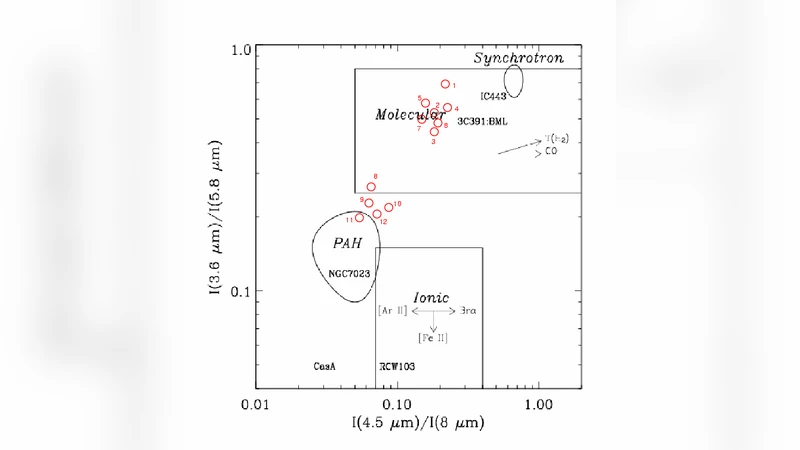
The supernova remnant (SNR) RX J1713.7-3946 (also known as G347.3-0.5) is part of the class of remnants dominated by synchrotron emission in X-rays. It is also one of the few shell-type SNRs observed at TeV energies allowing to investigate particle acceleration at SNRs shock. Our goal is to compare spatial and spectral properties of the remnant in X- and gamma-rays to understand the nature of the TeV emission. This requires to study the remnant at the same spatial scale at both energies. To complement the non-thermal spectrum of the remnant, we attempt to provide a reliable estimate for the radio flux density. In radio, we revisited ATCA data and used HI and mid-infrared observations to disentangle the thermal from the non-thermal emission. In X-rays, we produced a new mosaic of the remnant and degraded the spatial resolution of the X-ray data to the resolution of the HESS instrument to perform spatially resolved spectroscopy at the same spatial scale in X- and gamma-rays. Radial profiles were obtained to investigate the extension of the emission at both energies. We found that part of the radio emission within the SNR contours is thermal in nature. Taking this into account, we provide new lower and upper limits for the integrated synchrotron flux of the remnant at 1.4 GHz of 22 Jy and 26 Jy respectively. In X-rays, we obtained the first full coverage of RX J1713.7-3946 with XMM-Newton. The spatial variation of the photon index seen at small scale in X-rays is smeared out at HESS resolution. A non-linear correlation between the X- and gamma-ray fluxes of the type Fx \propto Fg^2.41 is found.
💡 Research Summary
The supernova remnant RX J1713.7‑3946 (also G347.3‑0.5) belongs to the rare class of shell‑type remnants whose X‑ray emission is dominated by synchrotron radiation, making it an ideal laboratory for studying particle acceleration at shock fronts. This paper presents a comprehensive, spatially matched analysis of X‑ray data from XMM‑Newton and very‑high‑energy (VHE) γ‑ray data from HESS, together with a re‑evaluation of the radio continuum flux using ATCA observations, HI 21 cm line maps, and mid‑infrared Spitzer images.
Radio re‑analysis. By cross‑checking the ATCA 1.4 GHz map with HI and mid‑IR data, the authors identified thermal (free‑free) emission components inside the SNR boundary, which had previously been mistakenly included in the synchrotron flux estimate. After removing these thermal contributions, the integrated non‑thermal radio flux at 1.4 GHz is constrained to lie between 22 Jy (lower limit) and 26 Jy (upper limit). This tighter range provides a more reliable anchor for the low‑energy end of the electron spectrum.
X‑ray mosaic and resolution matching. The authors assembled a new, full‑coverage XMM‑Newton mosaic of the remnant, totaling ~400 ks of exposure and providing unprecedented uniform coverage of the entire shell. To enable a direct pixel‑by‑pixel comparison with HESS, the X‑ray images were deliberately degraded to the HESS point‑spread function (~0.1°). The resulting data set allows spatially resolved spectroscopy on the same physical scale in both wavebands.
Spectral fitting and photon‑index mapping. In the original high‑resolution X‑ray maps, the photon index (Γ) varies locally between ≈2.0 and 2.8, reflecting changes in magnetic field strength, shock obliquity, or local turbulence. When the data are smoothed to HESS resolution, these variations are averaged out, yielding an almost uniform Γ≈2.4 across the shell. The γ‑ray spectra, extracted from the same HESS‑matched regions, are well described by a simple power law with a flux of order 10⁻¹² ph cm⁻² s⁻¹.
Non‑linear X‑ray/γ‑ray correlation. A key result is the discovery of a non‑linear relationship between the X‑ray and γ‑ray surface brightnesses: Fx ∝ Fg^2.41. This exponent significantly exceeds unity, indicating that the γ‑ray emission does not simply trace the same electron population responsible for the X‑ray synchrotron radiation. Instead, the data suggest that environmental factors—such as variations in ambient gas density, magnetic field amplification, or the relative contribution of hadronic (π⁰‑decay) versus leptonic (inverse‑Compton) processes—modulate the γ‑ray output more strongly than the X‑ray output.
Radial profile comparison. By constructing radial brightness profiles in both bands, the authors find that the γ‑ray emission extends ≈0.05° beyond the X‑ray rim, hinting at particle diffusion ahead of the shock or γ‑ray production in dense clumps located just outside the bright X‑ray shell.
Implications for particle acceleration. The combined findings support a scenario in which both electrons and protons (or heavier ions) are accelerated efficiently at the SNR shock, but their radiative signatures are shaped differently by local conditions. The smoothing of the photon‑index map at HESS resolution underscores the importance of high‑resolution X‑ray imaging for probing micro‑scale magnetic turbulence, while the non‑linear Fx–Fg scaling points to a complex, possibly density‑dependent, hadronic contribution to the VHE γ‑ray flux.
Future prospects. The authors argue that the methodology—matching spatial scales across wavebands and rigorously separating thermal from non‑thermal radio emission—sets a new standard for multi‑wavelength SNR studies. Upcoming facilities such as the Cherenkov Telescope Array (CTA) and the Square Kilometre Array (SKA) will provide finer angular resolution and sensitivity, allowing the non‑linear correlation to be tested on smaller scales and the relative leptonic/hadronic contributions to be disentangled more definitively.
In summary, this work delivers the first full‑coverage XMM‑Newton mosaic of RX J1713.7‑3946, refines the radio synchrotron flux estimate, demonstrates that X‑ray spectral variations are washed out at VHE resolution, and uncovers a strong, non‑linear X‑ray–γ‑ray flux relationship. These results deepen our understanding of how supernova remnants accelerate particles to TeV energies and how the resulting radiation is modulated by the surrounding interstellar environment.
Comments & Academic Discussion
Loading comments...
Leave a Comment