Earthshine observations of an inhabited planet
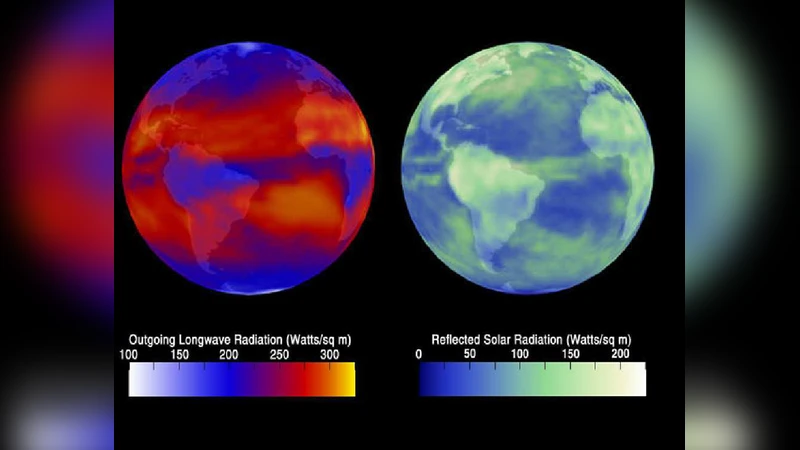
Earthshine is sunlight that has been reflected from the dayside Earth onto the dark side of the Moon and back again to Earth. In recent times, there has been renewed interest in ground-based visible and near-infrared measurements of earthshine as a proxy for exoplanet observations. Observations of earthshine allow us to explore and characterize the globally integrated photometric, spectral and polarimetric features of the Earth, and to extract precise information on the distinctive characteristics of our planet, and life in particular. They also allow us to quantify how this feature changes with time and orbital configuration. Here we present a brief review of the main earthshine observations and results.
💡 Research Summary
Earthshine—the sunlight reflected from Earth’s dayside onto the dark side of the Moon and back to an observer on Earth—offers a unique, globally integrated view of our planet. This paper reviews recent ground‑based observations in the visible and near‑infrared (NIR) that treat Earthshine as a proxy for future exoplanet measurements. By capturing the combined effects of atmosphere, oceans, land, and clouds in a single signal, Earthshine enables the extraction of photometric, spectroscopic, and polarimetric signatures that are directly relevant to the detection of habitable worlds and potential biosignatures.
The authors first outline the observational geometry: the Sun–Earth–Moon configuration creates a double‑reflection path that amplifies subtle planetary features while averaging over the entire illuminated hemisphere. Because the lunar dark side is a relatively uniform reflector, variations in the measured Earthshine are dominated by changes on Earth rather than lunar surface properties. This makes Earthshine an ideal “single‑pixel” analogue for an unresolved exoplanet.
Photometric results show that Earth’s Bond albedo fluctuates between ~0.29 and ~0.39 on daily, seasonal, and annual timescales. Cloud cover is the primary driver, accounting for more than 70 % of albedo variability; the remaining variation stems from the changing proportion of ocean, land, and ice visible to the Sun. Diurnal albedo swings of ~0.02 are linked to Earth’s rotation, while seasonal peaks occur during northern summer when continental ice retreat and increased vegetation boost reflectivity.
Spectroscopically, visible‑range (0.4–0.7 µm) Earthshine is dominated by Rayleigh scattering, producing a characteristic blue slope, and by strong atmospheric absorption bands of O₂ (0.76 µm), O₃ (0.6 µm Chappuis band), and H₂O. In the NIR (0.7–2.5 µm) the signal reveals water vapor bands at 1.13, 1.38, and 1.90 µm, as well as weaker features from CO₂ and CH₄. Of particular interest is the “red‑edge” – a sharp increase in reflectance around 0.7 µm associated with chlorophyll‑rich vegetation. When integrated over the whole planet, this feature appears as a modest but detectable slope change, offering a potential global biosignature.
Polarimetric measurements indicate linear polarization levels of 15–20 % in the visible, generated mainly by atmospheric Rayleigh scattering. The degree and angle of polarization vary with cloud particle size, phase angle, and surface type. Maximum polarization occurs at phase angles of 30–60°, a range that coincides with the most favorable observing windows for directly imaged exoplanets. The authors note a systematic ~5 % offset between ground‑based and satellite polarimeters, attributed to differences in viewing geometry and atmospheric path length.
Temporal analysis employs Fourier and wavelet techniques to separate three dominant variability components: (1) diurnal modulation from Earth’s rotation, (2) seasonal modulation driven by hemispheric insolation differences and vegetation cycles, and (3) interannual modulation linked to large‑scale climate phenomena such as El Niño–Southern Oscillation and anthropogenic albedo changes. Machine‑learning classifiers have been tested to identify patterns that could be misinterpreted as biosignatures, highlighting the need for robust statistical frameworks when extrapolating Earthshine results to exoplanet data.
The review then connects Earthshine findings to exoplanet science. Photometric phase curves derived from Earthshine provide benchmarks for interpreting reflected‑light light curves of Earth‑like planets observed with future missions such as LUVOIR, HabEx, and the Roman Space Telescope. Spectral signatures of O₂, O₃, H₂O, and CH₄, especially when detected simultaneously, form a “triple‑biosignature” that reduces false‑positive risk. Polarization adds an orthogonal diagnostic: the wavelength‑dependent polarization spectrum can help discriminate between cloudy, ocean‑dominated, and vegetated surfaces.
However, the authors acknowledge several limitations. The lunar phase strongly influences signal‑to‑noise; observations near new Moon suffer from low reflectance, while crescent phases introduce geometric biases. Anthropogenic light pollution and aerosol loading introduce subtle spectral contaminants that are not yet fully quantified. Current polarimeters lack the sensitivity to detect the faint polarization variations associated with specific vegetation types, limiting the ability to resolve finer biosignatures.
To overcome these challenges, the paper recommends a coordinated, long‑term Earthshine monitoring network that combines high‑resolution spectro‑polarimeters at multiple latitudes, satellite‑based Earthshine measurements, and possibly in‑situ lunar reflectance stations. Advances in detector technology (e.g., superconducting nanowire arrays) and data‑fusion algorithms will improve the retrieval of weak signals. The authors conclude that Earthshine, when systematically observed and rigorously modeled, offers an indispensable empirical foundation for the next generation of exoplanet characterization, bringing us closer to confidently identifying inhabited worlds beyond our Solar System.
Comments & Academic Discussion
Loading comments...
Leave a Comment