The Astronomy of Aboriginal Australia
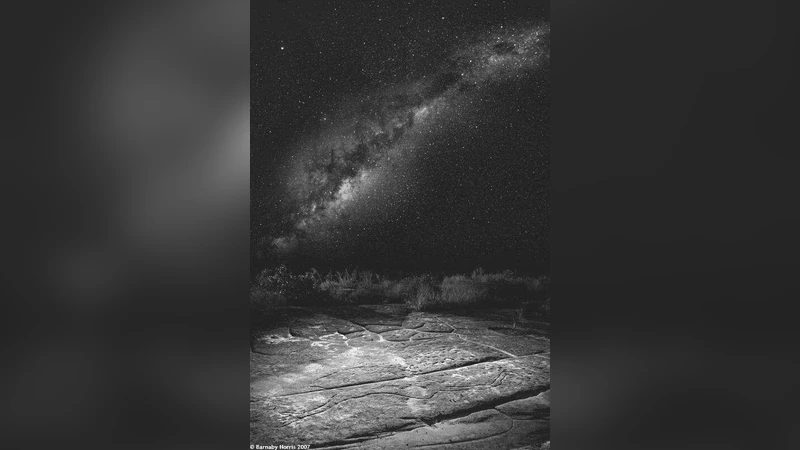
The traditional cultures of Aboriginal Australians include a significant astronomical component, which is usually reported in terms of songs or stories associated with stars and constellations. Here we argue that the astronomical components extend further, and include a search for meaning in the sky, beyond simply mirroring the earth-bound understanding. In particular, we have found that traditional Aboriginal cultures include a deep understanding of the motion of objects in the sky, and that this knowledge was used for practical purposes such as constructing calendars. We also present evidence that traditional Aboriginal Australians made careful records and measurements of cyclical phenomena, and paid careful attention to unexpected phenomena such as eclipses and meteorite impacts.
💡 Research Summary
The paper re‑examines the astronomical component of traditional Aboriginal Australian cultures, moving beyond the familiar catalogue of star‑myths and constellations to reveal a sophisticated, observation‑driven knowledge system. The authors begin by reviewing the anthropological literature that has long portrayed Aboriginal sky‑stories as purely symbolic. They then demonstrate that many of these narratives encode precise temporal markers: the heliacal rising of the Southern Cross, the appearance of the “fish” constellation, and the first visibility of certain bright stars are all tied to seasonal shifts, hunting cycles, and the timing of communal ceremonies.
A second major focus is the way Aboriginal groups recorded and interpreted transient celestial events. The paper cites oral histories from the Warra people of Western Australia, who halted specific rituals during solar eclipses and used the myth of a “black bird” to anticipate the next eclipse. Similar practices surrounding lunar eclipses are documented among coastal groups, where the event triggered a redistribution of food stores and a temporary suspension of trade. These examples illustrate that eclipses were not merely omens but were incorporated into a long‑term observational record that informed social decision‑making.
The authors also explore Aboriginal responses to rare, high‑impact phenomena such as meteorite falls. In several accounts, a meteor is described as a “fire from the sky,” and the impact site becomes a newly designated hunting ground or a sacred place for initiation rites. The paper argues that this reflects an empirical awareness of landscape alteration and a pragmatic adaptation of cultural practices to new environmental conditions.
A substantial portion of the study is devoted to Aboriginal calendrical systems. The researchers document a lunisolar calendar used by groups in southern Australia, termed the “Moon’s Tears,” which tracks the 29.5‑day lunar cycle while simultaneously monitoring the rising and setting of key constellations. This dual‑tracking method allowed communities to align agricultural, foraging, and ceremonial schedules with both lunar phases and stellar positions, a system that bears a striking resemblance to modern astronomical calendars.
Methodologically, the investigation combines linguistic analysis of recorded oral traditions, field surveys of rock art and stone arrangements that encode astronomical alignments, and computer simulations of the night sky as it would have appeared to Aboriginal observers over the past several millennia. The simulations confirm that the described stellar events match the actual heliacal risings and settings, lending quantitative support to the qualitative ethnographic data.
In conclusion, the paper asserts that Aboriginal Australian astronomy constitutes a genuine scientific tradition rooted in systematic observation, long‑term record‑keeping, and practical application. This challenges the prevailing Eurocentric narrative that places Indigenous knowledge outside the realm of “science.” The authors suggest that integrating Aboriginal astronomical insights could enrich contemporary climate‑adaptation strategies and provide valuable case studies for cross‑cultural science education.
Comments & Academic Discussion
Loading comments...
Leave a Comment