Particle acceleration in a reconnecting current sheet: PIC simulation
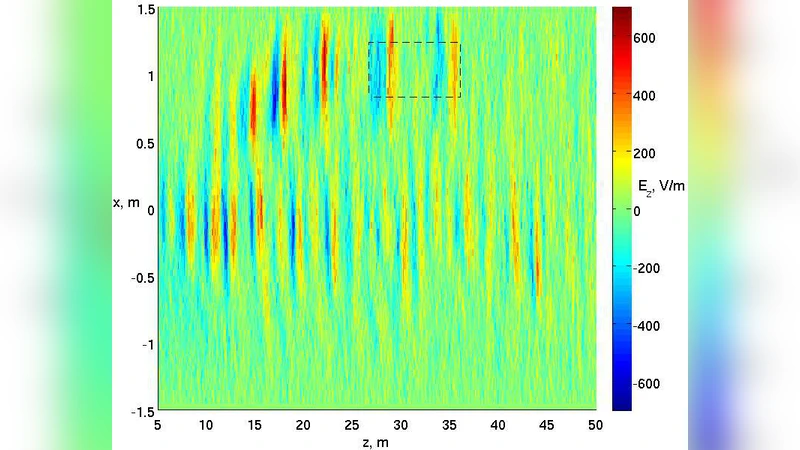
The acceleration of protons and electrons in a reconnecting current sheet (RCS) is simulated with a particle-in-cell (PIC) 2D3V code for the proton-to-electron mass ratio of 100. The electro-magnetic configuration forming the RCS incorporates all three components of the magnetic field (including the guiding field) and a drifted electric field. PIC simulations reveal that there is a polarisation electric field that appears during acceleration owing to a separation of electrons from protons towards the midplane of the RCS. If the plasma density is low, the polarisation field is weak and the particle trajectories in the PIC simulations are similar to those in the test particle (TP) approach. For the higher plasma density the polarisation field is stronger and it affects the trajectories of protons by increasing their orbits during acceleration. This field also leads to a less asymmetrical abundances of ejected protons towards the midplane in comparison with the TP approach. For a given magnetic topology electrons in PIC simulations are ejected to the same semispace as protons, contrary to the TP results. This happens because the polarisation field extends far beyond the thickness of a current sheet. This field decelerates the electrons, which are initially ejected into the semispace opposite to the protons, returns them back to the RCS, and, eventually, leads to the electron ejection into the same semispace as protons. Energy distribution of the ejected electrons is rather wide and single-peak, contrary to the two-peak narrow-energy distribution obtained in the TP approach. In the case of a strong guiding field, the mean energy of the ejected electrons is found to be smaller than it is predicted analytically and by the TP simulations.
💡 Research Summary
The paper presents a detailed particle‑in‑cell (PIC) investigation of proton and electron acceleration in a reconnecting current sheet (RCS). Using a 2‑dimensional, three‑velocity (2D3V) PIC code with a reduced proton‑to‑electron mass ratio of 100, the authors model a magnetic configuration that includes all three components of the magnetic field (Bx, By as a guide field, and Bz) together with a drift electric field directed along the sheet. Two plasma density regimes are examined: a low‑density case where the charge‑separation effect is negligible, and a high‑density case where a significant polarization electric field (Ep) develops due to the spatial separation of electrons and protons toward the sheet mid‑plane.
In the low‑density regime the particle trajectories closely follow those predicted by the test‑particle (TP) approach: protons are accelerated across the sheet and ejected into one semispace, while electrons are ejected into the opposite semispace, producing a strongly asymmetric outflow and a two‑peak, narrow energy spectrum for each species.
When the density is increased, the charge separation generates a robust Ep that points perpendicular to the sheet. This field acts in the same direction as the reconnection electric field for protons, enlarging their orbits and reducing the asymmetry of the proton outflow. For electrons, Ep initially decelerates those that would have been ejected opposite to the protons, pulling them back into the sheet. The electrons then experience the extended Ep region, are re‑accelerated, and ultimately leave the sheet in the same semispace as the protons. Consequently, the electron energy distribution becomes a single, broad peak rather than the twin narrow peaks seen in TP simulations, and the mean electron energy is lower than analytical predictions.
The authors also explore the impact of a strong guide field (large By). A strong guide field confines electron motion, further suppressing their acceleration. In this regime the simulated mean electron energy falls well below both the analytic estimate (based on the reconnection electric field and sheet thickness) and the TP results, highlighting the importance of the combined effects of guide field and polarization electric field.
Overall, the study demonstrates that plasma density and guide‑field strength critically modify particle dynamics in an RCS by introducing a self‑consistent polarization electric field that is absent in test‑particle models. This field reshapes proton trajectories, reduces outflow asymmetry, forces electrons to share the same ejection direction as protons, and broadens the electron energy spectrum. The findings have direct implications for interpreting particle acceleration in solar flares, magnetospheric substorms, and laboratory laser‑plasma experiments, where realistic plasma densities and guide fields are unavoidable. Incorporating the self‑generated polarization field into reconnection models is therefore essential for accurate predictions of energetic particle populations.
Comments & Academic Discussion
Loading comments...
Leave a Comment