The Science Case for PILOT I: Summary and Overview
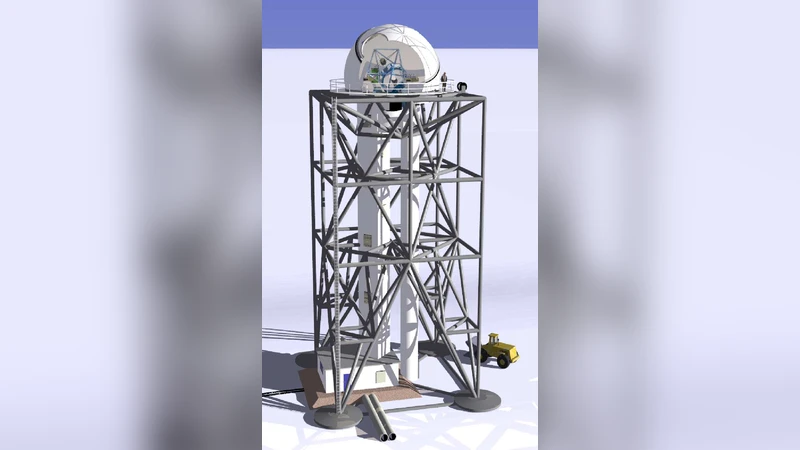
PILOT (the Pathfinder for an International Large Optical Telescope) is a proposed 2.5 m optical/infrared telescope to be located at Dome C on the Antarctic plateau. Conditions at Dome C are known to be exceptional for astronomy. The seeing (above ~30 m height), coherence time, and isoplanatic angle are all twice s good as at typical mid-latitude sites, while the water-vapour column, and the atmosphere and telescope thermal emission are all an order of magnitude better. These conditions enable a unique scientific capability for PILOT, which is addressed in this series of papers. The current paper presents an overview of the optical and instrumentation suite for PILO and its expected performance, a summary of the key science goals and observational approach for the facility, a discussion of the synergies between the science goals for PILOT and other telescopes, and a discussion of the future of Antarctic astronomy. Paper II and Paper III present details of the science projects divided, respectively, between the distant Universe (i.e., studies of first light, and the assembly and evolution of structure) and the nearby Universe (i.e., studies of Local Group galaxies, the Milky Way, and the Solar System).
💡 Research Summary
The paper presents a comprehensive case for the Pathfinder for an International Large Optical Telescope (PILOT), a 2.5‑meter optical/infrared facility proposed for Dome C on the Antarctic plateau. Dome C offers an unparalleled observing environment: above roughly 30 m the median seeing is about 0.3 arcsec—approximately twice as good as typical mid‑latitude sites—while the atmospheric coherence time and isoplanatic angle are also twice as large. The water‑vapor column is an order of magnitude lower, and both atmospheric and telescope thermal emission are reduced by roughly a factor of ten. These conditions translate into exceptionally low infrared background, high‑resolution imaging, and stable wavefronts, enabling scientific programs that are difficult or impossible elsewhere.
The instrument suite is built around a classic Cassegrain 2.5 m primary, feeding a suite of cameras and spectrographs covering 0.2–5 µm. A multi‑band optical/near‑IR imager, a low‑resolution spectrograph, a high‑resolution infrared spectrograph, and a photon‑counting detector for simultaneous optical‑IR observations are all planned. Cryogenic cooling and high‑QE detectors are designed to reach limiting magnitudes of ~28 AB in the optical and ~24 AB in the near‑IR for a one‑hour exposure, with a field of view large enough for efficient surveys.
Science goals are divided into two broad categories. The “distant Universe” program targets the epoch of first light and early structure formation: deep Lyman‑α searches for galaxies at z > 6, identification of high‑z supernovae and quasars, and three‑dimensional mapping of large‑scale filaments. The superb seeing and low infrared background at Dome C make it possible to conduct wide‑field, deep surveys while retaining the angular resolution needed for morphological studies and precise photometry. The “nearby Universe” program focuses on the Milky Way, Local Group galaxies, and Solar System objects. Continuous, year‑round visibility from the pole enables long‑baseline time‑domain studies of variable stars, transients, and moving objects, while the high spatial resolution permits detailed imaging of star‑forming regions, nebulae, and cometary comae.
Synergies with other facilities are emphasized. PILOT will complement smaller Antarctic telescopes (e.g., AST3, PLATO) by providing follow‑up imaging and spectroscopy of candidates identified in wide‑field surveys. It will also serve as a pathfinder for next‑generation 30‑meter class observatories (ELT, TMT, GMT), supplying target lists and pre‑characterization data. Coordination with space‑based missions such as JWST and Euclid will allow joint optical‑IR studies that exploit PILOT’s low background and high cadence capabilities.
Finally, the authors discuss the broader outlook for Antarctic astronomy. Sustainable operation requires robust power, communications, and data‑transfer infrastructure, as well as environmental safeguards. Remote, automated observatories and renewable energy sources are proposed to minimize the logistical footprint. The paper argues that establishing a permanent, 24‑hour, high‑performance observing platform at Dome C will open a unique scientific niche, fostering international collaboration and ensuring that the Antarctic plateau becomes a cornerstone of 21st‑century astrophysics.
Comments & Academic Discussion
Loading comments...
Leave a Comment