The evidence for and against astronomical impacts on climate change and mass extinctions: A review
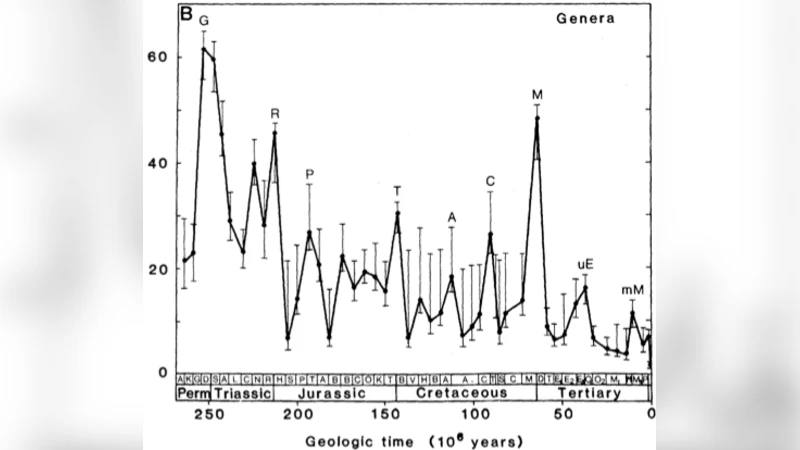
Numerous studies over the past 30 years have suggested there is a causal connection between the motion of the Sun through the Galaxy and terrestrial mass extinctions or climate change. Proposed mechanisms include comet impacts (via perturbation of the Oort cloud), cosmic rays and supernovae, the effects of which are modulated by the passage of the Sun through the Galactic midplane or spiral arms. Supposed periodicities in the fossil record, impact cratering dates or climate proxies over the Phanerozoic (past 545 Myr) are frequently cited as evidence in support of these hypotheses. This remains a controversial subject, with many refutations and replies having been published. Here I review both the mechanisms and the evidence for and against the relevance of astronomical phenomena to climate change and evolution. This necessarily includes a critical assessment of time series analysis techniques and hypothesis testing. Some of the studies have suffered from flaws in methodology, in particular drawing incorrect conclusions based on ruling out a null hypothesis. I conclude that there is little evidence for intrinsic periodicities in biodiversity, impact cratering or climate on timescales of tens to hundreds of Myr. Furthermore, Galactic midplane and spiral arm crossings seem to have little or no impact on biological or climate variation above background level. (truncated)
💡 Research Summary
The paper provides a comprehensive review of the hypothesis that the Sun’s motion through the Milky Way influences Earth’s climate change and mass‑extinction events. It begins by outlining the three principal astronomical mechanisms that have been proposed over the past three decades: (1) perturbations of the Oort cloud during Galactic mid‑plane or spiral‑arm crossings, leading to an increased flux of long‑period comets and impact events; (2) enhanced exposure to cosmic rays, gamma‑ray bursts, and supernova ejecta when the Solar System traverses regions of higher stellar density, potentially affecting atmospheric chemistry and cloud nucleation; and (3) variations in the Galactic magnetic field that could modulate the flux of high‑energy particles reaching Earth.
The author then surveys the empirical evidence that has been marshaled in support of these mechanisms, focusing on three main data streams: (i) the fossil record of biodiversity and extinction rates over the Phanerozoic, (ii) the chronology of impact craters on the terrestrial surface, and (iii) climate proxies such as stable‑isotope ratios, sedimentary facies, and paleotemperature reconstructions. Each of these records is examined for periodicities that might correspond to the Solar System’s ~30‑million‑year oscillation through the Galactic plane or its ~140‑million‑year spiral‑arm passages.
A critical part of the review is the methodological assessment of the time‑series analyses that have been employed. The paper points out that many earlier studies relied heavily on Fourier transforms, Lomb‑Scargle periodograms, or wavelet techniques without adequately accounting for uneven sampling intervals, dating uncertainties, and the non‑stationary nature of the underlying signals. The author emphasizes that rejecting a null hypothesis of “no periodicity” does not automatically validate a specific periodic model; proper model comparison using Bayesian evidence, Akaike or Bayesian information criteria, and posterior predictive checks is essential.
When the author re‑examines the claimed periodicities—most notably the 26–30 Myr, 62 Myr, and 140 Myr cycles—he finds that they are highly sensitive to the chosen time window, data selection, and detrending method. In many cases, the apparent peaks disappear when the full dataset is considered or when more realistic error models are applied. The paper also highlights the substantial uncertainties in impact‑crater dating (often ±5–10 Myr) and in fossil‑record chronostratigraphy, which make precise alignment with Galactic crossing times problematic.
The review concludes that, after accounting for methodological shortcomings and data uncertainties, there is little robust statistical evidence for intrinsic periodicities in biodiversity, impact frequency, or climate proxies on timescales of tens to hundreds of millions of years. Moreover, the timing of Galactic mid‑plane and spiral‑arm crossings does not appear to produce a signal that rises above the background variability driven by terrestrial processes such as volcanism, plate tectonics, sea‑level change, and greenhouse‑gas fluctuations. While astronomical events (e.g., nearby supernovae or gamma‑ray bursts) could in principle affect Earth’s environment, the magnitude of such effects is likely minor compared with the dominant Earth‑system drivers.
Finally, the author calls for future work that improves absolute dating precision, employs rigorous Bayesian hierarchical models, and integrates astronomical forcing into Earth‑system climate simulations. Only with such interdisciplinary, statistically sound approaches can the community definitively assess whether the cosmos plays a measurable role in Earth’s long‑term climate and biological evolution.
Comments & Academic Discussion
Loading comments...
Leave a Comment