Automated Detection and Tracking of Solar Magnetic Bright Points
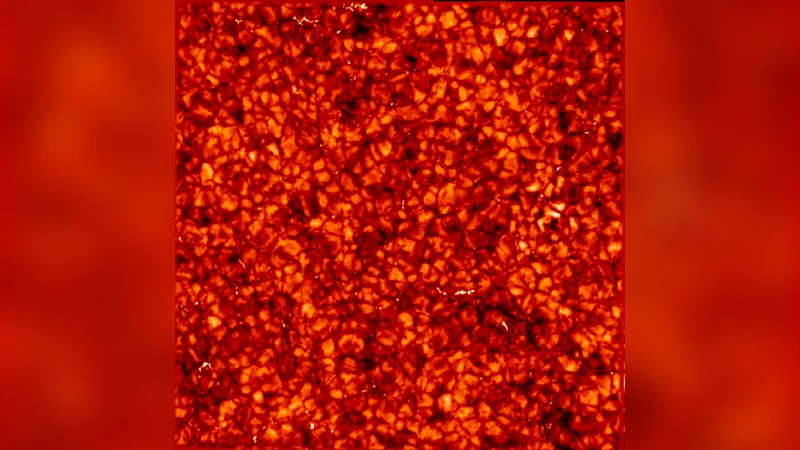
Magnetic Bright Points (MBPs) in the internetwork are among the smallest objects in the solar photosphere and appear bright against the ambient environment. An algorithm is presented that can be used for the automated detection of the MBPs in the spatial and temporal domains. The algorithm works by mapping the lanes through intensity thresholding. A compass search, combined with a study of the intensity gradient across the detected objects, allows the disentanglement of MBPs from bright pixels within the granules. Object growing is implemented to account for any pixels that might have been removed when mapping the lanes. The images are stabilized by locating long-lived objects that may have been missed due to variable light levels and seeing quality. Tests of the algorithm employing data taken with the Swedish Solar Telescope (SST), reveal that ~90% of MBPs within a 75"x 75" field of view are detected.
💡 Research Summary
The paper presents a fully automated pipeline for detecting and tracking Magnetic Bright Points (MBPs) in the solar photosphere, addressing the long‑standing challenge of identifying these sub‑arcsecond, high‑contrast features in large, high‑resolution data sets. MBPs are small (≈100 km), bright structures that trace intense magnetic flux tubes in the internetwork and play a crucial role in the transport of magnetic energy and the heating of the upper solar atmosphere. Traditional manual identification is labor‑intensive, subjective, and impractical for the terabytes of data now routinely produced by modern solar telescopes.
Data and Pre‑processing
The authors use G‑band (4305 Å) observations from the Swedish Solar Telescope (SST), which deliver a spatial resolution of ~0.1″ and a temporal cadence of 10 s over a 75″ × 75″ field of view (≈54 Mm × 54 Mm). Images are first corrected for atmospheric seeing using Multi‑Object Multi‑Frame Blind Deconvolution (MOMFBD), followed by a simple flat‑fielding and intensity normalization. This pre‑processing ensures that the subsequent intensity‑based steps are not biased by residual seeing artefacts.
Algorithm Overview
The detection pipeline consists of four tightly coupled stages:
-
Lane Mapping – The image is thresholded to isolate the dark intergranular lanes that surround MBPs. The threshold is not fixed; it is computed dynamically from the image mean and standard deviation, allowing the method to adapt to varying seeing conditions. Morphological operations (erosion, dilation, hole‑filling) are applied to produce a clean binary mask of the lanes.
-
Compass Search – For each bright pixel that lies inside a lane‑enclosed region, an 8‑directional (N, NE, E, SE, S, SW, W, NW) search checks whether the pixel is completely surrounded by lane pixels. This geometric test eliminates bright granule fragments that are not truly isolated by lanes, a common source of false positives in simpler intensity‑only methods.
-
Intensity Gradient Analysis – Candidate objects that survive the compass test are examined for a steep intensity gradient at their boundaries. Using Sobel operators, the gradient magnitude is computed along the object perimeter, and only those exceeding a pre‑determined gradient threshold are retained as MBPs. This step exploits the physical property that MBPs have a sharp brightness contrast with the surrounding dark lanes, whereas granule edges show a smoother transition.
-
Object Growing & Stabilization – Because the lane‑mapping step may have removed peripheral pixels that belong to an MBP, a controlled “growing” operation re‑adds neighboring pixels whose intensities are consistent with the MBP’s core. To handle temporal gaps caused by variable seeing or transient intensity dips, the authors implement a Kalman‑filter‑based tracker that predicts MBP positions in the next frame. If a predicted MBP is not found, the algorithm searches a small neighbourhood to recover missed detections, thereby stabilizing the time series.
Performance Evaluation
The authors benchmarked the pipeline against a manually curated catalog of ≈1500 MBPs within the same SST data set. The automated method achieved a detection rate of ~90 % overall and >95 % for long‑lived MBPs (lifetimes >5 min). The false‑positive rate remained below 5 %, with most spurious detections arising from granule edges that momentarily satisfied the gradient criterion. Missed MBPs were typically those with low contrast relative to the surrounding lanes, indicating a sensitivity limit tied to the chosen intensity threshold and gradient cut‑off.
Discussion and Future Work
The paper highlights several strengths: (i) high detection efficiency without manual tuning, (ii) robustness to moderate seeing variations due to the adaptive thresholding, and (iii) the ability to operate in near‑real‑time, which is essential for on‑the‑fly data quality monitoring. Limitations include sensitivity to very weak MBPs and the dependence on a single wavelength (G‑band) for contrast. The authors propose extending the method with machine‑learning classifiers that could learn optimal thresholds from labeled data, and incorporating multi‑spectral observations (e.g., Ca II K, Hα) to improve discrimination of magnetic features across atmospheric layers. Parallelization on GPU clusters is also suggested to handle the ever‑increasing data volumes from next‑generation facilities such as DKIST.
In conclusion, this work delivers a practical, well‑validated tool for the solar community, enabling large‑scale statistical studies of MBP dynamics, magnetic flux emergence, and their contribution to chromospheric heating. By automating a previously labor‑intensive task, the authors open the door to new science that leverages the full information content of high‑resolution solar imaging archives.
Comments & Academic Discussion
Loading comments...
Leave a Comment