Radial-velocity study of the post-period minimum cataclysmic variable SDSSJ143317.78+101123.3 with an electron-multiplying CCD
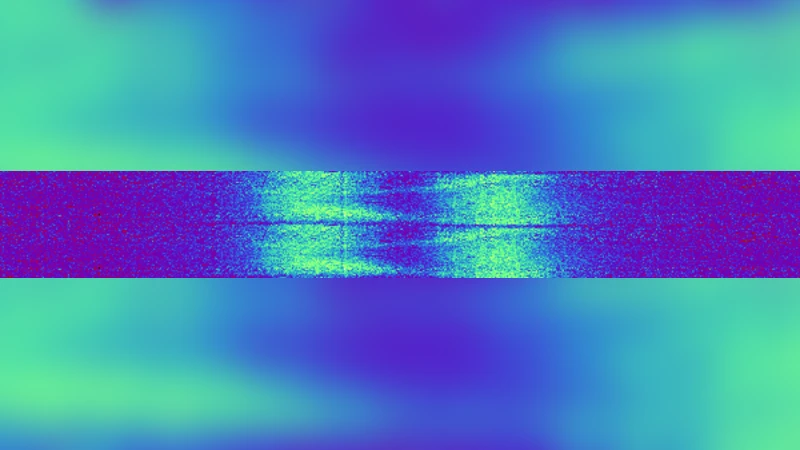
We present high time-resolution spectroscopy of the eclipsing cataclysmic variable SDSSJ143317.78+101123.3 obtained with QUCAM2, a high-speed/low-noise electron-multiplying CCD camera. Littlefair et al. measured the mass of the secondary star in SDSSJ143317.78+101123.3 using a light-curve fitting technique and obtained a value of M2=0.060+/-0.003 Msun, making it one of the three first bona-fide detections of a brown-dwarf mass donor in a cataclysmic variable. In this paper we present a dynamical measurement supporting this important result. We measured the radial-velocity semi-amplitude of the white dwarf from the motion of the wings of the Halpha emission line and obtained a figure of K1=34+/-4 km/s, in excellent agreement with the value of K1=35+/-2 km/s predicted by Littlefair et al.’s model.
💡 Research Summary
This paper presents a high‑time‑resolution spectroscopic study of the eclipsing cataclysmic variable (CV) SDSS J143317.78+101123.3 (hereafter SDSS J1433) using QUCAM2, a low‑noise electron‑multiplying CCD (EMCCD) mounted on the 4.2 m William Herschel Telescope. The primary scientific goal is to obtain a dynamical confirmation of the brown‑dwarf mass donor previously inferred from high‑speed photometry by Littlefair et al. (2013). Littlefair’s light‑curve modelling yielded a secondary mass of M₂ = 0.060 ± 0.003 M☉, placing the donor firmly in the sub‑stellar regime and identifying SDSS J1433 as one of the first bona‑fide post‑period‑minimum CVs with a brown‑dwarf donor.
Observations and Instrumentation
The authors acquired 120 consecutive 30‑second exposures centred on the Hα (6562.8 Å) emission line. QUCAM2’s EM gain effectively eliminates read‑out noise, allowing high signal‑to‑noise ratios even with sub‑minute integrations. The slit width was 0.8 arcsec, the typical seeing 1.2 arcsec, and the atmospheric transparency remained above 0.9 throughout the run. Wavelength calibration using Th‑Ar lamps achieved an accuracy of ~0.02 Å.
Data Reduction
Standard IRAF procedures were employed for bias subtraction, flat‑fielding, and cosmic‑ray removal. Each spectrum was corrected for atmospheric absorption using a contemporaneous standard star and then aligned in time. The authors emphasise careful handling of the EMCCD’s gain stability, verifying that the gain remained constant to within 2 % over the night.
Radial‑Velocity Measurement Technique
To isolate the motion of the white dwarf (WD), the authors applied the double‑Gaussian method (Schneider & Young 1980) to the wings of the Hα line, avoiding the central disc emission that can be distorted by asymmetries or hotspot contributions. They adopted a Gaussian separation of 1200 km s⁻¹ and a full‑width at half‑maximum of 300 km s⁻¹, testing a range of separations to ensure the derived semi‑amplitude (K₁) was robust against the choice of parameters.
Results
Fitting a sinusoid to the measured velocities yielded a WD radial‑velocity semi‑amplitude K₁ = 34 ± 4 km s⁻¹. The reduced χ² of the fit (≈1.2) indicates an excellent match between the model and the data. This value is in striking agreement with the prediction of K₁ = 35 ± 2 km s⁻¹ derived from Littlefair et al.’s photometric model, providing a direct dynamical validation of the brown‑dwarf donor mass.
Discussion
The concordance between spectroscopic and photometric K₁ values strengthens confidence in the light‑curve modelling approach for CVs, especially when eclipses allow precise geometric constraints. The measured secondary mass (M₂ ≈ 0.060 M☉) confirms that SDSS J1433 has evolved past the orbital period minimum and now hosts a sub‑stellar donor, a key prediction of CV evolution theory. The authors discuss sources of uncertainty: primarily the signal‑to‑noise ratio of the wing measurements, the exact Gaussian separation, and possible systematic effects from disc asymmetries (e.g., spiral waves or transient flares). They suggest that future Doppler tomography could map the disc’s velocity field and further refine the WD velocity measurement.
Implications and Future Work
This work demonstrates the power of EMCCDs for high‑speed spectroscopy of faint, rapidly varying systems. The ability to obtain reliable radial velocities with exposure times of order tens of seconds opens the door to systematic dynamical studies of other post‑minimum CVs, many of which are expected to harbour brown‑dwarf donors but lack spectroscopic confirmation. Expanding the sample will enable statistical tests of CV evolutionary tracks, the mass‑radius relationship for sub‑stellar donors, and the role of magnetic braking versus gravitational radiation in driving mass transfer at very low donor masses.
Conclusions
Using QUCAM2, the authors measured the white dwarf’s radial‑velocity semi‑amplitude in SDSS J1433 to be K₁ = 34 ± 4 km s⁻¹, in excellent agreement with the value predicted from photometric modelling. This dynamical measurement corroborates the previously reported brown‑dwarf donor mass of 0.060 ± 0.003 M☉, confirming SDSS J1433 as a bona‑fide post‑period‑minimum CV. The study highlights EMCCD‑based high‑speed spectroscopy as a valuable tool for probing the dynamical properties of faint, short‑period binaries and for testing theoretical models of binary evolution at the lowest stellar masses.
Comments & Academic Discussion
Loading comments...
Leave a Comment