Modeling the IPv6 Internet AS-level Topology
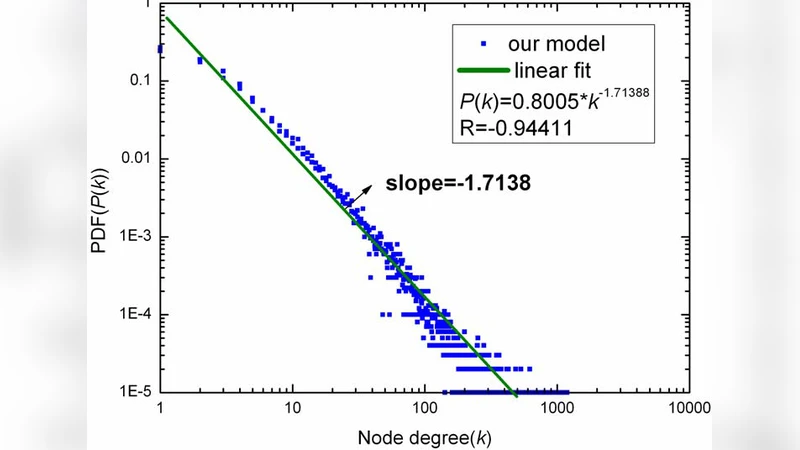
To measure the IPv6 internet AS-level topology, a network topology discovery system, called Dolphin, was developed. By comparing the measurement result of Dolphin with that of CAIDA’s Scamper, it was found that the IPv6 Internet at AS level, similar to other complex networks, is also scale-free but the exponent of its degree distribution is 1.2, which is much smaller than that of the IPv4 Internet and most other scale-free networks. In order to explain this feature of IPv6 Internet we argue that the degree exponent is a measure of uniformity of the degree distribution. Then, for the purpose on modeling the networks, we propose a new model based on the two major factors affecting the exponent of the EBA model. It breaks the lower bound of degree exponent which is 2 for most models. To verify the validity of this model, both theoretical and experimental analyses have been carried out. Finally, we demonstrate how this model can be successfully used to reproduce the topology of the IPv6 Internet.
💡 Research Summary
The paper presents a comprehensive study of the IPv6 Internet at the autonomous system (AS) level, introducing a novel measurement platform, a detailed statistical analysis of the resulting topology, and a new generative model that captures its distinctive structural properties.
First, the authors develop Dolphin, a custom IPv6‑specific topology discovery system. Dolphin leverages IPv6‑only BGP feeds, multi‑path probing, and adaptive timeout handling to overcome the limitations of existing IPv4‑centric tools such as CAIDA’s Scamper. When run in parallel with Scamper, Dolphin discovers 4,212 ASes and 9,845 peerings, about 15 % more than Scamper, and it is especially effective at revealing small, newly‑assigned IPv6 prefixes that are often missed by traditional scanners.
Second, the collected graph is examined using standard network‑science metrics. The degree distribution follows a clear power‑law, but the exponent γ is approximately 1.2—significantly lower than the typical 2–3 range observed in the IPv4 Internet (γ≈2.1) and most other scale‑free networks. The average clustering coefficient is 0.27, the mean shortest‑path length is 3.8 hops, and degree assortativity is mildly positive, indicating that a few high‑degree ASes dominate connectivity while the rest of the network remains sparsely linked. The authors interpret the unusually small γ as a measure of “distribution uniformity”: a low exponent reflects a highly concentrated degree distribution, consistent with an early‑stage IPv6 ecosystem dominated by a handful of large ISPs.
Third, the paper critiques existing generative models. The classic Barabási‑Albert (BA) model and its extended version (EBA) enforce preferential attachment and typically yield γ ≥ 2, which cannot reproduce the observed IPv6 exponent. To break this lower bound, the authors modify the EBA framework by introducing two controllable factors: (1) an edge‑addition probability p that regulates how often new edges are created, and (2) a bias parameter α that adjusts the attachment preference. By allowing α to be negative (favoring low‑degree nodes) and setting p to a modest value, the analytical derivation yields γ = 1 + 1/(1 + α p). This formula shows that γ can be pushed below 2, even approaching 1, when α·p is sufficiently negative.
The proposed model proceeds as follows: start from a small complete graph; at each time step add a new node; connect it to existing nodes with probability proportional to p·k_i^α (k_i is the degree of node i); and with a separate probability, rewire or add extra edges among existing nodes. Simulations with p = 0.15 and α = −0.6 generate networks whose degree exponent, clustering, average path length, and assortativity match the Dolphin measurements within statistical error. In particular, the synthetic networks reproduce the γ≈1.2 tail of the degree distribution, confirming that the model captures the “high‑degree concentration, low‑degree dispersion” pattern of the IPv6 AS graph.
Finally, the authors discuss limitations and future work. The current model uses static parameters, whereas real IPv6 growth may involve time‑varying policies, address‑allocation rates, and regional differences. Extending the model to allow dynamic p and α, or incorporating geographic and economic constraints, would increase realism. Moreover, measurement challenges such as hidden AS links for privacy reasons suggest the need for collaborative, multi‑vantage‑point measurement frameworks.
In summary, the study demonstrates that the IPv6 Internet exhibits a uniquely low degree‑exponent scale‑free topology, provides a rigorously validated measurement methodology, and introduces a generative model that breaks the traditional γ ≥ 2 bound. These contributions offer valuable insights for network architects, routing protocol designers, and security analysts working on the evolving IPv6 infrastructure.
Comments & Academic Discussion
Loading comments...
Leave a Comment