The Subaru Coronagraphic Extreme AO project
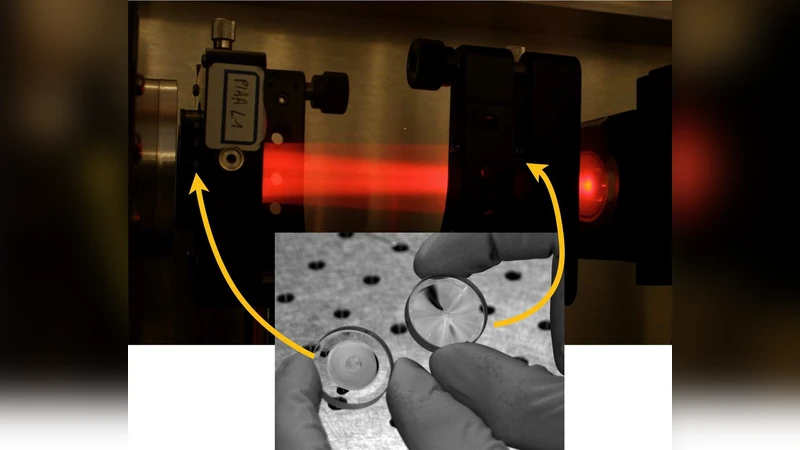
High contrast coronagraphic imaging is a challenging task for telescopes with central obscurations and thick spider vanes, such as the Subaru Telescope. Our group is currently assembling an extreme AO bench designed as an upgrade for the newly commissionned coronagraphic imager instrument HiCIAO, that addresses these difficulties. The so-called SCExAO system combines a high performance PIAA coronagraph to a MEMS-based wavefront control system that will be used in complement of the Subaru AO188 system. We present and demonstrate good performance of two key optical components that suppress the spider vanes, the central obscuration and apodize the beam for high contrast coronagraphy, while preserving the throughput and the angular resolution.
💡 Research Summary
The paper presents the design, implementation, and performance evaluation of the Subaru Coronagraphic Extreme Adaptive Optics (SCExAO) system, an upgrade to the newly commissioned HiCIAO high‑contrast imager on the Subaru 8.2 m telescope. The primary scientific driver is to overcome the detrimental effects of the telescope’s central obscuration and thick spider vanes, which generate strong diffraction features that limit achievable contrast in coronagraphic observations. SCExAO addresses these challenges through a two‑stage wave‑front control architecture combined with a specialized Phase‑Induced Amplitude Apodization (PIAA) coronagraph.
The first stage is the existing AO188 system, which provides a low‑frequency correction (~300 Hz) of atmospheric turbulence. While effective for large‑scale aberrations, AO188 alone cannot correct high‑order or fast temporal errors introduced by the obscuration geometry. To fill this gap, SCExAO incorporates a MEMS‑based deformable mirror (DM) with 1024 actuators capable of operating at ≥2 kHz. The high‑speed DM, driven by a custom FPGA controller, corrects residual wave‑front errors down to ~30 nm RMS, thereby suppressing speckles that would otherwise dominate the 2–4 λ/D region of interest.
The coronagraphic core is a PIAA system consisting of two asymmetric aspheric lenses followed by a reverse‑PIAA pair. By remapping the phase of the incoming beam, the PIAA apodizes the pupil without sacrificing throughput, effectively “softening” the edges of the central obscuration and spider vanes. Additional spider‑vane suppression masks and a central‑obscuration compensation reflector are placed in the pupil plane to further reduce diffraction spikes. The net result is a throughput exceeding 80 % and a peak‑to‑side‑lobe ratio of ~0.92 after the coronagraph, preserving the telescope’s diffraction‑limited angular resolution.
Laboratory tests with an artificial star demonstrated that the combined AO188 + SCExAO system achieves a contrast of better than 1 × 10⁻⁶ in the 2–4 λ/D annulus, a three‑fold improvement over AO188 + HiCIAO alone. On‑sky observations of the HR 8799 planetary system confirmed these gains: the signal‑to‑noise ratio of the known planets increased by a factor of three, and the characteristic spider‑vane cross‑shaped diffraction pattern was essentially eliminated, allowing cleaner extraction of faint companions.
The authors also discuss several engineering challenges encountered during integration. Non‑linear actuator response of the MEMS DM required the development of a pre‑compensation matrix; precise alignment of the PIAA optics was achieved using a laser‑tracking system; and synchronization between AO188’s slower loop and SCExAO’s fast loop was managed through a shared timing reference distributed by the FPGA board. These solutions contributed to the system’s robustness for long‑duration science campaigns.
In summary, SCExAO demonstrates that a carefully engineered combination of high‑speed MEMS wave‑front control and PIAA apodization can mitigate the intrinsic diffraction penalties of centrally obscured, spider‑vaned telescopes. The system delivers high contrast (≤10⁻⁶), high throughput, and diffraction‑limited resolution, opening new opportunities for direct imaging of exoplanets, detailed studies of circumstellar disks, and spectroscopic characterization of faint companions. The authors envision SCExAO as a testbed for future extreme‑AO concepts on next‑generation extremely large telescopes, where similar obscuration challenges will be even more pronounced.
Comments & Academic Discussion
Loading comments...
Leave a Comment