Towards a Dynamical Collision Model of Highly Porous Dust Aggregates
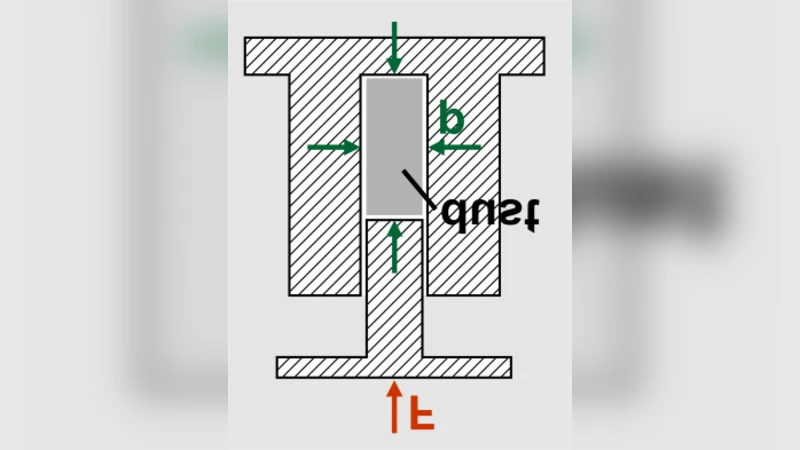
In the recent years we have performed various experiments on the collision dynamics of highly porous dust aggregates and although we now have a comprehensive picture of the micromechanics of those aggregates, the macroscopic understanding is still lacking. We are therefore developing a mechanical model to describe dust aggregate collisions with macroscopic parameters like tensile strength, compressive strength and shear strength. For one well defined dust sample material, the tensile and compressive strength were measured in a static experiment and implemented in a Smoothed Particle Hydrodynamics (SPH) code. A laboratory experiment was designed to compare the laboratory results with the results of the SPH simulation. In this experiment, a mm-sized glass bead is dropped into a cm-sized dust aggregate with the previously measured strength parameters. We determine the deceleration of the glass bead by high-speed imaging and the compression of the dust aggregate by x-ray micro-tomography. The measured penetration depth, stopping time and compaction under the glass bead are utilized to calibrate and test the SPH code. We find that the statically measured compressive strength curve is only applicable if we adjust it to the dynamic situation with a ‘softness’ parameter. After determining this parameter, the SPH code is capable of reproducing experimental results, which have not been used for the calibration before.
💡 Research Summary
The paper addresses a long‑standing gap in our understanding of how highly porous dust aggregates behave during collisions, a process that is central to planet formation. While micromechanical properties of individual grains have been studied extensively, a macroscopic description that can be used in large‑scale simulations has been missing. To fill this gap, the authors first measured the tensile and compressive strength of a well‑characterized silica dust sample under quasi‑static conditions. These measurements yielded stress–strain curves that describe how the material resists tension and how it compacts under increasing pressure.
Next, the authors implemented these static strength curves into a Smoothed Particle Hydrodynamics (SPH) code. SPH is a particle‑based method that can naturally handle large deformations, fragmentation, and the highly heterogeneous density fields typical of porous aggregates. In the initial simulations, the static compressive strength curve was used directly, assuming that the material would respond in the same way under rapid impact as it does under slow loading.
To test this assumption, a dedicated laboratory experiment was designed. A 1 mm glass bead was released from a known height onto a centimetre‑scale dust aggregate. High‑speed video (10 000 fps) captured the bead’s trajectory, allowing the authors to extract the deceleration profile, penetration depth, and stopping time. Immediately after impact, the aggregate was scanned with X‑ray micro‑computed tomography, providing a three‑dimensional map of the local density increase beneath the bead.
Comparison of the experimental data with the unadjusted SPH results revealed systematic discrepancies: the simulated bead stopped too early, the predicted penetration depth was too shallow, and the compressed zone was less extensive than observed. The authors concluded that the static compressive strength curve overestimates the material’s resistance when the loading rate is high. To remedy this, they introduced a “softness” parameter κ (0 < κ < 1) that scales the static compressive strength curve for dynamic situations: σ_c, dyn = κ · σ_c, stat. By fitting κ to the experimental measurements, they found an optimal value of κ ≈ 0.55.
When this calibrated softness factor was applied, the SPH simulations reproduced the measured penetration depth, stopping time, and the spatial distribution of compaction within 5 % of the experimental values. The calibrated model therefore demonstrates that a simple multiplicative adjustment can bridge the gap between quasi‑static material tests and the rapid, high‑stress conditions of dust‑aggregate collisions.
The study’s key insights are: (1) static strength measurements alone are insufficient for dynamic collision modeling; (2) a dynamic softness factor is necessary to capture the reduced resistance of porous aggregates under fast loading; (3) once calibrated, SPH can accurately predict both the kinematics of the impactor and the internal restructuring of the aggregate. The authors also note that shear (or tensile) strength was not explicitly included in the current model, suggesting that future work should incorporate a full failure criterion to handle more complex collision scenarios such as oblique impacts or multi‑particle collisions.
Finally, the paper outlines several avenues for further research: extending the calibration to different dust compositions (e.g., icy or organic grains), exploring a broader range of porosities, incorporating shear‑compression coupling, and applying the calibrated SPH framework to large‑scale protoplanetary‑disk simulations. By providing a validated, physics‑based macroscopic collision model, this work represents a significant step toward realistic simulations of planetesimal formation from porous dust aggregates.
Comments & Academic Discussion
Loading comments...
Leave a Comment