Dome C site testing: surface layer, free atmosphere seeing and isoplanatic angle statistics
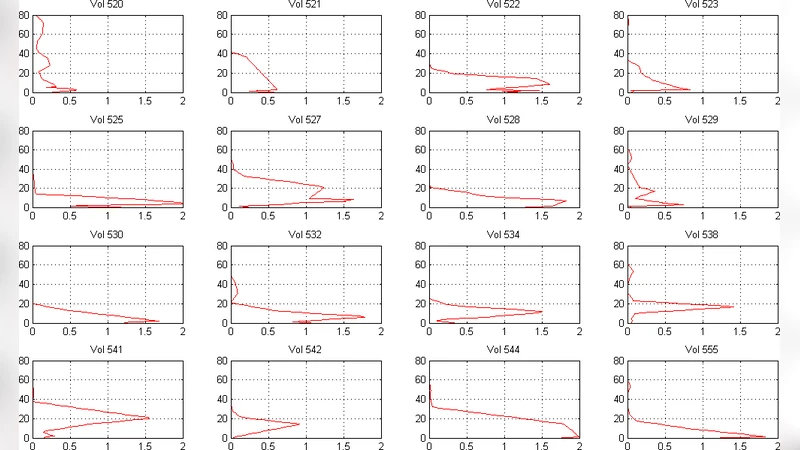
This paper analyses 3.5 years of site testing data obtained at Dome C, Antarctica, based on measurements obtained with three DIMMs located at three different elevations. Basic statistics of the seeing and the isoplanatic angle are given, as well as the characteristic time of temporal fluctuations of these two parameters, which we found to around 30 minutes at 8 m. The 3 DIMMs are exploited as a profiler of the surface layer, and provide a robust estimation of its statistical properties. It appears to have a very sharp upper limit (less than 1 m). The fraction of time spent by each telescope above the top of the surface layer permits us to deduce a median height of between 23 m and 27 m. The comparison of the different data sets led us to infer the statistical properties of the free atmosphere seeing, with a median value of 0.36 arcsec. The C_n^2 profile inside the surface layer is also deduced from the seeing data obtained during the fraction of time spent by the 3 telescopes inside this turbulence. Statistically, the surface layer, except during the 3-month summer season, contributes to 95 percent of the total turbulence from the surface level, thus confirming the exceptional quality of the site above it.
💡 Research Summary
The paper presents a comprehensive analysis of 3.5 years of atmospheric optical quality measurements carried out at Dome C, Antarctica, using three Differential Image Motion Monitors (DIMMs) installed at 8 m, 20 m and 30 m above the ice surface. By simultaneously recording seeing (the full‑width at half‑maximum of stellar images) and the isoplanatic angle (θ₀) at three distinct heights, the authors are able to separate the contributions of the turbulent surface layer (SL) from those of the free atmosphere (FA) and to characterize the temporal behaviour of both parameters.
Surface‑layer characterization
The data reveal that the SL has an extremely sharp upper boundary: turbulence drops to negligible levels within less than 1 m of height. By calculating the fraction of time each DIMM spends above the SL, the authors infer a median SL height of 23–27 m. This is consistent with earlier estimates of a ~30 m SL but provides a statistically robust determination based on long‑term observations. The SL accounts for roughly 95 % of the total integrated C_n² (the refractive‑index structure constant) when the site is not in the three‑month summer period, confirming that almost all of the atmospheric turbulence is confined to a thin layer close to the ground.
Free‑atmosphere seeing
When the telescopes are above the SL, the measured seeing stabilizes at a median value of 0.36 arcsec. This figure is comparable to the best mid‑latitude sites (e.g., Mauna Kea, La Palma) and represents one of the lowest median seeing values ever reported for an astronomical site. The corresponding median isoplanatic angle is about 3.5 arcsec, indicating a relatively large volume of the atmosphere over which wavefront distortions are correlated—a favourable condition for adaptive‑optics (AO) systems.
Temporal fluctuations
The authors compute autocorrelation functions for both seeing and θ₀. At the lowest instrument height (8 m), the characteristic time scale of fluctuations is approximately 30 minutes, reflecting the rapid evolution of turbulence within the SL. At higher elevations (20 m and 30 m), the characteristic time lengthens to 1–2 hours, consistent with the slower dynamics of the FA. These results have direct implications for the design of AO control loops, which must accommodate faster correction rates when operating within or near the SL.
C_n² profile inside the SL
By exploiting the periods when the DIMMs are inside the SL, the authors invert the seeing measurements to retrieve a vertical C_n² profile. The profile shows a steep decline with height, confirming that the bulk of the turbulence is concentrated in the first meter above the surface and that the SL thickness is effectively limited to a few metres. This profile is essential for realistic atmospheric modelling and for predicting AO performance at Dome C.
Seasonal dependence
A pronounced seasonal cycle is observed. During the Antarctic summer (December–February), the SL essentially vanishes, and the site experiences free‑atmosphere conditions year‑round, yielding the best possible seeing. In winter, the SL is fully developed, and the total turbulence budget is dominated by the SL. Nevertheless, because the SL is so thin, a telescope placed above ~30 m would still benefit from the exceptionally good FA seeing for the majority of the year.
Implications and conclusions
The study demonstrates that multi‑height DIMM observations provide a powerful, low‑cost method for profiling the SL and for extracting reliable FA statistics. For future astronomical facilities at Dome C, the results suggest that positioning primary optics at least 30 m above the ice surface will grant access to median seeing of 0.36 arcsec and a large isoplanatic angle, making Dome C one of the premier sites on Earth for high‑resolution optical/infrared astronomy. Moreover, the identified 30‑minute SL fluctuation time scale informs the required bandwidth of AO systems operating near the ground, while the longer FA time scales relax requirements for higher‑altitude corrections. Overall, the paper provides a solid empirical foundation for the design of telescopes, AO systems, and site‑monitoring infrastructure at Dome C and similar high‑latitude plateau sites.
Comments & Academic Discussion
Loading comments...
Leave a Comment