Molecular Clouds as Cosmic-Ray Barometers
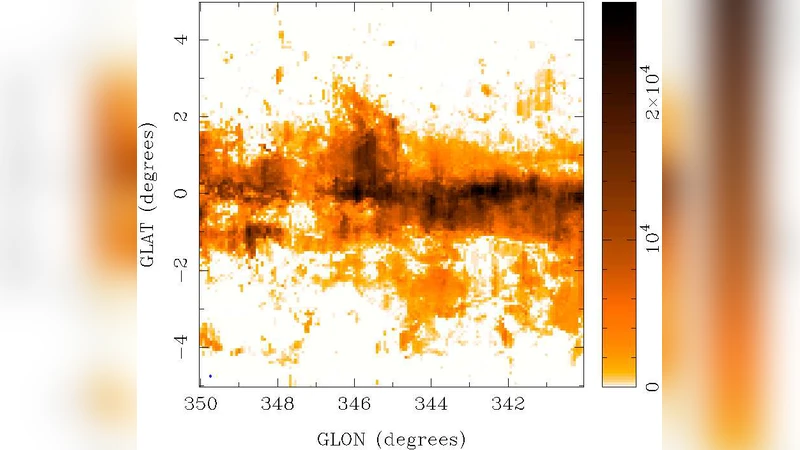
The advent of high sensitivity, high resolution gamma-ray detectors, together with a knowledge of the distribution of the atomic hydrogen and especially of the molecular hydrogen in the Galaxy on sub-degree scales creates a unique opportunity to explore the flux of cosmic rays in the Galaxy. We here present the new data on the distribution of the molecular hydrogen from a large region of the inner Galaxy obtained by the NANTEN Collaboration. We then introduce a methodology which aims to provide a test bed for current and future gamma-ray observatories to explore the cosmic ray flux at various positions in our Galaxy. In particular, for a distribution of molecular clouds, as provided by the NANTEN survey, and local cosmic ray density as measured at the Earth, we estimate the expected GeV to TeV gamma-ray signal, which can then be compared with observations and use to test the cosmic ray flux.
💡 Research Summary
The paper presents a novel methodology for using molecular clouds as “cosmic‑ray barometers” to probe the spatial distribution of Galactic cosmic‑ray (CR) density. The authors combine recent advances in high‑sensitivity, high‑resolution gamma‑ray instrumentation (e.g., Fermi‑LAT, H.E.S.S., and the upcoming CTA) with a newly released, sub‑degree‑scale map of molecular hydrogen (H₂) derived from the NANTEN CO(1–0) survey of the inner Milky Way. By converting CO line intensities to H₂ column densities using a standard X_CO factor and resolving the kinematic distance ambiguity with ancillary HI and dust data, they construct a three‑dimensional catalogue of several hundred molecular clouds spanning masses from 10⁴ to >10⁶ M⊙ and distances up to ~10 kpc.
For each cloud the expected gamma‑ray flux is calculated under the assumption that the local CR spectrum measured at Earth (a power‑law ∝ E⁻²·⁷) permeates the cloud uniformly. The calculation uses the well‑known p‑p interaction cross‑section, the π⁰ decay spectrum, and accounts for the cloud’s mass, density, and distance (flux ∝ M_cloud / 4πd²). The authors then compare these model fluxes with the sensitivity curves of current and future gamma‑ray observatories. They find that massive clouds (M ≥ 10⁵ M⊙) within ~5 kpc should produce detectable signals in the 1 GeV–10 TeV band, with predicted fluxes of 10⁻¹²–10⁻¹¹ ph cm⁻² s⁻¹, well above the Fermi‑LAT point‑source threshold and comfortably within the reach of CTA at TeV energies.
The central scientific question addressed is whether the CR spectrum measured locally is representative of the entire Galactic disk. If observed gamma‑ray intensities match the model predictions, this would support a picture of relatively uniform CR diffusion throughout the inner Galaxy. Conversely, systematic excesses or deficits would point to localized CR sources (e.g., recent supernova remnants, pulsar wind nebulae) or to variations in propagation conditions (magnetic turbulence, Galactic winds). The paper discusses three main sources of systematic uncertainty: (1) distance errors, which propagate as d⁻² into the flux estimate; (2) variations in the CO‑to‑H₂ conversion factor, which can change inferred cloud masses by factors of two or more; and (3) background modeling and gamma‑ray absorption, especially below a few GeV. To mitigate these, the authors propose cross‑checking with dust emission maps, using HI self‑absorption to resolve near–far ambiguities, and incorporating multi‑wavelength data.
In addition to the quantitative predictions, the authors outline a practical “barometer” workflow: (i) select a cloud from the NANTEN catalogue, (ii) compute its expected gamma‑ray spectrum assuming the local CR density, (iii) compare with observations, and (iv) infer any deviation as a measure of the local CR density relative to the Earth value. This framework can be applied systematically across the inner Galaxy, providing a map of CR intensity variations on kiloparsec scales.
Finally, the paper emphasizes the future potential of this approach. With CTA’s order‑of‑magnitude improvement in sensitivity and angular resolution, it will be possible to resolve individual clouds, separate overlapping emission, and detect subtle spectral differences. Such measurements could directly test diffusion models (e.g., energy‑dependent diffusion coefficients), identify hidden CR accelerators, and refine our understanding of the Galactic CR energy budget. In summary, the work establishes molecular clouds as powerful, spatially resolved probes of the Galactic CR sea, opening a new observational window onto the origin and propagation of high‑energy particles in our Galaxy.
Comments & Academic Discussion
Loading comments...
Leave a Comment