The First Passage Probability of Intracellular Particle Trafficking
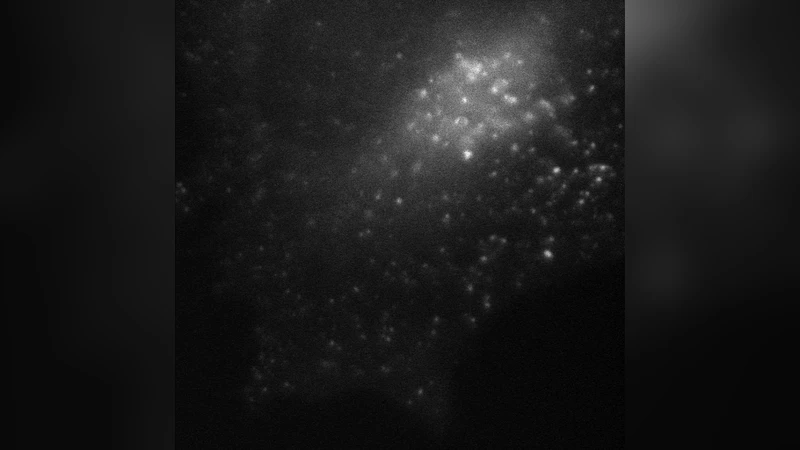
The first passage probability (FPP), of trafficked intracellular particles reaching a displacement L, in a given time t or inverse velocity S = t/L, can be calculated robustly from measured particle tracks, and gives a measure of particle movement in which different types of motion, e.g. diffusion, ballistic motion, and transient run-rest motion, can readily be distinguished in a single graph, and compared with mathematical models. The FPP is attractive in that it offers a means of reducing the data in the measured tracks, without making assumptions about the mechanism of motion: for example, it does not employ smoothing, segementation or arbitrary thresholds to discriminate between different types of motion in a particle track. Taking experimental data from tracked endocytic vesicles, and calculating the FPP, we see how three molecular treatments affect the trafficking. We show the FPP can quantify complicated movement which is neither completely random nor completely deterministic, making it highly applicable to trafficked particles in cell biology.
💡 Research Summary
The paper introduces the First Passage Probability (FPP) as a robust, model‑free statistic for quantifying intracellular particle transport. FPP is defined as the probability distribution of the time t (or its inverse, the “inverse velocity” S = t/L) required for a particle to first traverse a prescribed displacement L. By computing FPP directly from raw particle trajectories—without smoothing, segmentation, or arbitrary thresholds—the authors avoid the assumptions that underlie conventional analyses such as mean‑square displacement (MSD), velocity histograms, or state‑segmentation algorithms.
The authors first derive analytical FPP forms for three canonical motion models: (i) pure diffusion, which yields a long‑time tail proportional to t⁻³⁄²; (ii) ballistic (constant‑velocity) motion, producing a sharp t⁻¹ decay; and (iii) a “run‑rest” stochastic process, where alternating active runs and pauses generate a mixed distribution that can be parameterized by the average run time, pause time, and transition probability. These theoretical curves serve as reference templates for interpreting experimental data.
Experimental validation is performed on fluorescently labeled endocytic vesicles tracked in live HeLa cells at 100 fps and 0.2 µm/pixel resolution. For each trajectory the authors evaluate first‑passage times across multiple distances (0.5 µm, 1 µm, 2 µm, etc.) and construct kernel‑density estimates of the FPP. Three pharmacological perturbations are examined: (1) nocodazole to depolymerize microtubules, (2) cytochalasin D to disrupt actin filaments, and (3) 2‑deoxy‑D‑glucose to deplete ATP.
The control (untreated) data display a hybrid FPP shape: a short‑distance t⁻¹ region indicative of ballistic runs, together with a long‑distance t⁻³⁄² tail reflecting diffusive pauses, consistent with a run‑rest process. Nocodazole markedly suppresses the ballistic component, shifting the curve toward the pure‑diffusion form and reducing the estimated run probability from ~0.6 to ~0.3, implying that microtubule‑based long‑range transport is largely abolished. Cytochalasin D primarily elongates pause durations (average pause time increases from 1.5 s to 2.8 s) and flattens the FPP, indicating that actin filaments contribute mainly to short‑range, frequent re‑starts. ATP depletion eliminates both run and pause structure, producing an FPP that closely matches the diffusion prediction, confirming the energy dependence of motor‑driven transport.
Beyond these specific findings, the study demonstrates several broader advantages of FPP. First, it condenses high‑dimensional trajectory data into a single, interpretable curve that simultaneously captures speed, persistence, and stochasticity. Second, because FPP is derived from first‑passage statistics, it can be directly incorporated into Bayesian inference frameworks or likelihood‑based model selection without resorting to ad‑hoc thresholds. Third, the method is scalable: by varying L, one can probe transport dynamics across spatial scales from sub‑micron to several microns, revealing scale‑dependent mechanisms.
Limitations include the need for sufficiently long, high‑frequency tracks to obtain reliable statistics, especially for large L where first‑passage events become rare. Moreover, the choice of L influences the shape of the FPP, so experimental design must consider the biologically relevant length scales.
In conclusion, the authors present FPP as a powerful, assumption‑light tool for dissecting intracellular trafficking. Its ability to distinguish diffusion, ballistic motion, and mixed run‑rest behavior in a unified framework makes it highly suitable for drug screening, disease modeling, and the design of nanocarrier delivery systems where precise quantification of particle dynamics is essential. Future work may extend FPP to multi‑particle interactions, heterogeneous environments, or incorporate spatially varying diffusion coefficients, further broadening its applicability in cell biology and biophysics.
Comments & Academic Discussion
Loading comments...
Leave a Comment