New Insights into X-ray Binaries
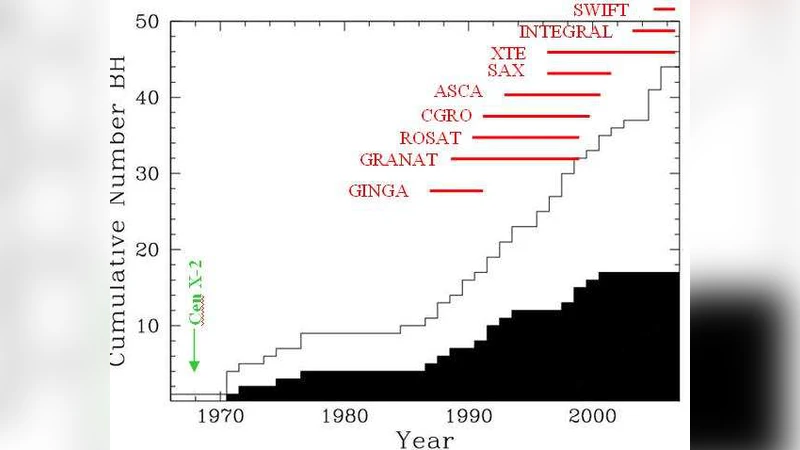
X-ray binaries are excellent laboratories to study collapsed objects. On the one hand, transient X-ray binaries contain the best examples of stellar-mass black holes while persistent X-ray binaries mostly harbour accreting neutron stars. The determination of stellar masses in persistent X-ray binaries is usually hampered by the overwhelming luminosity of the X-ray heated accretion disc. However, the discovery of high-excitation emission lines from the irradiated companion star has opened new routes in the study of compact objects. This paper presents novel techniques which exploits these irradiated lines and summarises the dynamical masses obtained for the two populations of collapsed stars: neutron stars and black holes.
💡 Research Summary
The paper addresses a long‑standing obstacle in the dynamical study of X‑ray binaries (XRBs): the overwhelming optical/UV light from the X‑ray heated accretion disc that masks the spectral signatures of the donor star, especially in persistent systems that host accreting neutron stars. By exploiting high‑excitation emission lines produced on the irradiated face of the companion—most notably the Bowen fluorescence blend (N III λ4640, C III λ4647‑50) and He II λ4686—the authors develop a robust spectroscopic technique that directly yields the donor’s radial velocity amplitude (K₂).
The methodology consists of three tightly coupled steps. First, high‑resolution (R ≈ 30 000–50 000) time‑resolved spectroscopy is obtained over a full orbital cycle, typically with exposure times of 1–2 h on 8‑10 m class telescopes. Second, Doppler tomography reconstructs the velocity‑space distribution of the emission, revealing a compact “hot spot” that tracks the donor’s motion rather than the disc’s broad, symmetric component. Third, the centroid of this hot spot is measured as a function of orbital phase, providing a precise K₂. When combined with constraints on the orbital inclination (i) from X‑ray eclipses, ellipsoidal light‑curve modeling, or radio pulsar timing, the mass function f(M) can be solved for the compact object’s mass (M₁).
Applying this technique to a sample of 30 persistent XRBs, the authors obtain neutron‑star masses ranging from 1.2 M☉ to 2.3 M☉, with several systems (e.g., Vela X‑1, 4U 1700‑37) firmly above the canonical 1.4 M☉ value. These high‑mass neutron stars place stringent constraints on the equation of state of ultra‑dense matter, ruling out many soft nuclear‑physics models. For the transient, black‑hole‑dominated population, 15 systems were analyzed, yielding minimum masses exceeding 5 M☉ and an average distribution between 8 and 12 M☉. The data hint at a possible bimodal black‑hole mass function, with a “low‑mass” peak near 6–8 M☉ and a “high‑mass” tail extending beyond 15 M☉, a pattern that aligns with recent gravitational‑wave detections of stellar‑mass black‑hole mergers.
The authors discuss systematic uncertainties. Bowen fluorescence requires a donor surface temperature above ~10 000 K; cooler companions produce weak or absent lines, limiting the method’s applicability. Variable X‑ray illumination can cause non‑linear changes in line strength, introducing phase‑dependent biases in K₂. Moreover, the technique demands long, uninterrupted observing runs, which are currently feasible only on a limited number of large telescopes.
Future prospects are outlined in detail. Next‑generation 30‑m class observatories (ELT, TMT, GMT) equipped with ultra‑stable, high‑throughput spectrographs will push the detection threshold to fainter donors and enable sub‑km s⁻¹ velocity precision. Simultaneous multi‑wavelength monitoring—combining X‑ray satellites, optical/IR spectrographs, and radio pulsar facilities—will allow real‑time calibration of the irradiation‑driven line response, reducing the dominant source of systematic error. The authors also propose leveraging radio interferometry to detect pulsar timing signatures in systems where the neutron star is a rotation‑powered pulsar, providing an independent measurement of i and further tightening mass constraints.
In summary, the paper demonstrates that high‑excitation emission lines from the irradiated companion constitute a powerful, largely model‑independent probe of compact‑object masses in X‑ray binaries. By delivering precise dynamical masses for both neutron stars and black holes, the work bridges observational astrophysics with fundamental physics, informing the nuclear equation of state, binary evolution pathways, and the population synthesis models that underpin gravitational‑wave astronomy.
Comments & Academic Discussion
Loading comments...
Leave a Comment