Quasar Feedback: More Bang for Your Buck
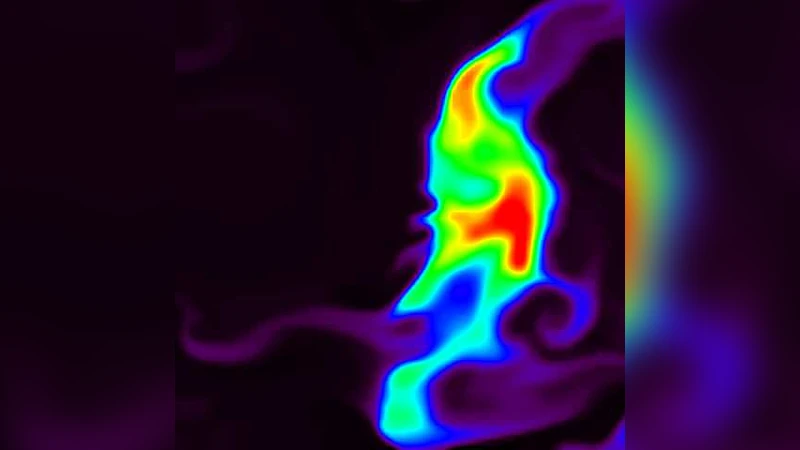
We propose a two-stage model for the effects of feedback from a bright quasar on the cold gas in a galaxy. It is difficult for feedback from near the accretion disk to directly impact dense molecular clouds at ~kpc. But if such feedback can drive a weak wind or outflow in the hot, diffuse ISM (a relatively ’easy’ task), then in the wake of such an outflow passing over a cold cloud, a combination of instabilities will drive the cloud material to effectively expand in the direction perpendicular to the outflow. Such expansion dramatically increases the effective cross section of the cloud material and makes it more susceptible to ionization and momentum coupling from absorption of the incident quasar radiation field. Even a moderate effect of this nature can dramatically alter the ability of clouds at large radii to be fully ionized and driven into a secondary outflow by radiation pressure. Since the amount of momentum and volume which can be ionized by observed quasar radiation field is more than sufficient to affect the entire cold gas supply once it has been altered in this manner (and the ‘initial’ feedback need only initiate a moderate wind in the low-density hot gas), this reduces by an order of magnitude the required energy budget for feedback to affect a host galaxy. Instead of ~5% of the radiated energy (~100% momentum) needed if the initial feedback must directly heat or blow out the galactic gas, if only ~0.5% of the luminosity (~10% momentum) can couple to drive the initial hot outflow, this mechanism could be efficient. This amounts to hot gas outflow rates from near the accretion disk of only 5-10% of the BH accretion rate.
💡 Research Summary
The paper puts forward a two‑stage feedback model that dramatically lowers the energetic cost of quasar‑driven removal of cold gas from a host galaxy. In the first stage, radiation and a modest disk wind from the accretion flow accelerate the low‑density, hot interstellar medium (T ≈ 10⁶ K). Because this component is tenuous, only a small fraction of the quasar luminosity—of order 0.5 % of L, or roughly 10 % of L/c in momentum—needs to be transferred to launch a wind with a mass‑loading of 5–10 % of the black‑hole accretion rate. This wind propagates out to kiloparsec scales but, by itself, cannot directly shred or blow away the dense molecular clouds (n ≈ 10²–10³ cm⁻³) that dominate the galaxy’s star‑forming reservoir.
When the hot wind sweeps over a cold cloud, the velocity shear triggers rapid Kelvin‑Helmholtz and Rayleigh‑Taylor instabilities. The cloud is “crushed” on a timescale t_cc ≈ χ¹ᐟ² R_c/v_w (χ ≈ 10³ is the density contrast), which for typical parameters (R_c ≈ 10 pc, v_w ≈ 10³ km s⁻¹) is only a few Myr—shorter than a galactic rotation period. The instabilities cause the cloud material to expand preferentially in the direction perpendicular to the flow, inflating its effective cross‑section by factors of tens. This geometric amplification makes the cloud far more vulnerable to the quasar’s photon field: ionizing radiation can now penetrate deeper, and radiation pressure couples more efficiently to the gas.
Consequently, the second stage of the model is a radiation‑driven outflow that acts on the already‑inflated clouds. Because the clouds present a much larger area, the same quasar luminosity can ionize and accelerate essentially the entire cold gas supply. The authors argue that the momentum budget required for this secondary stage is already supplied by the observed quasar radiation field; therefore the total energy needed to affect the galaxy drops from the canonical ≈5 % of L (or 100 % of L/c) to ≈0.5 % of L (≈10 % of L/c). In other words, a modest hot outflow is sufficient to “prime” the cold phase, after which radiation pressure does the heavy lifting.
The paper discusses several implications. First, the model naturally explains the coexistence of high‑velocity, multi‑phase outflows observed in quasars: the hot wind provides the initial kinematic seed, while the cold component appears later as broadened, ionized absorption lines. Second, the rapid removal of cold gas curtails star formation on short timescales, offering a plausible route to the observed quenching of massive galaxies during the quasar epoch. Third, the predicted increase in cloud surface area should enhance observable signatures such as extended X‑ray emission from mixed hot‑cold gas and stronger metal‑line cooling in the outflow.
The authors acknowledge limitations. The treatment of cloud disruption neglects magnetic fields, detailed chemistry, and thermal conduction, all of which could modify instability growth rates. The analysis is largely analytic; high‑resolution three‑dimensional magneto‑hydrodynamic simulations that include radiative transfer are required to validate the scaling relations and to explore parameter space (e.g., different density contrasts, wind velocities, and cloud size distributions). Moreover, real galaxies host a spectrum of environments—from dense nuclear disks to diffuse halos—so a single efficiency factor may not capture the full diversity of feedback outcomes.
In summary, the study proposes that a weak, hot outflow generated by a quasar can pre‑condition the cold interstellar medium, inflating clouds and making them highly susceptible to radiation pressure. This two‑stage process reduces the required coupling efficiency by an order of magnitude, offering a more economical explanation for quasar‑driven galaxy‑scale feedback and its role in shaping the co‑evolution of supermassive black holes and their host galaxies.
Comments & Academic Discussion
Loading comments...
Leave a Comment