Comparative analysis of the impact of geological activity on astronomical sites of the Canary Islands, Hawaii and Chile
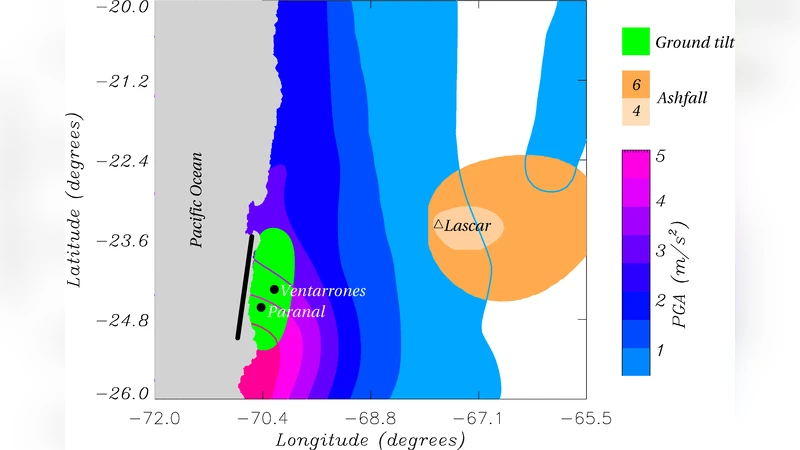
An analysis of the impact of seismic and volcanic activity was carried out at selected astronomical sites, namely the observatories of El Teide (Tenerife, Canary Islands), Roque de los Muchachos (La Palma, Canary Islands), Mauna Kea (Hawaii) and Paranal (Chile) and the candidate site of Cerro Ventarrones (Chile). Hazard associated to volcanic activity is low or negligible at all sites, whereas seismic hazard is very high in Chile and Hawaii. The lowest geological hazard in both seismic and volcanic activity was found at Roque de los Muchachos observatory, in the island of La Palma.
💡 Research Summary
The paper presents a systematic comparative assessment of geological hazards—specifically seismic and volcanic activity—affecting four major astronomical sites: the El Teide Observatory (Tenerife, Canary Islands), the Roque de los Muchachos Observatory (La Palma, Canary Islands), the Mauna Kea Observatory (Hawaii, USA), and two Chilean sites, the Paranal Observatory and the candidate Cerro Ventarrones site. The authors first outline the geological context of each location, noting that the Canary Islands are part of a volcanic archipelago formed by the African plate’s interaction with the Atlantic mantle plume, while Hawaii sits atop the Pacific plate above a hotspot, and Chile lies along the active subduction zone where the Nazca plate dives beneath the South American plate.
Methodologically, seismic hazard is quantified using a probabilistic seismic hazard analysis (PSHA) that incorporates a century‑long catalog of local earthquakes, mapped fault structures, and ground‑motion prediction equations (GMPEs). The primary metric is Peak Ground Acceleration (PGA), with hazard categories defined by PGA thresholds (e.g., low < 0.1 g, moderate 0.1–0.2 g, high > 0.2 g). Volcanic hazard is evaluated through a composite index that combines eruption frequency, historic lava‑flow and tephra dispersal extents, gas emission rates, and the probability of future activity based on recent monitoring data. The volcanic index is then mapped onto a three‑tier scale (negligible, low, moderate).
Results show a clear divergence between the two hazard types. Volcanic risk is uniformly low or negligible across all four sites. At El Teide and Roque de los Muchachos, the observatories are situated several kilometers upwind and uphill from the active vents of Teide and Cumbre Nueva, respectively, so direct lava or ash impact is highly unlikely. Mauna Kea, although located on a dormant volcano, lies far from the currently active Kilauea and Mauna Loa vents, resulting in a similarly low volcanic threat. In Chile, both Paranal and Cerro Ventarrones are far from the nearest active volcanoes of the Central Andes, which further reduces volcanic exposure.
In contrast, seismic hazard varies dramatically. The Canary Islands exhibit moderate seismicity; PGA values at El Teide are estimated around 0.12–0.15 g, reflecting occasional intraplate earthquakes but generally below levels that would compromise large telescopes. Roque de los Muchachos, however, benefits from a more stable crust and shows the lowest PGA (~0.08 g), making it the safest site in both dimensions. Hawaii’s Mauna Kea experiences relatively high seismicity because the Hawaiian Islands sit on a flexing lithospheric slab; PGA estimates reach 0.30–0.35 g, with recorded events capable of inducing noticeable telescope jitter and requiring robust isolation systems. Chile presents the highest seismic risk: the Paranal site, located on the western edge of the Andes, has PGA values of 0.40–0.45 g, and the candidate Cerro Ventarrones site shows comparable or slightly higher values. These figures align with the known recurrence of magnitude > 7.5 earthquakes in the region, which can generate ground motions that threaten both structural integrity and the precise alignment of optical components.
The authors synthesize these findings into a risk ranking. Roque de los Muchachos emerges as the most geologically benign location, scoring low in both volcanic and seismic categories. El Teide ranks second, with low volcanic but moderate seismic exposure. Mauna Kea, while volcanically safe, is penalized for its high seismic hazard. Paranal and Cerro Ventarrones are tied for the highest overall risk due to their exposure to strong ground shaking, despite negligible volcanic concerns.
From an operational perspective, the paper argues that geological risk must be integrated into every stage of observatory planning. For high‑seismic sites, the design must incorporate advanced base isolation, tuned mass dampers, and real‑time seismic monitoring that can trigger automatic shutdowns or protective stowing of delicate instruments. The authors also note that even low volcanic activity can affect atmospheric transparency; fine ash particles can settle on mirror surfaces, degrade coatings, and increase sky background. Consequently, routine atmospheric monitoring and periodic cleaning regimes are recommended, especially for sites that experience occasional distant eruptions.
The study concludes that while atmospheric clarity, altitude, and infrastructure are traditionally the primary criteria for site selection, geological stability is equally decisive for long‑term scientific productivity and cost efficiency. Roque de los Muchachos, located on La Palma, currently offers the optimal combination of excellent seeing, high altitude, and minimal geological threat, making it a prime candidate for future flagship telescopes such as the Extremely Large Telescope (ELT) or the Thirty‑Meter Telescope (TMT). Conversely, sites in Hawaii and Chile, despite their superior atmospheric conditions, must allocate substantial resources to seismic mitigation and emergency response planning to safeguard multi‑billion‑dollar investments. The paper thus provides a practical framework for observatory planners, emphasizing that rigorous, site‑specific geological hazard assessments are indispensable for the sustainable development of next‑generation astronomical facilities.