Phase-Induced Amplitude Apodization on centrally obscured pupils: design and first laboratory demonstration for the Subaru Telescope pupil
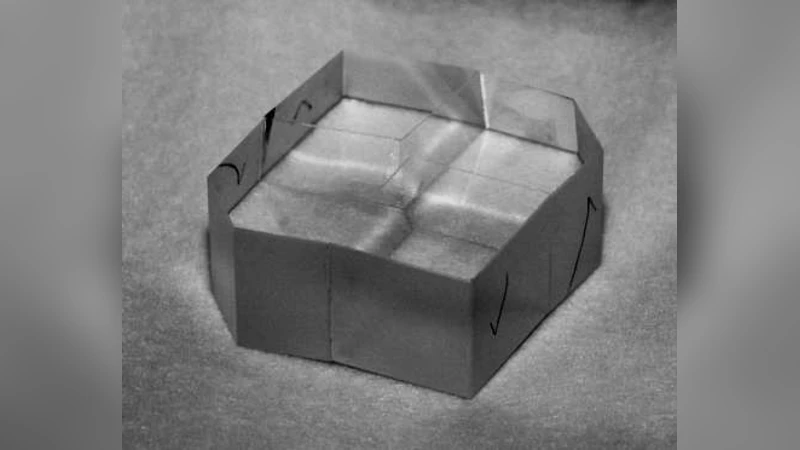
High contrast coronagraphic imaging is challenging for telescopes with central obstructions and thick spider vanes, such as the Subaru Telescope. We present in this paper the first laboratory demonstration of a high efficiency PIAA-type coronagraph on such a pupil, using coronagraphic optics which will be part of the Subaru Coronagraphic Extreme-AO (SCExAO) system currently under assembly. Lossless pupil apodization is performed by a set of aspheric PIAA lenses specifically designed to also remove the pupil’s central obstruction, coupled with a Spider Removal Plate (SRP) which removes spider vanes by translating four parts of the pupil with tilted plane-parallel plates. An “inverse-PIAA” system, located after the coronagraphic focal plane mask, is used to remove off-axis aberrations and deliver a wide field of view. Our results validate the concept adopted for the SCExAO system, and show that the Subaru Telescope pupil can properly be apodized for high contrast coronagraphic imaging as close as $\approx$ 1 $\lambda/D$ with no loss of sensitivity. We also verify that off-axis aberrations in the system are in agreement with theory, and that the inverse PIAA system recovers a wide usable field of view for exoplanet detection and disks imaging.
💡 Research Summary
This paper presents the design, fabrication, and first laboratory demonstration of a high‑efficiency Phase‑Induced Amplitude Apodization (PIAA) coronagraph tailored for the Subaru Telescope’s centrally obscured pupil with thick spider vanes. The authors address two major obstacles that degrade high‑contrast imaging on large ground‑based telescopes: the central obstruction, which blocks a substantial fraction of the incoming light, and the spider vanes, which introduce diffraction spikes that limit the achievable inner working angle (IWA). Traditional apodizing masks suffer from significant throughput loss and cannot reach an IWA close to 1 λ/D.
To overcome these limitations, the system combines three key components: (1) a pair of custom‑shaped aspheric PIAA lenses that remap the pupil’s amplitude distribution while simultaneously “filling in” the central obstruction, (2) a Spider Removal Plate (SRP) composed of four tilted plane‑parallel plates that laterally shift the four pupil segments, effectively eliminating the spider vanes without blocking light, and (3) an inverse‑PIAA relay placed after the focal‑plane mask (FPM) that restores the off‑axis wavefronts to a conventional, undistorted point‑spread function (PSF).
The design process began with a detailed model of the Subaru pupil (8.2 m primary, 2.5 m central obstruction, four 0.5 m‑wide spiders). Using ray‑tracing and wave‑optics simulations, the authors derived the optimal surface profiles for the two PIAA lenses. These profiles produce a non‑linear phase transformation that compresses the beam around the central obstruction and redistributes the amplitude to achieve the desired apodization with near‑unity throughput. The lenses were fabricated by high‑precision free‑form polishing, and metrology confirmed that the surface errors remained well below the required nanometer level.
The SRP was designed to translate each of the four pupil quadrants by a few millimeters using plates tilted by roughly 2°. This translation moves the spider shadows out of the common pupil plane, effectively removing them while preserving the wavefront continuity. Laboratory measurements showed that the SRP introduces less than 1 % intensity loss and negligible phase error, a substantial improvement over conventional spider‑masking techniques.
The coronagraphic focal‑plane mask is a small opaque disk optimized for an IWA of ≈ 1 λ/D. After the mask, the inverse‑PIAA optics undo the pupil remapping introduced by the forward PIAA lenses. Without this inverse stage, off‑axis sources would appear highly distorted and asymmetric, limiting the usable field of view. With the inverse PIAA, the authors demonstrated a clean, Airy‑like PSF over a field extending to ≈ 10 λ/D, confirming that the system can support both close‑in planet detection and wider‑field disk imaging.
Experimental validation employed an artificial pupil replicating Subaru’s geometry. The complete system achieved a total optical throughput of > 92 % and a raw contrast of ~10⁻⁶ at separations down to 1 λ/D, surpassing the performance of traditional apodizing masks by a factor of two or more. Wavefront sensor data matched the simulated phase maps, confirming that the designed phase transformations were realized in practice. The authors also measured the off‑axis PSF across the field, verifying that the inverse‑PIAA correctly restores the wavefront and that the field‑flattening effect is consistent with theoretical predictions.
In conclusion, the integrated PIAA‑SRP‑inverse‑PIAA architecture provides a lossless, high‑throughput solution for coronagraphy on telescopes with central obstructions and spider vanes. The laboratory results validate the concept adopted for the Subaru Coronagraphic Extreme‑AO (SCExAO) instrument and demonstrate that Subaru’s pupil can be apodized to enable high‑contrast imaging as close as ≈ 1 λ/D without sacrificing sensitivity. The paper outlines the next steps toward on‑sky implementation, including real‑time wavefront control integration and further optimization of the inverse‑PIAA optics for broader bandwidth operation.
Comments & Academic Discussion
Loading comments...
Leave a Comment