Microquasar interaction with the surrounding medium
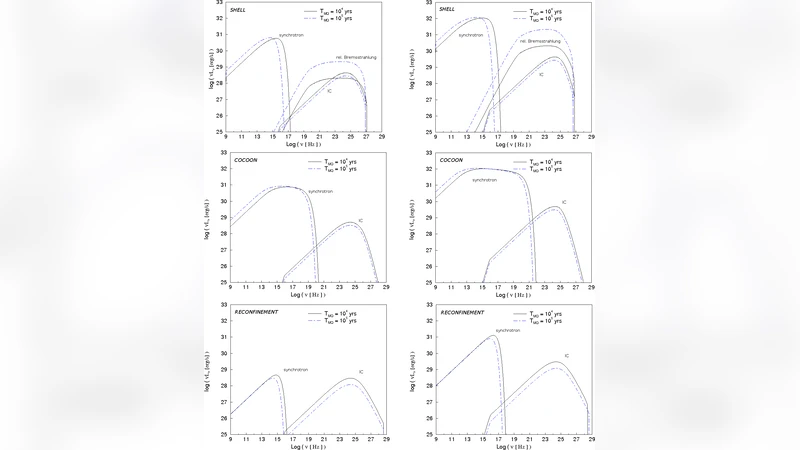
The high kinetic energy outflowing in the jets of microquasars is delivered to the surrounding interstellar medium. This energy input can cause the formation of bow shocks and cocoons that may be detectable from radio to gamma-ray energies. Evidences or hints of emission from jet/medium interactions have been reported for some sources, but little has been done regarding the theoretical modeling of the resulting non-thermal emission. We have developed an analytical model based on those successfully applied to extragalactic sources or the interaction of AGN jets with their surroundings. Focusing on the adiabatic phase of the growing structures, we give estimations of the expected luminosities through synchrotron, relativistic Bremsstrahlung and inverse Compton processes. We conclude that the interaction structures may be detectable at radio wavelengths, while extreme values for the jet kinetic power, the source age and the medium density are required to make the emission at high and very high energies detectable.
💡 Research Summary
The paper investigates how the powerful jets of microquasars deposit kinetic energy into the surrounding interstellar medium (ISM) and the resulting non‑thermal radiation that may be observable from radio up to very‑high‑energy (VHE) γ‑rays. Building on analytical models that have been successfully applied to extragalactic radio sources and to the interaction of active‑galactic‑nucleus (AGN) jets with their environments, the authors adapt the framework to the much smaller scales of microquasars. They focus on the adiabatic (energy‑conserving) phase of the expanding structures, which consist of a forward bow shock that sweeps up the ISM and a cocoon of shocked jet material that inflates behind the shock front.
The model treats the jet as a continuous, supersonic outflow characterized by its kinetic power (L j), bulk velocity (β j), and opening angle. When the jet impacts the ambient medium of density n ISM, a double‑shock system forms. Particles (primarily electrons) are accelerated at the shock fronts via diffusive shock acceleration. The accelerated electrons then lose energy through three main channels: (1) synchrotron radiation in the magnetic field that permeates the cocoon, (2) relativistic Bremsstrahlung in the dense shocked gas, and (3) inverse‑Compton (IC) scattering off ambient photon fields, chiefly the stellar radiation of the companion star and the cosmic microwave background (CMB). The authors derive analytic expressions for the luminosity and spectral shape of each component as functions of L j, n ISM, source age (t age), magnetic field strength, and photon field energy density.
A systematic parameter study reveals that synchrotron emission from the cocoon is the most promising observable. For typical microquasar jet powers (10^36–10^38 erg s⁻¹) and ISM densities (∼1 cm⁻³), the model predicts radio flux densities of order a few milli‑Janskys at GHz frequencies, well within the detection limits of current interferometers such as the VLA or ATCA. The radio morphology would appear as an extended, possibly elongated structure aligned with the jet axis, analogous to the lobes seen in AGN but on parsec scales.
In contrast, high‑energy (X‑ray) and very‑high‑energy (GeV–TeV) γ‑ray emission are far less luminous under standard conditions. Detectable IC or Bremsstrahlung fluxes require extreme combinations of parameters: jet powers exceeding ∼10^38 erg s⁻¹, ambient densities above ∼10 cm⁻³, and source ages of ≥10⁴ yr, which allow the cocoon to grow large enough for the magnetic field to weaken and for the electron population to accumulate. Even then, the predicted γ‑ray fluxes are at the level of 10⁻¹³–10⁻¹² erg cm⁻² s⁻¹, bordering the sensitivity of present‑day instruments such as Fermi‑LAT and ground‑based Cherenkov arrays. Consequently, only a minority of microquasars—those with exceptionally powerful, long‑lived jets in dense environments—are expected to be detectable at high energies.
The authors discuss several caveats. The analytical treatment assumes a one‑dimensional, spherically symmetric expansion and a uniform magnetic field, neglecting possible turbulence, anisotropies, and jet precession that could modify particle acceleration efficiency and radiation patterns. The model also fixes the electron‑to‑proton ratio and does not consider secondary particle production or re‑acceleration processes that could boost the high‑energy output. These simplifications are acknowledged as necessary for tractability but point to the need for future three‑dimensional magneto‑hydrodynamic simulations coupled with detailed radiative transfer.
In summary, the paper provides a coherent theoretical framework for the non‑thermal emission from microquasar jet/ISM interactions. It predicts that radio observations are the most viable means to identify and study these interaction structures, while detection at X‑ray or γ‑ray energies would require extreme jet powers, old source ages, and dense surrounding media. The work lays the groundwork for targeted multi‑wavelength campaigns and for interpreting forthcoming high‑sensitivity γ‑ray data from next‑generation facilities such as the Cherenkov Telescope Array (CTA).
Comments & Academic Discussion
Loading comments...
Leave a Comment