International Year of Astronomy Invited Review on Exoplanets
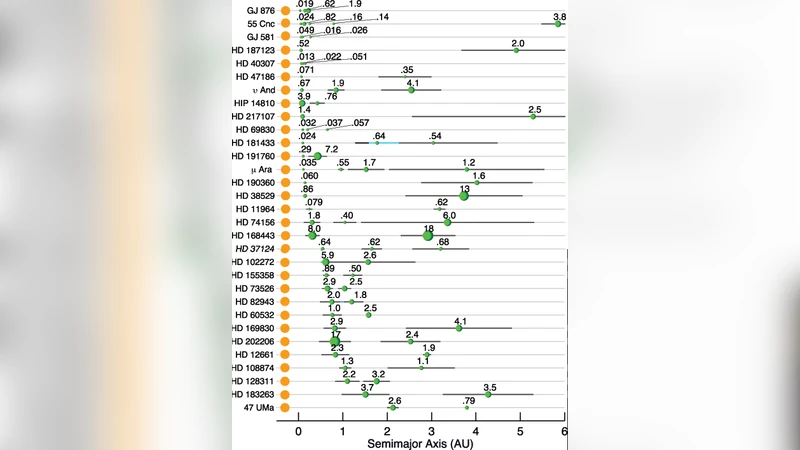
Just fourteen years ago the Solar System represented the only known planetary system in the Galaxy, and conceptions of planet formation were shaped by this sample of one. Since then, 320 planets have been discovered orbiting 276 individual stars. This large and growing ensemble of exoplanets has informed theories of planet formation, placed the Solar System in a broader context, and revealed many surprises along the way. In this review I provide an overview of what has been learned from studies of the occurrence, orbits and physical structures of planets. After taking a look back at how far the field has advanced, I will discuss some of the future directions of exoplanetary science, with an eye toward the detection and characterization of Earth-like planets around other stars.
💡 Research Summary
The invited review “International Year of Astronomy Invited Review on Exoplanets” provides a comprehensive snapshot of how exoplanetary science has transformed over the past fourteen years—from a discipline with a single data point, the Solar System, to one that now boasts a catalog of over three hundred planets orbiting more than two hundred seventy‑six stars. The author begins by outlining the historical context: prior to the mid‑2000s, theories of planet formation were built almost exclusively on the architecture of our own system, and the notion of planetary diversity was largely speculative. The launch of dedicated space missions such as Kepler, CoRoT, and later TESS, combined with ground‑based radial‑velocity surveys, ushered in a new era of discovery. These complementary techniques expanded the detection parameter space dramatically, enabling the identification of planets ranging from sub‑Earth sized bodies to super‑Jupiters, and from ultra‑short‑period “hot Jupiters” to temperate planets residing in the habitable zones of their host stars.
A major portion of the review is devoted to occurrence rates. By leveraging the statistical power of Kepler’s transit catalog, the author reports that small planets (1–2 R⊕) are common around M‑dwarfs, with an estimated 0.3–0.5 such planets per star within the conventional habitable zone. For FGK stars, the frequency of larger gas giants is lower but still significant, especially for orbital periods shorter than 100 days. The paper emphasizes how these occurrence statistics vary with stellar metallicity, age, and spectral type, reinforcing the idea that planet formation efficiency is intimately linked to the composition of the protoplanetary disk.
The orbital architecture section highlights several surprising trends that have forced revisions of classical formation models. The prevalence of hot Jupiters, the existence of high‑eccentricity planets, and the detection of compact multi‑planet systems with near‑resonant period ratios all point to the importance of migration processes, dynamical scattering, and disk‑planet interactions. The author discusses how resonant chains observed in systems such as TRAPPIST‑1 and Kepler‑223 provide compelling evidence for convergent migration within a dissipating gas disk, while the wide spread in eccentricities among giant planets suggests later dynamical instabilities.
Physical structure and composition are examined through the lens of the mass‑radius relationship and atmospheric spectroscopy. The review notes that planets of similar mass can display markedly different radii, indicating a spectrum of bulk compositions from iron‑rich super‑Earths to low‑density mini‑Neptunes with substantial H/He envelopes. Spectroscopic studies, both in transmission and emission, have revealed a diversity of atmospheric chemistries: hydrogen‑dominated envelopes, water‑rich atmospheres, and in some cases signatures of clouds and hazes that mute spectral features. The author underscores how temperature, stellar irradiation, and planetary gravity together dictate cloud formation pathways, thereby influencing observable spectra.
In the theoretical section, the author contrasts the core‑accretion model with gravitational‑instability scenarios, evaluating each against the observed population. Core accretion, especially when coupled with inward migration, successfully explains the bulk of super‑Earths and sub‑Neptunes, while gravitational instability may be required for the most massive, distant companions. The metallicity correlation—higher occurrence of gas giants around metal‑rich stars—provides strong empirical support for core accretion.
Looking forward, the review outlines a roadmap for the next decade of exoplanet research. The James Webb Space Telescope (JWST) will enable high‑precision infrared spectroscopy of temperate, small planets, potentially detecting water vapor, carbon dioxide, and methane—key biosignature gases. Ground‑based Extremely Large Telescopes (ELT, TMT, GMT) will push direct imaging toward Earth‑size planets around nearby stars, allowing measurements of reflected light spectra and polarization that could reveal surface oceans or vegetation. Upcoming missions such as PLATO and ARIEL will expand the statistical sample of well‑characterized planets and provide systematic atmospheric surveys. The ultimate goal articulated by the author is the detection and characterization of true Earth analogs, including the search for biosignatures, which will require a synergy of high‑precision radial‑velocity instruments, next‑generation coronagraphs, and sophisticated data‑analysis pipelines.
In summary, the review paints a picture of a rapidly maturing field that has moved from cataloguing exotic outliers to building a statistically robust framework for planet formation and evolution. The author concludes that with the imminent arrival of powerful space‑ and ground‑based observatories, exoplanet science is poised to transition from describing planetary demographics to probing planetary habitability and, perhaps, detecting signs of life beyond the Solar System.
Comments & Academic Discussion
Loading comments...
Leave a Comment