Suzaku Observation Adjacent to the South End of the Radio Arc
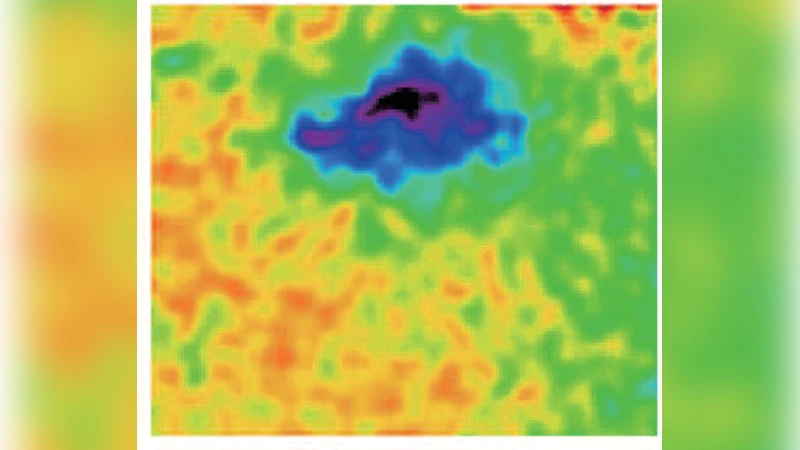
Suzaku observed the Galactic center region near the Radio Arc at ~20’ southeast of Sagittarius A*.In the 18’x18’ field of view, we found four distinct X-ray sources: a bright star and a diffuse source associated with the star clusters in the soft band (0.5-2.0 keV), a small clump in a higher energy band (4-6 keV), and a peculiar clump in the 6.4 keV line band.The latter two clumps are located at the south end of the Radio Arc. This paper reports on the results, and discusses the origin of these X-ray sources, with a particular emphasis on small clumps.
💡 Research Summary
The Suzaku X‑ray Imaging Spectrometer (XIS) was pointed at a region of the Galactic Center located about 20 arc‑minutes southeast of Sgr A*, adjacent to the southern end of the well‑known Radio Arc. The observation covered an 18′ × 18′ field of view and revealed four distinct X‑ray emitters when the data were examined in three energy bands: (1) a bright point source and a diffuse component associated with a stellar cluster in the soft band (0.5–2 keV), (2) a compact hard‑band clump visible in the 4–6 keV range, and (3) a peculiar clump that shines predominantly in the neutral‑iron fluorescence line at 6.4 keV. The latter two clumps are situated precisely at the southern terminus of the Radio Arc, a location where strong magnetic fields, dense molecular material, and energetic particle populations are known to coexist.
The soft‑band sources are interpreted as thermal plasma emission from a luminous massive star and from a young star cluster embedded in hot gas. Spectral fits yield absorbing columns of order N_H ≈ 5 × 10²² cm⁻² and plasma temperatures kT ≈ 0.8–1.0 keV, consistent with shock‑heated wind material or supernova‑remnant‑like bubbles. Their X‑ray luminosities (L_X ≈ 10³³–10³⁴ erg s⁻¹) are typical for massive stellar aggregates in the central molecular zone.
The 4–6 keV clump is much smaller (≈1′ across) and exhibits a harder spectrum. Both a high‑temperature thermal component (kT ≈ 5–7 keV) and a non‑thermal power‑law (photon index Γ ≈ 2) are required to reproduce the data, suggesting either a localized region of very hot gas (perhaps a mini‑superbubble or a colliding‑wind shock) or synchrotron‑like emission from particles accelerated in the intense magnetic field of the Radio Arc. Its luminosity (L_X ≈ 10³³ erg s⁻¹) places it among the faint end of Galactic Center hard X‑ray sources.
The most intriguing object is the 6.4 keV Fe Kα clump. Its spectrum is dominated by a narrow line at 6.40 keV with an equivalent width (EW) of 1.0–1.5 keV, accompanied by a weak underlying continuum. Two principal excitation mechanisms are considered: (i) X‑ray reflection (the “X‑ray echo” scenario) in which a past flare from Sgr A* irradiates a dense molecular cloud, producing fluorescent Fe Kα emission; and (ii) low‑energy cosmic‑ray (CR) bombardment, where sub‑MeV electrons or protons collide with neutral iron atoms, ionizing them and generating the line. The observed EW exceeds the typical values expected from pure reflection (≈0.5–0.8 keV) and the presence of a modest non‑thermal continuum is more naturally explained by CR interactions. Moreover, the clump’s size (∼1′) and its spatial coincidence with a compact molecular condensation seen in CO and infrared maps favor the CR scenario, as dense gas provides an efficient target for particle collisions.
The authors discuss the broader implications of these findings. The detection of a small, isolated 6.4 keV clump at the Radio Arc’s terminus suggests that the Galactic Center’s high‑energy environment is highly inhomogeneous, with localized sites where particle acceleration and cloud illumination occur on scales of a few parsecs. This challenges the view that most Fe Kα emission in the central molecular zone arises from a few large reflection nebulae (e.g., Sgr B2) and points to a more complex interplay between magnetic fields, turbulence, and cosmic‑ray transport.
Future work is outlined: high‑resolution spectroscopy with upcoming missions such as XRISM (Resolve) and Athena (X‑IFU) will be able to resolve the line profile, measure any Doppler broadening, and separate the reflected and CR‑induced components. Complementary radio interferometry (VLA, ALMA) can map the magnetic field geometry and the distribution of dense gas, while time‑variability studies could detect echoes of past Sgr A* activity. Together, these observations will clarify whether the 6.4 keV clump is a fossil record of a historic flare or a steady‑state laboratory for low‑energy cosmic‑ray physics.
In summary, the Suzaku observation provides the first comprehensive X‑ray view of the southern Radio Arc region, identifies four distinct sources, and, most importantly, presents strong evidence that the 6.4 keV Fe Kα clump is likely powered by low‑energy cosmic‑ray bombardment of a compact molecular cloud. This result adds a new piece to the puzzle of how energetic particles and magnetic structures shape the X‑ray landscape of our Galaxy’s nucleus.
Comments & Academic Discussion
Loading comments...
Leave a Comment