Search for Remnant Clouds Associated with the TW Hya Association
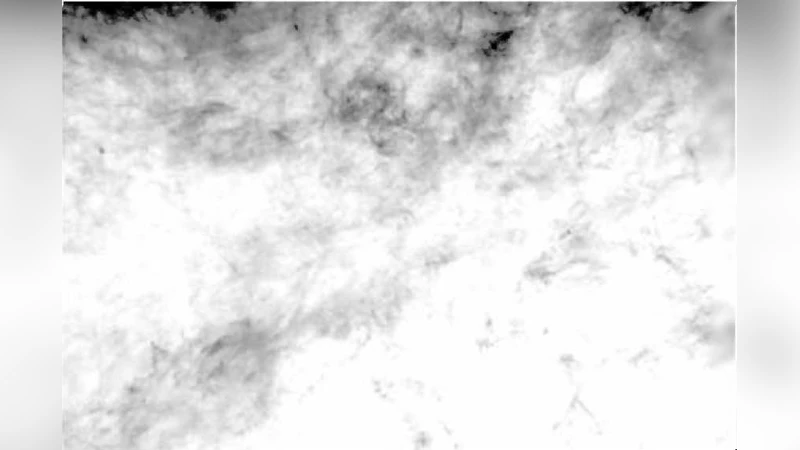
We report on a search for the parental molecular clouds of the TW Hya association (TWA), using CO emission and Na I absorption lines. TWA is the nearest young (~ 50 pc; ~ 10 Myr) stellar association, yet in spite of its youth, there are no detection of any associated natal molecular gas, as is the case for other typical young clusters. Using infrared maps as a guide, we conducted a CO cloud survey toward a region with a dust extinction of E(B-V) > 0.2 mag, or AV > 0.6 mag. CO emission is detected toward three IR dust clouds, and we reject one cloud from the TWA, as no interstellar Na absorption was detected from the nearby Hipparcos stars, implying that it is too distant to be related. The other two clouds exhibit only faint and small-scale CO emission. Interstellar Na I absorptions of Hipparcos targets, HIP 57809, HIP 64837, and HIP 64925 (at distances of 133, 81, and 101 pc, respectively) by these couds is also detected. We conclude that only a small fraction of the interstellar matter (ISM) toward the IR dust cloud is located at distance less than 100 pc, which may be all that is left of the remnant clouds of TWA; the remaining remnant cloud having dissipated in the last ~ 1 Myr. Such a short dissipation timescale may be due to an external perturbation or kinematic segregation that has a large stellar proper motion relative to the natal cloud.
💡 Research Summary
The TW Hydra Association (TWA) is one of the nearest young stellar groups, located at roughly 50 pc and aged about 10 Myr. In most young clusters of comparable age, remnants of the natal molecular cloud are still detectable either as CO emission or as interstellar absorption lines toward background stars. However, prior surveys have failed to locate any such material associated with TWA, raising questions about the association’s birth environment and early dynamical evolution.
In this study the authors performed a targeted search for residual molecular gas by combining two classic interstellar medium diagnostics: (1) CO (1–0) line emission at 115 GHz, and (2) Na I D‑line absorption toward nearby Hipparcos stars. The search region was defined using infrared dust maps (IRAS/2MASS) and limited to areas with colour excess E(B–V) > 0.2 mag (equivalent visual extinction AV > 0.6 mag), a threshold that typically marks the presence of dense, CO‑bright clouds.
CO observations revealed weak emission toward three infrared dust condensations, labelled here as Cloud A, Cloud B, and Cloud C. Cloud A exhibited a peak main‑beam temperature of ~0.8 K and a narrow linewidth (~0.6 km s⁻¹), indicative of a cold, low‑density structure. Clouds B and C showed even fainter signals (0.3–0.4 K) confined to spatial scales of only a few arcminutes, suggesting they are small, fragmented remnants rather than coherent molecular complexes.
To test whether these CO features lie in front of, within, or behind the TWA members, the authors obtained high‑resolution optical spectra of three Hipparcos stars that lie along the same lines of sight: HIP 57809 (distance = 133 pc), HIP 64837 (81 pc), and HIP 64925 (101 pc). All three stars display interstellar Na I D absorption with equivalent widths of 0.05–0.12 Å. The central velocities of the Na I lines match the LSR velocities of the CO emission from Clouds B and C, confirming that the absorbing gas is physically associated with the CO‑detected material and lies at distances ≤ 100 pc. In contrast, no Na I absorption is seen toward stars behind Cloud A, implying that Cloud A is a more distant background structure unrelated to TWA.
Putting the CO and Na I results together, the authors conclude that only a minute fraction of the interstellar matter projected onto the infrared dust clouds is located within ~100 pc, i.e., within the plausible distance range of TWA. Consequently, the bulk of the original natal cloud must have dissipated within the last ~1 Myr. This rapid dispersal is atypical for a 10 Myr‑old association and suggests an external or dynamical trigger. The paper discusses two plausible mechanisms: (i) an external perturbation such as a shock wave from a nearby OB association or a supernova, which could have compressed and then shredded the cloud; and (ii) kinematic segregation, where the relatively high space motion of TWA members (≈ 20 km s⁻¹) relative to the ambient gas caused the stars to quickly outrun their birth material, effectively stripping the cloud away.
The authors stress that further observations are required to refine this picture. Higher‑sensitivity CO transitions (e.g., CO (2–1), ¹³CO) and complementary HI 21 cm data would better constrain the mass and density of any remaining gas. Moreover, precise parallaxes from Gaia DR3 can pinpoint the distances to the absorbing material, allowing a three‑dimensional reconstruction of the residual cloud geometry. Such multi‑wavelength, high‑resolution studies are essential not only for TWA but also for understanding the early dispersal of natal clouds in other nearby young associations.
In summary, the paper provides the first direct evidence that only trace amounts of molecular gas survive near the TW Hydra Association, that these remnants are confined to within ~100 pc, and that the original cloud has largely vanished on a timescale of ≲ 1 Myr, likely due to external shocks or the high proper motion of the association’s stars.
Comments & Academic Discussion
Loading comments...
Leave a Comment