ATLASGAL - The APEX Telescope Large Area Survey of the Galaxy at 870 microns
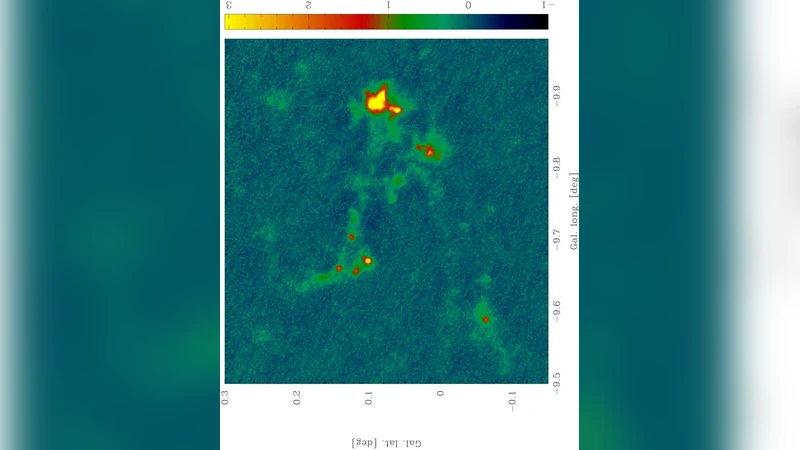
(Abridged) Studying continuum emission from interstellar dust is essential to locating and characterizing the highest density regions in the interstellar medium. In particular, the early stages of massive star formation remain poorly understood. Our goal is to produce a large-scale, systematic database of massive pre- and proto-stellar clumps in the Galaxy, to understand how and under what conditions star formation takes place. A well characterized sample of star-forming sites will deliver an evolutionary sequence and a mass function of high-mass, star-forming clumps. This systematic survey at submm wavelengths also represents a preparatory work for Herschel and ALMA. The APEX telescope is ideally located to observe the inner Milky Way. The Large APEX Bolometer Camera (LABOCA) is a 295-element bolometer array observing at 870 microns, with a beam size of 19". Taking advantage of its large field of view (11.4’) and excellent sensitivity, we started an unbiased survey of the Galactic Plane, with a noise level of 50-70 mJy/beam: the APEX Telescope Large Area Survey of the Galaxy (ATLASGAL). As a first step, we covered 95 sq. deg. These data reveal 6000 compact sources brighter than 0.25 Jy, as well as extended structures, many of them filamentary. About two thirds of the compact sources have no bright infrared counterpart, and some of them are likely to correspond to the precursors of (high-mass) proto-stars or proto-clusters. Other compact sources harbor hot cores, compact HII regions or young embedded clusters. Assuming a typical distance of 5 kpc, most sources are clumps smaller than 1 pc with masses from a few 10 to a few 100 M_sun. In this introductory paper, we show preliminary results from these ongoing observations, and discuss the perspectives of the survey.
💡 Research Summary
The ATLASGAL project represents the first large‑scale, unbiased sub‑millimetre survey of the inner Milky Way, carried out with the APEX 12 m telescope equipped with the LABOCA bolometer array. LABOCA observes at 870 µm (345 GHz) with a 19 arcsec beam, a field of view of 11.4 arcmin and a typical rms noise of 50–70 mJy beam⁻¹. Using a fast “skydip” scanning strategy, the team mapped 95 square degrees of the Galactic plane (−60° ≤ l ≤ +60°, |b| ≤ 1.5°) and produced a uniform map that reveals both compact and extended emission.
Source extraction was performed with a combination of the ClumpFind algorithm and custom density‑threshold criteria, yielding about 6 000 compact sources with peak flux densities ≥ 0.25 Jy. The catalog includes positions, peak and integrated fluxes, deconvolved sizes, and shape parameters. Cross‑matching with existing mid‑infrared surveys (MSX, IRAS, Spitzer GLIMPSE/MIPSGAL) shows that roughly two‑thirds of the sub‑mm sources have no bright infrared counterpart; these are termed “infrared‑dark clumps” (IRDCs) and are interpreted as the cold, dense precursors of high‑mass protostars or proto‑clusters. The remaining one‑third are associated with hot cores, compact H II regions, or embedded young clusters, indicating a more advanced evolutionary stage.
Assuming a representative distance of 5 kpc, the physical properties of the clumps can be estimated. Using a dust opacity κ_870 ≈ 1.85 cm² g⁻¹ and a dust temperature of 15–20 K, the derived masses span from a few × 10 M☉ up to a few × 10² M☉, with a median around 100 M☉. The deconvolved radii are typically ≤ 1 pc, placing the objects firmly in the “clump” regime (as opposed to cores or clouds). The mass‑size relation follows M ∝ R^2.4, suggesting that many of these structures are close to the threshold for gravitational collapse.
A striking morphological feature of the ATLASGAL maps is the prevalence of filamentary structures. Filaments extend over several to tens of parsecs, have widths of 0.1–0.5 pc, and often host multiple compact clumps aligned along their axes. This morphology mirrors the filamentary network revealed by Herschel in the far‑infrared and supports the emerging picture that filaments are the primary sites of mass accumulation and subsequent fragmentation into star‑forming clumps.
The survey provides a crucial foundation for follow‑up studies with Herschel and ALMA. Herschel’s 70–500 µm photometry will allow precise temperature and luminosity determinations for the ATLASGAL clumps, refining mass estimates and enabling a robust evolutionary classification. ALMA, with sub‑arcsecond resolution and high‑sensitivity spectral line capabilities, will be able to resolve the internal sub‑structure of selected clumps, detect individual protostellar cores, measure kinematics, and probe chemical evolution. Together, these facilities will transform the ATLASGAL catalog into a benchmark dataset for testing theories of high‑mass star formation, the initial mass function of clumps, and the role of filaments in channeling material into star‑forming sites.
In summary, the ATLASGAL survey has delivered a homogeneous, high‑quality map of the inner Galactic plane at 870 µm, identified ~6 000 compact sub‑mm sources, and demonstrated that the majority are cold, massive clumps without bright infrared emission—prime candidates for the earliest phases of massive star and cluster formation. The catalog, combined with forthcoming Herschel and ALMA observations, will enable statistical studies of clump mass functions, star‑formation efficiencies, and the interplay between large‑scale filamentary gas and localized collapse, thereby advancing our understanding of how the most massive stars in the Galaxy are born.
Comments & Academic Discussion
Loading comments...
Leave a Comment