An analysis of the composite stellar population in M32
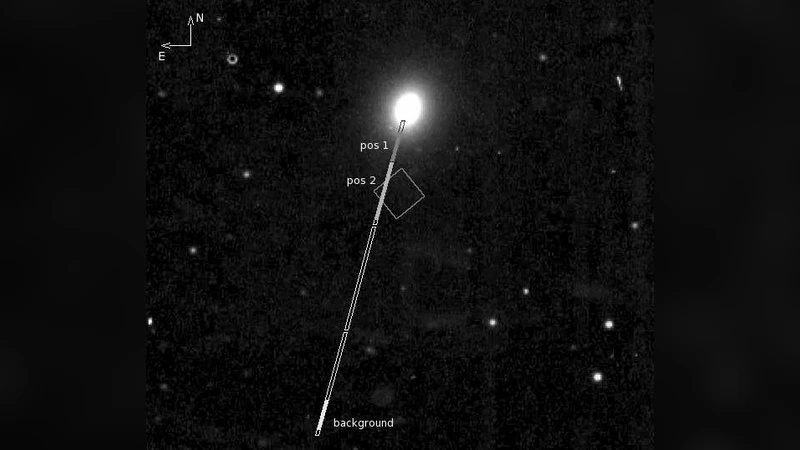
We obtained long-slit spectra of high signal-to-noise ratio of the galaxy M32 with the GMOS spectrograph at the GEMINI North telescope. We analysed the integrated spectra by means of full spectral fitting in order to extract the mixture of stellar populations that best represents its composite nature. Three different galactic radii were analysed, from the nuclear region out to 2 arcmin from the centre. This allows us to compare, for the first time, the results of integrated light spectroscopy with those of resolved colour-magnitude diagrams from the literature. As our main result, we propose that an ancient and an intermediate-age population coexist in M32, and that the balance between these two populations change between the nucleus and outside 1 effective radius in the sense that the contribution from the intermediate population is larger at the nuclear region. We retrieve a smaller signal of a young population at all radii whose origin is unclear and may be a contamination from horizontal-branch stars, such as the ones identified by Brown et al. in the nuclear region. We compare our metallicity distribution function for a region 1 to 2 arcmin from the centre to the one obtained with photometric data by Grillmair et al. Both distributions are broad, but our spectroscopically derived distribution has a significant component with $[Z/Z_{\sun}] \leq -1$, which is not found by Grillmair et al.
💡 Research Summary
This paper presents a detailed spectroscopic study of the compact elliptical galaxy M32, using high‑signal‑to‑noise long‑slit spectra obtained with the Gemini North Multi‑Object Spectrograph (GMOS). Observations were carried out at three radial zones: the nuclear region (0–0.5 effective radii, Rₑ), an intermediate annulus (0.5–1 Rₑ), and an outer region extending from 1 to 2 Rₑ (approximately 2 arcminutes from the centre). The total exposure time per zone exceeded three hours, delivering spectra with S/N ≈ 100 across the wavelength range 4000–5500 Å. Standard reduction steps (bias subtraction, flat‑fielding, wavelength calibration) were complemented by careful sky subtraction and instrumental response correction to minimise systematic errors.
The analysis departs from traditional line‑index methods and instead employs full‑spectral fitting, which simultaneously matches the entire observed spectrum to a linear combination of simple stellar population (SSP) models. The authors constructed a comprehensive SSP library based on the MILES empirical stellar library and BaSTI isochrones, spanning ages from 0.5 to 13 Gyr in 0.5 Gyr steps and metallicities from
Comments & Academic Discussion
Loading comments...
Leave a Comment