Linking pre- and proto-stellar objects in the intermediate-/high-mass star forming region IRAS 05345+3157
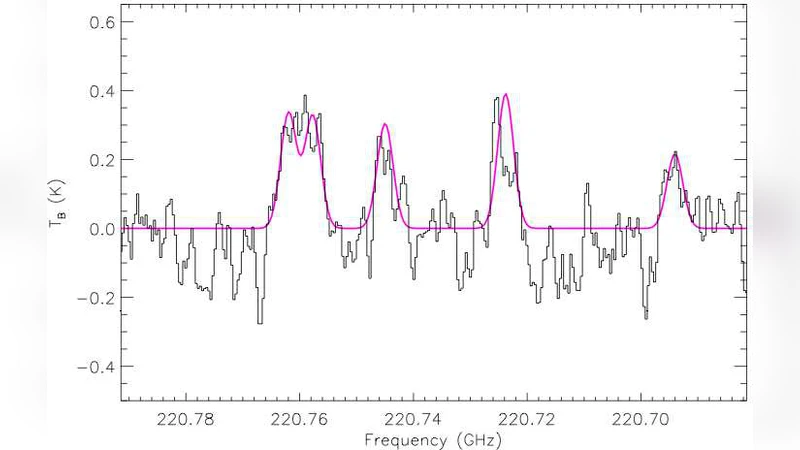
To better understand the initial conditions of the high-mass star formation process, it is crucial to study at high-angular resolution the morphology, the kinematics, and eventually the interactions of the coldest condensations associated with intermediate-/high-mass star forming regions. The paper studies the cold condensations in the intermediate-/high-mass proto-cluster IRAS 05345+3157, focusing the attention on the interaction with the other objects in the cluster. We have performed millimeter high-angular resolution observations, both in the continuum and several molecular lines, with the PdBI and the SMA. In a recent paper, we have already published part of these data. The main finding of that work was the detection of two cold and dense gaseous condensations, called N and S (masses ~2 and ~9 M_sun), characterised by high values of the deuterium fractionation (~0.1 in both cores). In this paper, we present a full report of the observations, and a complete analysis of the data obtained. The millimeter maps reveal the presence of 3 cores inside the interferometers primary beam, called C1-a, C1-b and C2. None of them are associated with cores N and S. C1-b is very likely associated with a newly formed early-B ZAMS star embedded inside a hot-core, while C1-a is more likely associated with a class 0 intermediate-mass protostar. The nature of C2 is unclear. Both C1-a and C1-b are good candidates as driving sources of a powerful CO outflow, which strongly interacts with N and S, as demonstrated by the velocity gradient across both condensations. Our major conclusion is that the chemical properties of these pre-stellar cores are similar to those observed in low-mass isolated ones, while the kinematics is dominated by the turbulence triggered by the CO outflow and can influece their evolution.
💡 Research Summary
The paper presents a comprehensive high‑angular‑resolution millimeter study of the intermediate‑to‑high‑mass star‑forming region IRAS 05345+3157, aiming to elucidate the initial conditions and early evolutionary interactions of the coldest condensations within a clustered environment. Using the Plateau de Bure Interferometer (PdBI) and the Submillimeter Array (SMA), the authors obtained continuum maps at 1.3 mm and 3 mm together with a suite of molecular line observations, including N₂H⁺(1–0), N₂D⁺(3–2), H¹³CO⁺(1–0), and CO(2–1). These data allow simultaneous probing of density, temperature, chemistry, and kinematics at sub‑arcsecond scales (≈ 0.5″, corresponding to ≈ 1000 AU at the source distance).
Previously, two cold, dense condensations—designated N and S—were identified in lower‑resolution work. They have masses of roughly 2 M☉ (N) and 9 M☉ (S) and exhibit a high deuterium fractionation (N₂D⁺/N₂H⁺ ≈ 0.1), a hallmark of chemically young, pre‑stellar cores. The new high‑resolution observations reveal three additional compact sources within the primary beam, labeled C1‑a, C1‑b, and C2, none of which coincide spatially with N or S.
C1‑b stands out as the most luminous millimeter source. Its spectrum shows hot‑core tracers such as CH₃CN and CH₃OH, and a compact free‑free component indicative of an early‑B zero‑age main‑sequence (ZAMS) star already embedded in a hot core. C1‑a is less luminous, lacks hot‑core chemistry, but is situated at the apex of a powerful bipolar CO outflow; its estimated mass (~3 M☉) and lack of infrared emission suggest a Class 0 intermediate‑mass protostar. C2 is faint in both continuum and line emission, leaving its nature ambiguous—it may be a low‑mass protostellar candidate or a dense core yet to collapse.
The CO(2–1) line maps uncover a high‑velocity bipolar outflow with a total velocity spread of about ±30 km s⁻¹. The outflow axis aligns closely with the line joining C1‑a and C1‑b, implying that one or both of these sources drive the flow. Importantly, the outflow intersects the pre‑stellar cores N and S, producing a measurable velocity gradient across each (≈ 1 km s⁻¹ pc⁻¹). This gradient is interpreted as turbulence injected by the outflow, rather than simple gravitational infall, and suggests that the dynamical environment of the pre‑stellar cores is strongly influenced by feedback from nearby massive protostars.
Chemically, the high deuterium fractionation observed in N and S mirrors that found in low‑mass isolated pre‑stellar cores, indicating that the cores have remained cold (T ≲ 15 K) and CO‑depleted despite being embedded in a massive star‑forming cluster. In contrast, the deuterium fraction drops dramatically in C1‑a, C1‑b, and C2, consistent with elevated temperatures and CO desorption that suppress deuteration. This dichotomy underscores that while the chemistry of the pre‑stellar cores is low‑mass‑like, their kinematics are dominated by the turbulent motions generated by the massive outflow.
The authors conclude that the chemical evolution of the pre‑stellar cores in IRAS 05345+3157 proceeds similarly to that of low‑mass counterparts, but the dynamical evolution is heavily modulated by feedback from neighboring massive protostars. This finding highlights a key difference between high‑mass and low‑mass star formation: in clustered high‑mass environments, outflows and other energetic processes can inject turbulence on scales comparable to core sizes, potentially altering collapse timescales, fragmentation, and the resulting stellar initial mass function. The paper calls for further ultra‑high‑resolution ALMA observations and detailed magneto‑hydrodynamic simulations to quantify how such feedback reshapes the fate of pre‑stellar cores in massive star‑forming regions.
Comments & Academic Discussion
Loading comments...
Leave a Comment