Bifurcations of Liouville Tori in Elliptical Billiards
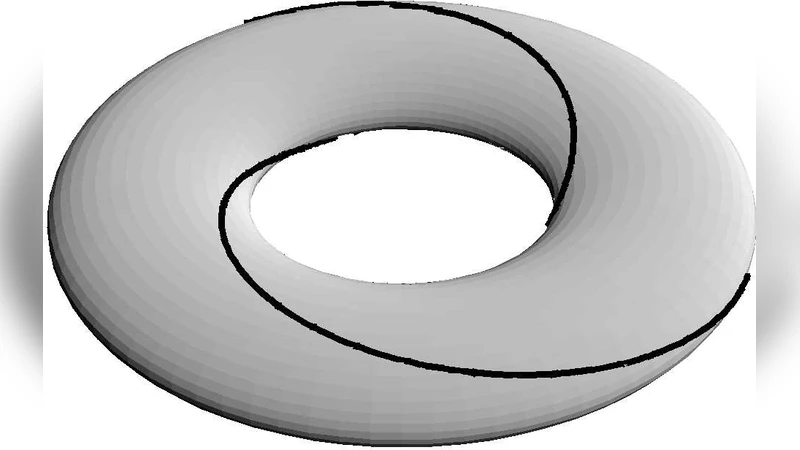
A detailed description of topology of integrable billiard systems is given. For elliptical billiards and geodesic billiards on ellipsoid, the corresponding Fomenko graphs are constructed.
💡 Research Summary
The paper presents a comprehensive topological study of two classic integrable billiard systems: the planar elliptical billiard and the geodesic billiard on a three‑dimensional ellipsoid. Both systems are completely integrable because they possess two independent first integrals (energy and a second quantity related to the geometry of the confocal family). By passing to action‑angle variables, the phase space of each system is foliated by two‑dimensional Liouville tori. The central problem addressed is how these tori change topology as the integrals vary, i.e., the bifurcations of Liouville tori.
For the planar elliptical billiard, the authors exploit the well‑known confocal coordinate system. The two foci give rise to special families of trajectories: those that pass through a focus, those that are tangent to a confocal caustic, and those that are tangent to the boundary itself. Each family corresponds to a distinct region in the (energy, angular momentum) parameter plane. When a parameter crosses a critical value, a torus either splits into two, merges with another, or collapses to a lower‑dimensional invariant set (a periodic orbit or a separatrix). The authors identify all such critical values and describe the local structure of the foliation near them.
The geodesic billiard on an ellipsoid is treated analogously, but the geometry is richer because the motion occurs on a curved surface without a physical boundary. The integrals are the energy and the component of the angular momentum associated with the confocal quadrics that intersect the ellipsoid. Again, the phase space is foliated by Liouville tori, but the bifurcation diagram reflects the anisotropy of the ellipsoid: tori associated with motion near the major axis behave differently from those near the minor axis. The paper provides a complete classification of the torus families and the corresponding critical values.
The main methodological contribution is the construction of Fomenko graphs for both systems. A Fomenko graph encodes the global topology of the Liouville foliation: vertices represent connected components of regular tori, edges represent families of singular leaves (critical tori, separatrices, periodic orbits), and labels on vertices and edges carry information about the genus of the component and the type of singularity. For the planar elliptical billiard, the graph exhibits a pronounced symmetry reflecting the two foci; pairs of vertices are linked by symmetric edges, and a central “focus” subgraph captures the families of focus‑passing trajectories. For the ellipsoidal geodesic billiard, the graph is less symmetric, with distinct subgraphs associated with motion along the major and minor axes, illustrating how the curvature anisotropy influences the foliation.
Beyond the purely classical picture, the authors discuss implications for semiclassical quantization. In the Bohr‑Sommerfeld framework, each regular torus gives rise to a quantized energy level, while singular tori contribute additional quantum numbers (e.g., Maslov indices). The structure of the Fomenko graph therefore predicts the arrangement of quantum levels and the presence of degeneracies. The paper argues that the differing graph topologies for the two billiards lead to distinct spectral patterns, a point that could be verified in numerical or experimental studies of wave billiards.
In summary, the work achieves three goals: (1) it provides a detailed description of the Liouville foliation and its bifurcations for two fundamental integrable billiard models; (2) it translates this description into explicit Fomenko graphs, thereby offering a compact topological invariant of each system; and (3) it outlines how these invariants inform the semiclassical quantization and spectral properties of the corresponding quantum billiards. The results enrich the toolbox for studying integrable Hamiltonian systems, illustrate the power of topological methods in classical mechanics, and set the stage for future investigations of more complex or partially integrable billiard problems.
Comments & Academic Discussion
Loading comments...
Leave a Comment