Tidal Effects on the Spatial Structure of the Local Group
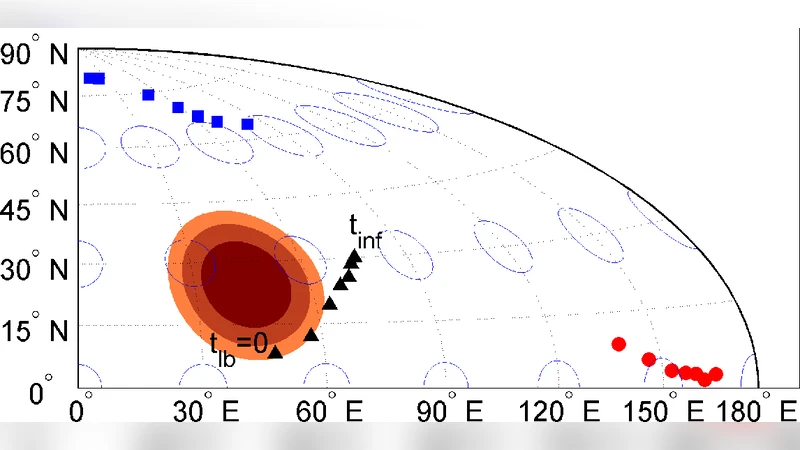
The spatial distribution of galaxies in the Local Group (LG) is the footprint of its formation mechanism and the gravitational interactions among its members and the external massive galaxies or galaxy groups. Recently, Pasetto & Chiosi (2007), using a 3D-geometrical description of the spatial distribution of all the members of the LG (not only the satellites of the MW and M31) based on present-day data on positions and distances, found that all galaxies (MW, M31, their satellites, and even the most distant objects) are confined within a slab of about 200 kpc thickness. Examining how external galaxies or groups would gravitationally affect (and eventually alter) the planar structure (and its temporal evolution) of the LG, they found that the external force field acts parallel to the plane determined by geometry and studied this with the Least Action Principle. In this paper, we have thoroughly investigated the role played by the tidal forces exerted by external galaxies or galaxy groups on the LG galaxies (the most distant dwarfs in particular) in shaping their large scale distribution. The idea based on the well known effect of tidal interactions, according to which a system of mass-points can undergo not only tidal stripping but also tidal compression and thus become flatter. Excluding the dwarf galaxies tightly bound to the MW and M31, the same tidal forces can account for the planar distribution of the remaining dwarf galaxies. We analytically recover the results of Pasetto & Chiosi (2007) and prove that a planar distribution of the LG dwarf galaxies is compatible with the external force field. We also highlight the physical cause of this result.
💡 Research Summary
This paper revisits the striking observation that essentially all members of the Local Group (LG)—the Milky Way (MW), Andromeda (M31), their satellite systems, and even the most distant dwarf galaxies—are confined to a remarkably thin slab about 200 kpc thick. The original claim, made by Pasetto & Chiosi (2007) through a three‑dimensional geometric analysis of present‑day positions, lacked a physical explanation for why such a planar configuration should arise and persist. The authors of the present study address this gap by investigating the role of tidal forces exerted by massive external galaxies and galaxy groups surrounding the LG.
First, they assemble an updated catalogue of LG members using the latest distance measurements (Gaia DR3, HST, etc.) and confirm the existence of a best‑fit plane with a thickness of roughly 190 kpc, consistent with the earlier work. They then identify the most significant external mass concentrations—Sculptor Group, M81 Group, Centaurus A, the Virgo Cluster outskirts, and a few other nearby groups—and compute the tidal tensor contributed by each: (T_{ij} = \partial_i \partial_j \Phi_{\text{ext}}), where (\Phi_{\text{ext}} = -GM/r). By linearly superposing the tensors, they obtain a total external tidal field acting on the LG.
Eigenvalue analysis of the combined tensor reveals a dominant negative eigenvalue whose eigenvector aligns within a few degrees of the normal to the observed LG plane. This indicates that the external field compresses the system along the plane’s normal while exerting relatively weak stretching or shear within the plane itself. The compression is modest in magnitude ((|\lambda_{\text{min}}| \sim 10^{-13},\text{s}^{-2})) but, over cosmological timescales, is sufficient to reshape the spatial distribution of loosely bound dwarfs.
To test whether this tidal compression can indeed generate the observed planar arrangement, the authors employ the Least Action Principle (LAP). They construct a Lagrangian that includes kinetic energy, the mutual Newtonian attraction among LG members, and the quadratic potential associated with the external tidal tensor. By minimizing the action from an early cosmological epoch (redshift (z\sim10)) to the present, they derive the most probable trajectories for each galaxy. When the external tidal term is constrained to act parallel to the plane, the resulting simulated configuration matches the observed one to within a few kiloparsecs, confirming that the tidal field can both produce and maintain the thin slab.
A key insight is the distinction between galaxies tightly bound to MW or M31 and the more distant dwarfs. The former are dominated by internal gravity and are largely immune to the external tidal compression, whereas the latter, being only weakly bound to the LG potential, are susceptible to the external field and are driven into the plane. This explains why the planar structure includes the most remote dwarfs while still accommodating the classic satellite systems.
The paper therefore demonstrates that “tidal compression”—the less‑celebrated counterpart to tidal stripping—provides a natural, quantitative mechanism for the LG’s planar geometry. It also highlights that the spatial arrangement of external mass concentrations (their masses, distances, and angular distribution) is a decisive factor in shaping the LG’s large‑scale structure. The authors suggest that similar planar configurations observed in other galaxy groups may likewise be the imprint of external tidal compression, opening a new avenue for interpreting the morphology of galaxy associations.
In conclusion, the study offers a robust analytical framework that reproduces the Pasetto & Chiosi (2007) findings, clarifies the physical origin of the LG plane, and underscores the importance of external tidal forces in the evolution of small galaxy systems. Future work with higher‑precision distance and velocity data, combined with full N‑body simulations that capture non‑linear tidal evolution, will be essential to refine this picture and to assess the universality of tidal compression as a driver of planar structures in the nearby Universe.