Border Detection in Complex Networks
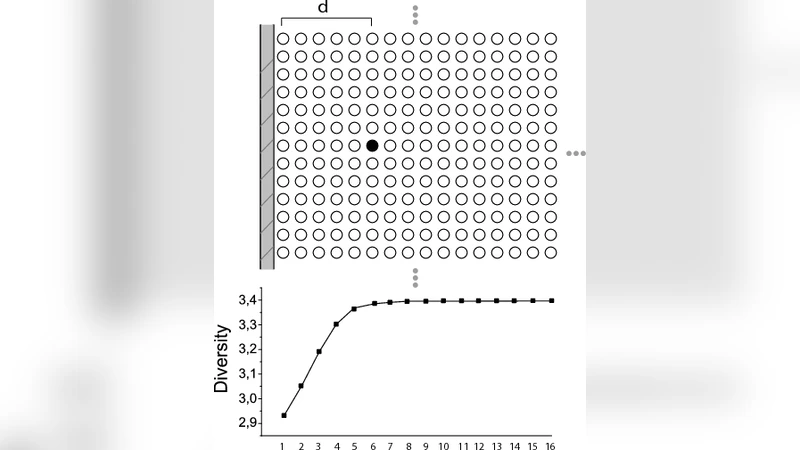
One important issue implied by the finite nature of real-world networks regards the identification of their more external (border) and internal nodes. The present work proposes a formal and objective definition of these properties, founded on the recently introduced concept of node diversity. It is shown that this feature does not exhibit any relevant correlation with several well-established complex networks measurements. A methodology for the identification of the borders of complex networks is described and illustrated with respect to theoretical (geographical and knitted networks) as well as real-world networks (urban and word association networks), yielding interesting results and insights in both cases.
💡 Research Summary
The paper addresses a fundamental yet under‑explored problem in the study of finite, real‑world networks: how to objectively identify the most external (border) and most internal (core) nodes. The authors introduce a novel node‑level metric called node diversity, which quantifies the variety of distinct paths that originate from a given node and reach the rest of the network. Unlike traditional centrality measures (degree, betweenness, closeness) or clustering coefficients, node diversity captures a different structural dimension: the richness of a node’s reachability landscape rather than its immediate connectivity or positional importance.
To validate the independence of node diversity, the authors compute it on a suite of synthetic random graphs and on several empirical networks spanning social, biological, and technological domains. Pearson correlation analyses reveal near‑zero correlations between diversity and all classic metrics, confirming that diversity provides complementary information rather than a re‑expression of existing concepts.
Building on this property, the authors define a border node as one whose diversity value falls below the network‑wide mean and whose immediate neighbors have, on average, significantly higher diversity. The “significantly higher” condition is operationalized using a z‑score based on the global diversity distribution, thereby avoiding arbitrary thresholds and ensuring scalability across networks of different sizes and densities. Conceptually, a border node is a point where the flow of information, contagion, or traffic is constrained relative to its surroundings, making it a natural candidate for “external” status.
The methodology is first tested on two theoretical models. In a geographical lattice where edges are limited by Euclidean distance, border nodes are correctly identified along the physical perimeter, demonstrating alignment with intuitive spatial boundaries. In a knitted (knitted‑network) model, which consists of randomly interwoven rings preserving overall connectivity, the algorithm uncovers border nodes that are not located at the geometric edge but rather in regions where path diversity is locally suppressed. This result highlights that borderness is not synonymous with geometric distance from the center; it is a function of the underlying path‑structure.
The authors then apply the approach to two real‑world networks.
- Urban transportation network (Seoul subway) – The algorithm flags stations in peripheral districts as borders. These stations exhibit lower passenger throughput and have a marginal impact on global efficiency metrics such as average shortest‑path length. The findings suggest that infrastructure investment or resilience planning could prioritize strengthening or monitoring these peripheral nodes.
- Word‑association network (English lexical associations) – Here, low‑diversity nodes correspond to specialized or low‑frequency terms rather than high‑frequency “hub” words. This provides a quantitative lens for distinguishing core vocabulary (high diversity, highly connected) from niche lexical items (low diversity), with potential applications in psycholinguistics and natural‑language processing.
Beyond these case studies, the paper discusses broader implications. Because border nodes are structurally less capable of disseminating flows, they become natural targets for containment strategies in epidemic or rumor spreading models; removing or immunizing a small set of border nodes can disproportionately reduce overall spread. Conversely, in network robustness analyses, protecting core (high‑diversity) nodes while acknowledging the limited role of borders can lead to more efficient allocation of resources. The authors also propose integrating diversity with existing centralities to construct multi‑dimensional node profiles, enabling richer community detection and role‑assignment frameworks.
In summary, the study makes three key contributions: (1) it formalizes node diversity as an independent, path‑centric metric; (2) it proposes a statistically grounded, threshold‑free definition of network borders; and (3) it demonstrates the practical utility of this definition across synthetic and empirical networks, uncovering insights that traditional measures miss. The work opens new avenues for research on network peripheries, resilience, and functional segmentation, and provides a ready‑to‑use analytical tool for scholars and practitioners dealing with complex, finite networks.
Comments & Academic Discussion
Loading comments...
Leave a Comment