Analysis of Galactic late-type O dwarfs: more constraints on the weak wind problem
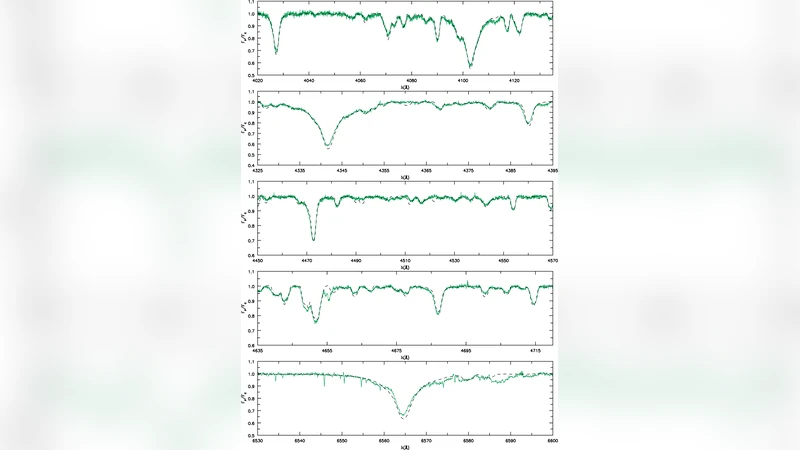
We have investigated the stellar and wind properties of a sample of five late-type O dwarfs in order to address the weak wind problem. A grid of TLUSTY models was used to obtain the stellar parameters, and the wind parameters were determined by using the CMFGEN code. We found that the spectra have mainly a photospheric origin. A weak wind signature is seen in CIV 1549, from where mass-loss rates consistent with previous CMFGEN results regarding O8-9V stars were obtained. A discrepancy of roughly 2 orders of magnitude is found between these mass-loss rates and the values predicted by theory (Mdot(Vink)), confirming a breakdown or a steepening of the modified wind momentum-luminosity relation at log L/Lsun < 5.2. We have estimated the carbon abundance for the stars of our sample and concluded that its uncertainty cannot cause the weak wind problem. Upper limits on Mdot were established for all objects using lines of different ions, namely, PV 1118,28, CIII 1176, NV 1239,43, Si IV 1394,03, and NIV 1718. All the values obtained are also in disagreement with theoretical predictions, bringing support to the reality of weak winds. Together with CIV 1549, the use of NV 1239,43 results in the lowest mass-loss rates: the upper limits indicate that Mdot must be less than about -1.0 dex Mdot(Vink). Regarding the other transitions, the upper limits still point to low rates: Mdot must be less than about $(-0.5 \pm 0.2)$ dex Mdot(Vink). We have studied the behavior of the Halpha line with different mass-loss rates. We have also explored ways to fit the observed spectra with Mdot(Vink). By using large amounts of X-rays, we verified that few wind emissions take place, as in weak winds. However, unrealistic X-rays luminosities had to be used (log Lx/Lbol > -3.5) (abridged).
💡 Research Summary
The paper addresses the long‑standing “weak wind problem” in late‑type O dwarf stars by performing a detailed spectroscopic analysis of five O8–O9 V objects. The authors first determine the fundamental stellar parameters (effective temperature, surface gravity, and metallicity) using a grid of TLUSTY atmosphere models, which provide a reliable description of the photospheric layers. They then employ the CMFGEN non‑LTE radiative transfer code to model the wind region and to derive the mass‑loss rates (Ṁ) and terminal velocities (v∞).
The primary wind diagnostic is the UV resonance line C IV λ1549. The observed profile shows only a shallow absorption component, indicative of a very weak outflow. CMFGEN fits require Ṁ values that are roughly one order of magnitude lower than the theoretical predictions of Vink et al. (2000), i.e., Ṁ ≈ 0.1 Ṁ(Vink). To test whether uncertainties in the carbon abundance could reconcile the discrepancy, the authors estimate C/H for each star. The derived carbon abundances vary by at most 0.2 dex, far insufficient to explain the ≈2 dex gap between observed and predicted mass‑loss rates.
Additional constraints are obtained from several other UV lines that form at different ionisation stages and wind depths: P V λλ1118,1128, C III λ1176, N V λλ1239,1243, Si IV λλ1394,1403, and N IV λ1718. For each transition the authors compute an upper limit on Ṁ by increasing the model mass‑loss until the synthetic line begins to exceed the observed profile. All upper limits lie below the Vink predictions, ranging from –0.5 ± 0.2 dex to –1.0 dex relative to Ṁ(Vink). The N V doublet, together with C IV, yields the most stringent limits, suggesting that the true mass‑loss rates must be at least a factor of ten lower than the standard theory.
The Hα line, traditionally used to diagnose strong winds, is examined as well. The authors show that, for the low Ṁ values required by the UV diagnostics, Hα remains essentially photospheric, confirming that it cannot be used to detect weak winds in these stars.
To explore whether enhanced X‑ray emission could artificially suppress wind signatures, the authors artificially raise the X‑ray luminosity in the CMFGEN models. They find that only unrealistically high X‑ray luminosities (log L_X/L_bol > –3.5) can reduce the wind emission to the observed level. Observed O dwarfs typically have log L_X/L_bol ≈ –7, so X‑ray ionisation cannot be the primary cause of the weak wind phenomenon.
Overall, the study confirms that the mass‑loss rates of late‑type O dwarfs are dramatically lower than predicted by the Vink prescription. This discrepancy manifests as a breakdown or a steepening of the modified wind momentum–luminosity relation (WLR) for stars with log L/L_⊙ < 5.2. The authors conclude that the weak wind problem is real, not an artefact of abundance uncertainties or X‑ray effects, and that current wind theory must be revised for low‑luminosity O stars. They suggest that future work should incorporate three‑dimensional radiative transfer, magnetic field effects, and more accurate X‑ray observations to uncover the physical mechanisms that suppress mass loss in these objects, with important implications for massive‑star evolution, feedback, and supernova progenitor models.
Comments & Academic Discussion
Loading comments...
Leave a Comment