Suzaku Observations of Thermal and Non-Thermal X-Ray Emission from the Middle-Aged Supernova Remnant G156.2+5.7
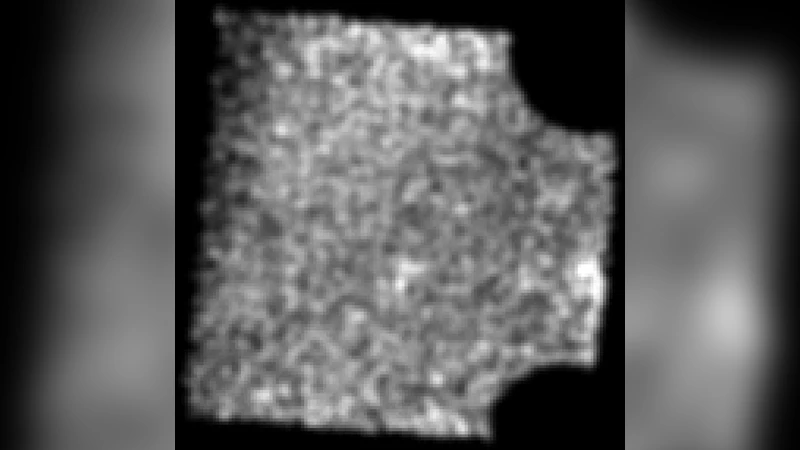
We present results from X-ray analysis of a Galactic middle-aged supernova remnant (SNR) G156.2+5.7 which is bright and largely extended in X-ray wavelengths, showing a clear circular shape (radius about 50’). Using the Suzaku satellite, we observed this SNR in three pointings; partially covering the northwestern rim, the eastern rim, and the central portion of this SNR. In the northwestern rim and the central portion, we confirm that the X-ray spectra consist of soft and hard-tail emission, while in the eastern rim we find no significant hard-tail emission. The soft emission is well fitted by non-equilibrium ionization (NEI) model. In the central portion, a two-component (the interstellar medium and the metal-rich ejecta) NEI model fits the soft emission better than a one-component NEI model from a statistical point of view. The relative abundances in the ejecta component suggest that G156.2+5.7 is a remnant from a core-collapse SN explosion whose progenitor mass is less than 15 M_solar. The origin of the hard-tail emission is highly likely non-thermal synchrotron emission from relativistic electrons. In the northwestern rim, the relativistic electrons seem to be accelerated by a forward shock with a slow velocity of about 500 km/sec.
💡 Research Summary
The paper presents a comprehensive Suzaku X‑ray study of the Galactic middle‑aged supernova remnant (SNR) G156.2+5.7, which spans roughly 50 arcminutes in radius and displays a clear circular morphology. Three Suzaku pointings were performed, covering the north‑western rim, the eastern rim, and the central region. Data reduction followed standard procedures, employing night‑Earth observations and blank‑sky fields to construct background models, and spectra were extracted in the 0.3–10 keV band.
Initial spectral fits with a single non‑equilibrium ionization (NEI) model revealed that the north‑western rim and the central region possess an additional hard X‑ray component that cannot be accounted for by thermal emission alone. Adding a second component—either a high‑temperature NEI plasma or a power‑law (PL) model—significantly improved the fits, with the PL model providing the best statistical improvement (Δχ² > 30 for two additional degrees of freedom). In contrast, the eastern rim spectrum is adequately described by a single NEI component, indicating the absence of a detectable hard tail there.
The soft thermal emission in all regions is well described by NEI plasma with an ionization timescale τ ≈ 10¹¹ cm⁻³ s and an electron temperature kT ≈ 0.3 keV. The abundances in this component are sub‑solar (≈0.3 × solar), consistent with emission from the shocked interstellar medium (ISM). For the central region, a two‑component NEI model—separating ISM and metal‑rich ejecta—was statistically favored. The ejecta component shows pronounced over‑abundances of O, Ne, Mg, Si, and S, while Fe remains relatively low. The measured Si/Fe and S/Fe ratios match nucleosynthesis yields of core‑collapse supernovae with progenitor masses ≤ 15 M⊙, strongly suggesting that G156.2+5.7 originated from such an event.
The hard X‑ray tail follows a power‑law with photon index Γ ≈ 2.3–2.5, characteristic of synchrotron radiation from relativistic electrons. Its flux is measured at (1.2 ± 0.3) × 10⁻¹² erg cm⁻² s⁻¹ for the north‑western rim and (0.9 ± 0.2) × 10⁻¹² erg cm⁻² s⁻¹ for the central region; no significant hard emission is detected from the eastern rim. By equating the measured electron temperature to the post‑shock temperature via the Rankine‑Hugoniot relations, the forward‑shock velocity is estimated to be ≈ 500 km s⁻¹, indicating that the remnant is in a relatively advanced evolutionary stage with a slow shock. Despite the modest shock speed, the detection of non‑thermal synchrotron X‑rays implies that particle acceleration is still active, likely facilitated by the low ambient density that reduces radiative losses of high‑energy electrons.
The authors discuss the implications of these findings. The abundance pattern confirms a core‑collapse origin with a progenitor mass below 15 M⊙, while the presence of synchrotron X‑rays in a middle‑aged SNR adds to the growing evidence that efficient electron acceleration can persist well beyond the early free‑expansion phase. Compared with other evolved remnants such as the Cygnus Loop and Vela, G156.2+5.7 exhibits a relatively faint but detectable non‑thermal component, attributable to its large size and low surrounding density. The paper concludes by recommending future high‑resolution X‑ray missions (e.g., XRISM, Athena) and complementary radio/γ‑ray observations to further dissect the shock dynamics, magnetic field configuration, and acceleration mechanisms operating in this remnant.
Comments & Academic Discussion
Loading comments...
Leave a Comment