Formation of Isolated Dwarf Galaxies with Feedback
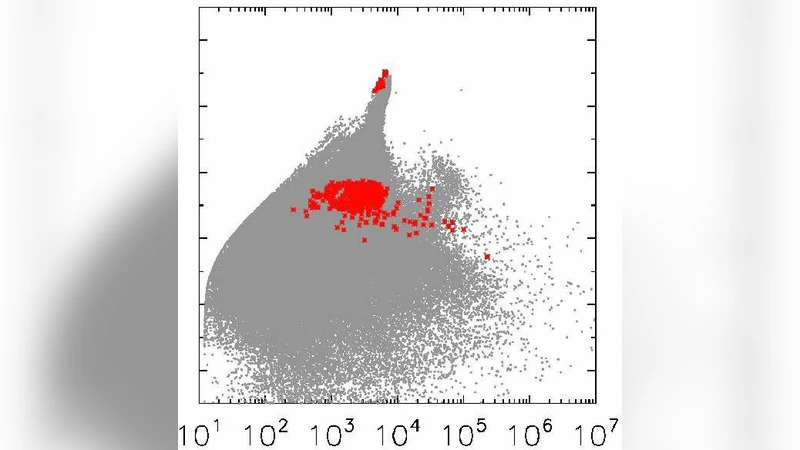
We present results of high resolution hydrodynamical simulations of the formation and evolution of dwarf galaxies. Our simulations start from cosmological initial conditions at high redshift. They include metal-dependent cooling, star formation, feedback from type II and type Ia supernovae and UV background radiation, with physical recipes identical to those applied in a previous study of Milky Way type galaxies. We find that a combination of feedback and the cosmic UV background results in the formation of galaxies with properties similar to the Local Group dwarf spheroidals, and that their effect is strongly moderated by the depth of the gravitational potential. Taking this into account, our models naturally reproduce the observed luminosities and metallicities. The final objects have halo masses between 2.3x10^8 and 1.1x10^9 solar masses, mean velocity dispersions between 6.5 and 9.7 kms-1, stellar masses ranging from 5x10^5 to 1.2x10^7 solar masses, median metallicities between [Fe/H] = -1.8 and -1.1, and half-light radii of the order of 200 to 300 pc, all comparable with Local Group dwarf spheroidals. Our simulations also indicate that the dwarf spheroidal galaxies observed today lie near a halo mass threshold around 10^9 solar masses, in agreement with stellar kinematic data, where supernova feedback not only suffices to completely expel the interstellar medium and leave the residual gas-free, but where the combination of feedback, UV radiation and self-shielding establishes a dichotomy of age distributions similar to that observed in the Milky Way and M31 satellites.
💡 Research Summary
The paper presents a suite of high‑resolution cosmological hydrodynamical simulations aimed at reproducing the formation and evolution of isolated dwarf spheroidal (dSph) galaxies similar to those observed in the Local Group. Starting from ΛCDM initial conditions at redshift ≈ 100, the authors evolve a 5 Mpc³ volume with a mass resolution better than 10⁴ M☉ and a spatial resolution of order 10 pc. The physical model incorporates metal‑dependent radiative cooling (using CLOUDY‑based tables), a stochastic star‑formation recipe triggered at densities >10 cm⁻³ and temperatures <10⁴ K, and feedback from both Type II and Type Ia supernovae. Each supernova injects 10⁵¹ erg of energy, split between thermal and kinetic channels, and a delayed‑cooling scheme is employed to prevent immediate radiative losses. In addition, a time‑varying UV background following the Haardt‑Madau 2012 prescription is switched on at z ≈ 6, providing a realistic ionising field that suppresses gas cooling in low‑density regions. Self‑shielding is modeled through a density‑dependent attenuation factor, allowing dense clumps to remain neutral and continue forming stars despite the external UV flux.
The simulations reveal a clear dependence of dwarf galaxy properties on the depth of their dark‑matter potential wells. Halos with virial masses between 2.3 × 10⁸ M☉ and 1.1 × 10⁹ M☉ produce final stellar systems whose observable characteristics—stellar mass (5 × 10⁵–1.2 × 10⁷ M☉), line‑of‑sight velocity dispersion (6.5–9.7 km s⁻¹), median metallicity (
Comments & Academic Discussion
Loading comments...
Leave a Comment