AMI observations of northern supernova remnants at 14-18 GHz
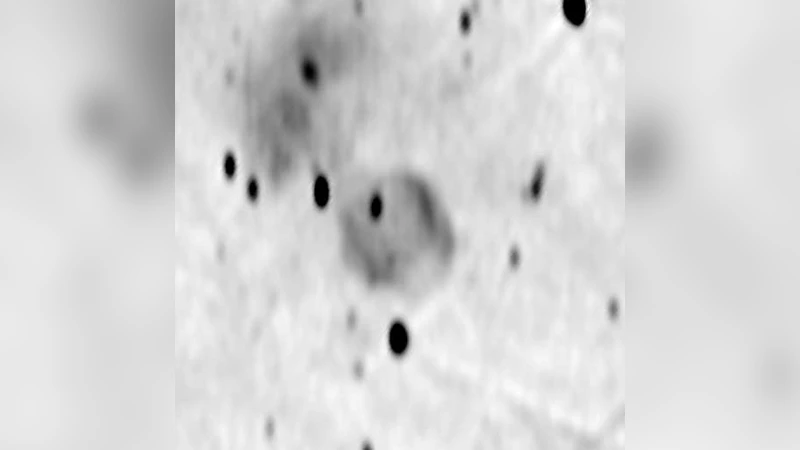
We present observations between 14.2 and 17.9 GHz of 12 reported supernova remnants (SNRs) made with the Arcminute Microkelvin Imager Small Array (AMI SA). In conjunction with data from the literature at lower radio frequencies, we determine spectra of these objects. For well-studied SNRs (Cas A, Tycho’s SNR, 3C58 and the Crab Nebula), the results are in good agreement with spectra based on previous results. For the less well-studied remnants the AMI SA observations provide higher-frequency radio observations than previously available, and better constrain their radio spectra. The AMI SA results confirm a spectral turnover at ~11 GHz for the filled-centre remnant G74.9+1.2. We also see a possible steepening of the spectrum of the filled-centre remnant G54.1+0.3 within the AMI SA frequency band compared with lower frequencies. We confirm that G84.9+0.5, which had previously been identified as a SNR, is rather an HII region and has a flat radio spectrum.
💡 Research Summary
This paper presents a systematic high‑frequency radio study of twelve northern supernova remnants (SNRs) using the Arcminute Microkelvin Imager Small Array (AMI SA). The instrument operates in the 13.5–18 GHz band; for this work the authors observed at four central frequencies—14.2, 15.0, 16.0 and 17.9 GHz—providing angular resolutions of roughly 3–5 arcminutes. By calibrating against standard flux calibrators (3C 48, 3C 147, etc.) and applying careful phase corrections, the authors obtained reliable integrated flux densities for each target. These new measurements were combined with a wealth of lower‑frequency data (from ∼0.1 GHz up to 5 GHz) drawn from the literature, allowing the construction of continuous radio spectra spanning more than two decades in frequency.
Four of the objects—Cassiopeia A, Tycho’s SNR, 3C 58 and the Crab Nebula—are well‑studied, shell‑type or filled‑centre remnants with extensive multi‑frequency coverage. The AMI SA fluxes for these sources match the established power‑law spectra (spectral indices α≈−0.77 for Cas A, −0.56 for Tycho, −0.10 for 3C 58, and −0.30 for the Crab) within the quoted 5 % calibration uncertainty, confirming the reliability of the high‑frequency measurements.
The remaining eight remnants are less characterized. For G74.9+1.2 (CTB 87), the authors detect a clear turnover near 11 GHz: the spectrum steepens dramatically above this frequency, suggesting either synchrotron ageing of the relativistic electron population or the onset of free‑free absorption in surrounding ionised gas. G54.1+0.3, previously reported to have a relatively flat spectrum (α≈−0.3) between 1 and 5 GHz, shows a modest steepening to α≈−0.5 across the AMI SA band, indicating a possible high‑energy cutoff or increased absorption at higher frequencies. G84.9+0.5, historically catalogued as an SNR, exhibits a flat spectrum (α≈0) consistent with thermal free‑free emission from an H II region; the authors therefore reclassify it as such.
For the five other SNRs (including G63.7+1.1, G67.7+1.8, G69.0+2.7, G78.2+2.1, and G111.7−2.1), the new data provide the first flux measurements above 10 GHz. Their spectra remain well described by simple power laws with indices ranging from −0.4 to −0.7, supporting the notion that non‑thermal synchrotron emission dominates across the entire radio band.
The scientific implications are twofold. First, high‑frequency observations fill a critical gap between traditional low‑frequency surveys (e.g., VLA, GMRT) and millimetre/sub‑millimetre facilities (e.g., ALMA). This gap is essential for diagnosing electron energy losses, magnetic field strengths, and the presence of thermal absorption components that are invisible at lower frequencies. Second, the ability to detect spectral turnovers or subtle steepenings provides constraints on particle acceleration mechanisms and the surrounding interstellar medium’s density and ionisation state. The re‑identification of G84.9+0.5 underscores how spectral shape alone can discriminate between SNRs and H II regions, aiding the cleaning of Galactic source catalogs.
Methodologically, the study demonstrates that a modest‑size interferometer like AMI SA can deliver accurate flux densities in the 14–18 GHz range, with calibration uncertainties comparable to those of larger facilities. The authors’ approach of matching uv‑coverage and integrating over consistent source regions when combining with literature data ensures that systematic biases are minimised.
In conclusion, the paper provides the first homogeneous set of 14–18 GHz measurements for a representative sample of northern SNRs. The results validate existing spectral models for well‑studied remnants, reveal new high‑frequency behaviour in less‑explored objects, and confirm the mis‑classification of one source as an SNR. These findings highlight the importance of mid‑frequency radio observations for a comprehensive understanding of supernova remnant physics and for refining Galactic source catalogs. Future work extending this technique to larger samples and incorporating polarization information could further elucidate magnetic field geometries and particle acceleration efficiencies in SNRs.
Comments & Academic Discussion
Loading comments...
Leave a Comment